
95% of B2B content is published by company pages, yet audiences pay far more attention to the personable, authentic content of familiar people than they do to company page posts.
This is the challenge that gets me out of bed every morning. There is a huge delta in attention on social media - once I saw it back in 2018, I couldn’t unsee it. The majority of B2B communications are published on company pages, yet the majority of attention is on personal pages.
How should B2B companies think about LinkedIn content strategy?
Think about the LinkedIn newsfeed as if it was the most optimised and complete trade marketing title on the planet.
As with most trade press publications, there is content and there is display advertising.
What is the attention delta between content and advertising? Well, if we look at Lumen Research attention benchmarks show us that standard IAB display formats on mobile web get an average of around a second of attention.
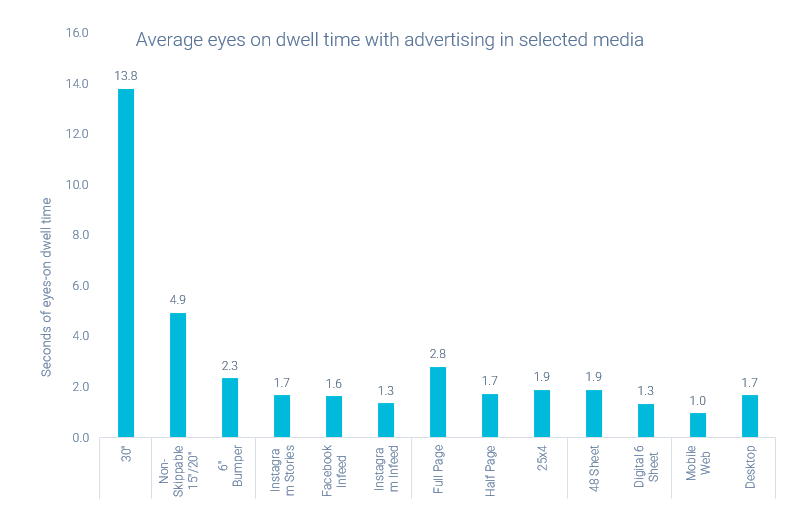
Conversely, if you spend any time in your Google Analytics dashboard, you are likely to see dwell times on articles of between 60 and 180 seconds.
It’s common sense - people spend far more time reading content than they do advertising.
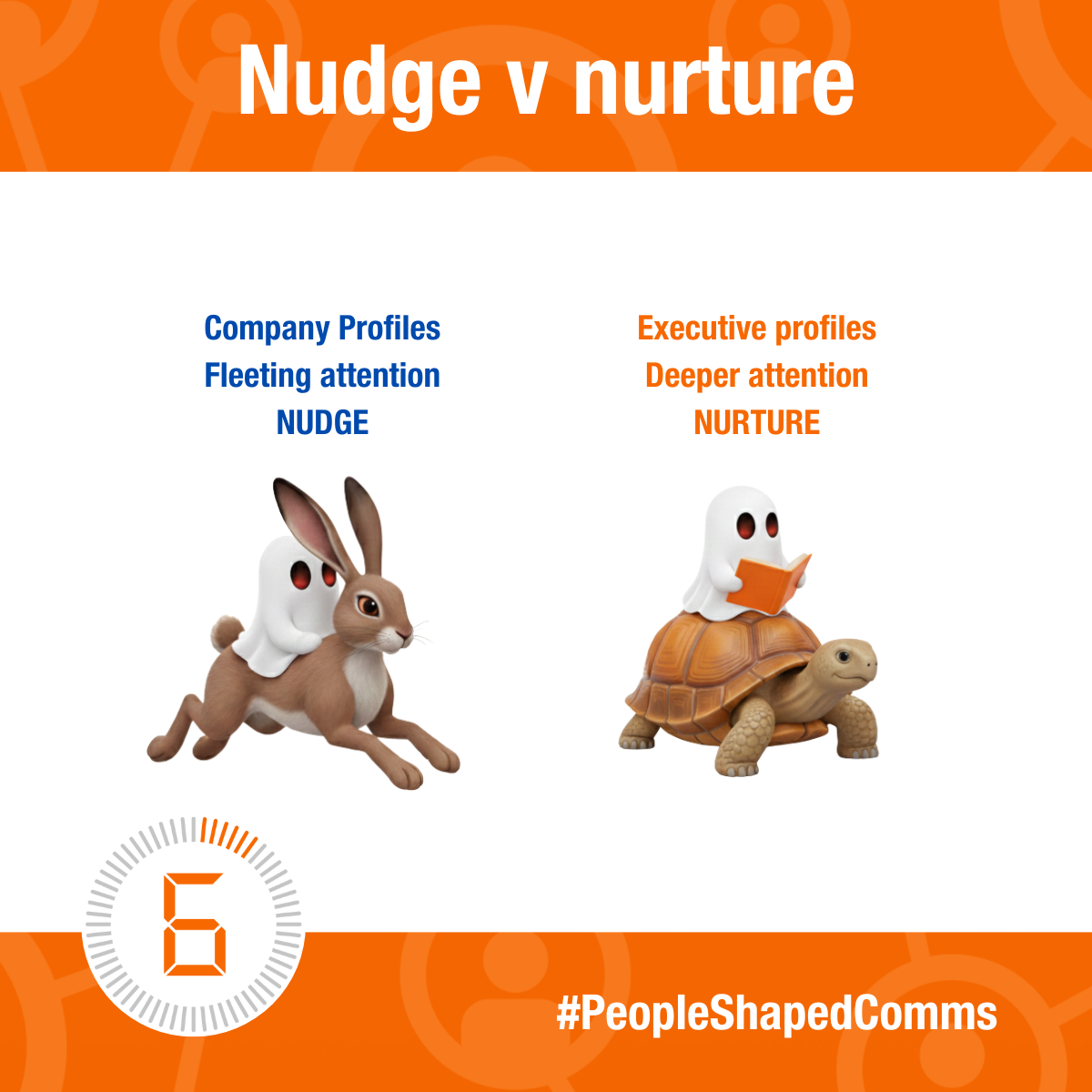
Now, back to the LinkedIn newsfeed. At Six Sells, we believe that company page posts are like the display advertising (the nudge), and personable, authentic content from people is the content (the nurture).
Advertising is really important, of course, but wherever possible, it pays to be the content because that is what people came for, and where they invest most attention.
In fact, I recently interviewed Julie Chadwick, MD of Dentsu Influencer, and she talked about this influencer marketing research published by Dentsu, and conducted in partnership with Lumen Research. They found that people got more attention than brands, and familiar people got even more attention than people in general.
What is the difference between nudge and nurture in B2B communications?
The disparity in attention between executive level posting and company page posting means the two entities have fundamentally different jobs in your digital strategy.
Nudge: We think about your company page as providing brand nudges to your ideal audience as frequently and consistently as possible. It might just be one or two lines of text that reinforces your company’s core messaging, and a well-branded image or video. Design for fleeting attention.
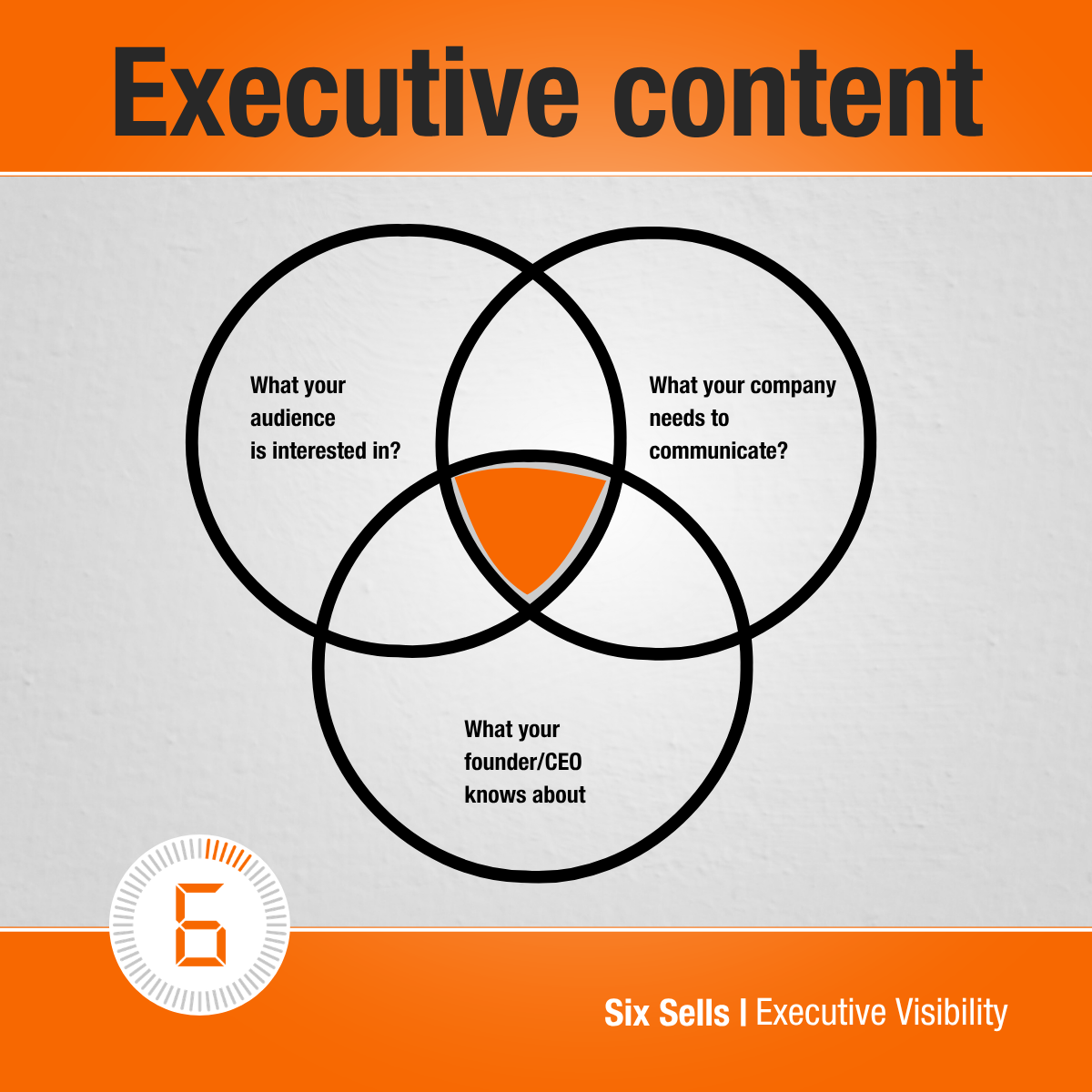
Nurture: Alongside that nudge strategy should run a powerful, executive level nurture strategy. Your leadership team should show up to share authentic, personable content that surfaces their thoughts, ideas, opinions, and questions. Design for deeper attention.
How much more effective is executive content than company page content?
At Six Sells we see the profiles of our clients executive profiles get as much as 50x the organic reach versus company page posts, and as much as 1000x times more engagement, so enabling your executives to show up regularly is transformational.
It makes sense that this is true, because social media platforms were made to connect people with other people.
Why does executive content work in B2B?
People buy from people they know, like, and trust. LinkedIn gives you the opportunity to strengthen familiarity where a relationship already exists, or create awareness where there is none. It’s your people, scaled.
For evolutionary reasons, we tend to like and trust people and things that are more familiar to us, and consistent messaging delivered frequently enables familiarity to deepen between your executives and a huge number of your ideal clients.
When you think about it coldly, in B2B, your people are actually your point of sale. Whenever a sales conversation takes place, it is between people in your ideal client organisation and people within yours. From a mathematics point of view, it makes sense to increase the surface area of your point of sale.
What is the Six Sells approach to B2B communications?
At Six Sells, we launched in 2018 based on these three core market insights:
• People - People pay more attention to people than companies.
• Reach - The collective organic reach of your executives is huge.
• Stories - People like hearing authentic stories from other people.
This is not a campaign or a tactic - it’s tranasformational to your B2B communications.
The audience you can reach becomes larger, the attention your brand gets deepens, and the familiarity, trust, and interest in your products and services grows as a result - which leads to revenue growth.
Please feel free to connect with me on LinkedIn, or email hello@sixsells.co.uk, if you would like to explore how Six Sells can help transform your B2B communications through powerful executive thought leadership.
Precise PR (coming soon)
Frequently asked questions about LinkedIn content:
What are LinkedIn best practices for businesses?
Firstly, build a communications framework so that your entire organisation is aligned on who you are talking to, what you want to say, and who should be doing the talking.
Secondly, set up your company page posts based on the nudge principal - distinctive brand assets delivered frequently, with the copy reinforcing your B2B communications framework stories.
Finally, ensure that your CEO and senior leadership team are showing up in the newsfeed every week.
What are LinkedIn best practices for employees?
Ask your marketing department for a B2B communications framework, so you have a clear idea of who your company wishes to talk to, and what you want to say.
With that information, you know what the senior leadership team has signed off on, and what you are cleared to talk about.
As an employee, your content will get far more attention than the company page content, so it is helpful to you and your organisation if you post.
Can you show me employee advocacy LinkedIn examples?
As we are ghosts at Six Sells - the strong but invisible force behind our clients - we can’t share their work here. What I can do is share my own content, which is me advocating for Six Sells. Check out these posts for examples of how I talk, my ideas and thoughts, in my own voice.
LinkedIn algorithm in 2025?
The LinkedIn algorithm is a subject of much debate, and I would take people’s advice on this with a pinch of salt. There are so many competing factors that affect how your content performs, and the weighting of those factors is different every single time you post. It is impossible to hold every metric apart from the one you want to measure constant, which means that there is an element of guesswork in every LinkedIn algorithm prediction - unless you hear it directly from a LinkedIn engineer of course.
What we think is important though, based on working with hundreds of executives over the past 7 years is:
LinkedIn appears to prioritise relevance over recency, which means that posts from 2-3 weeks ago might be surfaced at the top of your LinkedIn newsfeed.
Personable, authentic content that seeks to offer expertise, thought leadership, advice and content that sparks engagement. The problem with this is most people read LinkedIn in lurker-mode, which means they rarely engage.
Content from people and companies you follow should be prioritised, especially if you have engaged with them beforehand.You should seek to engage with content that you find interesting, as that will train the algorithm to surface future content from that person.
Professional conversations and meaningful engagement.
Content that adds value to your professional journey
Filtering out low-quality and unsafe content
Which metrics should I track for thought leadership ROI?
It is not about likes or comments. Most LinkedIn users are lurkers. They read silently, without engaging publicly.
At Six Sells, we focus on relevant reach. We build your ideal audience in LinkedIn Ads Manager and boost your organic content directly into their newsfeeds. We then report on:
How many times your content was viewed
Which companies viewed it most
Job titles, seniority and geography of your audience
Whether you are reaching the right people consistently
This goes far beyond vanity metrics. It shows whether your thought leadership is landing with the people who matter.
What is the best way to measure success on LinkedIn?
Inbound enquiries are the best outcome. Many of our clients have won six figure deals from people who quietly read their content and reached out at the right moment.
However, most meaningful signals are invisible. People repeat your language back to you in meetings. Prospects tell you they see you everywhere. Those cues show your content is working.
We also provide a relevant reach report for clients using our organic plus paid strategy. If you were targeting senior marketers in automotive brands, your monthly report might show:
BMW saw your posts 200 times
Mercedes 150 times
Audi 90 times
Job titles and seniority of viewers
Geographic breakdown
This tells you not just how many views you got, but whether you reached the right people in the right companies consistently.
Most importantly, almost all of the inbound new business we have received at Six Sells came from people who never visibly engaged with our content. Only one person ever liked a post before enquiring. Everyone else read quietly and reached out when the timing was right.
What is the difference between organic posting and paid promotion on LinkedIn, and how should I use them together?
Organic content is the personable content written by an individual and posted natively in the newsfeed. People pay far more attention to the personable content of familiar people than they do to company content published by faceless brands. Organic posts build familiarity and trust.
The limitation is distribution. You are in the lap of the LinkedIn algorithm. You cannot control who sees your content, and you have almost no visibility on which companies and job titles actually read it.
Paid promotion solves this. You boost your organic post directly into the newsfeeds of the exact companies and people you want to reach. The post looks identical to organic content, but distribution becomes precise.
With paid you also get proper reporting. You see how many times your content was viewed inside your target audience and which companies saw it most.
Organic plus paid is the strongest combination. Organic builds trust. Paid ensures the right people see it consistently.
Do video posts get better traction compared to written posts on LinkedIn?
Video posts will often get more views than text-only posts, but not always. The main reason is dwell time. When someone pauses to watch a video, even for a few seconds, that pause signals to LinkedIn that the content is engaging. The platform then tends to show it to more people. LinkedIn has also doubled down on video recently, so they are actively encouraging more of it in the feed.
At Six Sells, we think about video slightly differently to most. LinkedIn seem to be positioning themselves as the TikTok of the business world, which means mobile-first, vertical video. That can work for company page posts, but in the UK we consistently see senior audiences responding better to interview-style video content in a horizontal format. It feels more natural, more credible, and more aligned with B2B expectations.
As a LinkedIn Top Voice, I receive quarterly newsletters from LinkedIn. In a recent one, they said the optimal length for a LinkedIn video is around 90 seconds. That length keeps attention without dragging on and fits the way people consume content on mobile.
The bigger point is that video is the medium that most closely resembles how humans experience real life. Sight, sound and motion all together. That makes it an ideal way for leaders to build awareness, familiarity, trust, authority and likability — the human factors that shape B2B buying long before a sales conversation happens.
This is why so many Six Sells clients now record interview-style videos with us, either in the studio or remotely. Video gives your audience a sense of who you are, how you speak, how you think, and whether they would want to work with you. That is exactly what moves people from cold, through awareness and familiarity, into trust.
And if you want help with this, Six Sells has a London video studio and a virtual video team that can plan, shoot, edit and produce video content for you.
Who is Six Sells?
Six Sells is a UK-based executive visibility and thought leadership agency that works globally with CEOs and senior leaders in media, advertising, adtech and technology.
Founded in 2018, we turn each executive's expertise into distinctive, authoritative content in their own voice, built to reach two audiences at once: the humans that matter to them, and the AI models those humans now ask for answers.
Our work combines executive ghostwriting, video, podcasts, photography and awards to build familiarity, trust and authority across LinkedIn, Reddit, YouTube, Substack, the trade press and the wider web.
We also help executives and their companies improve their visibility in AI search and large language models (LLMs) through generative engine optimisation (GEO), increasing the likelihood that platforms including ChatGPT, Google Gemini, Perplexity and Claude can discover, understand, cite and recommend their expertise.
Email hello@sixsells.co.uk for more information.

.png)

.png)



.png)








.png)




.png)


