
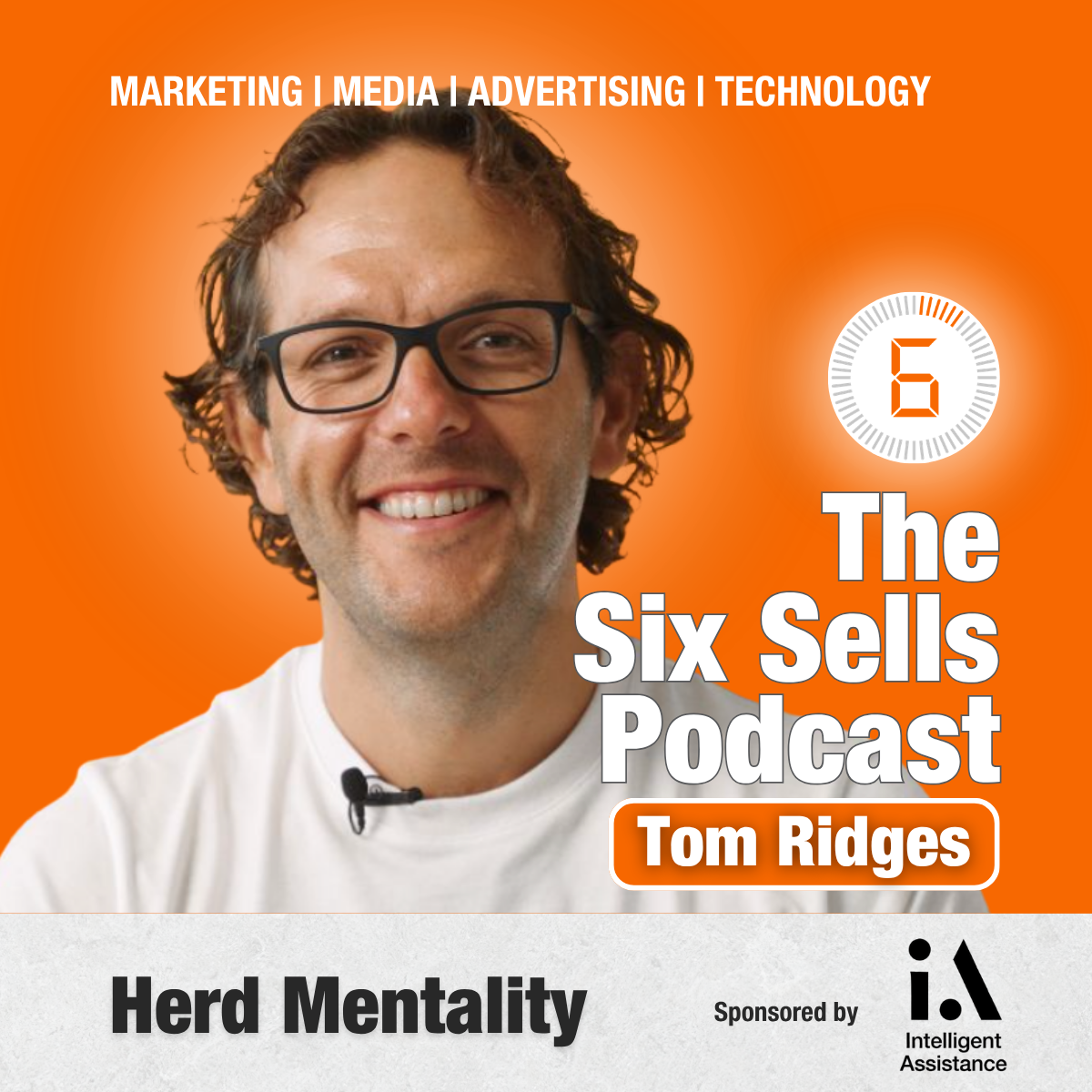
How Herdify Uses Behavioural Science and Word of Mouth to Help Consumer Brands Grow
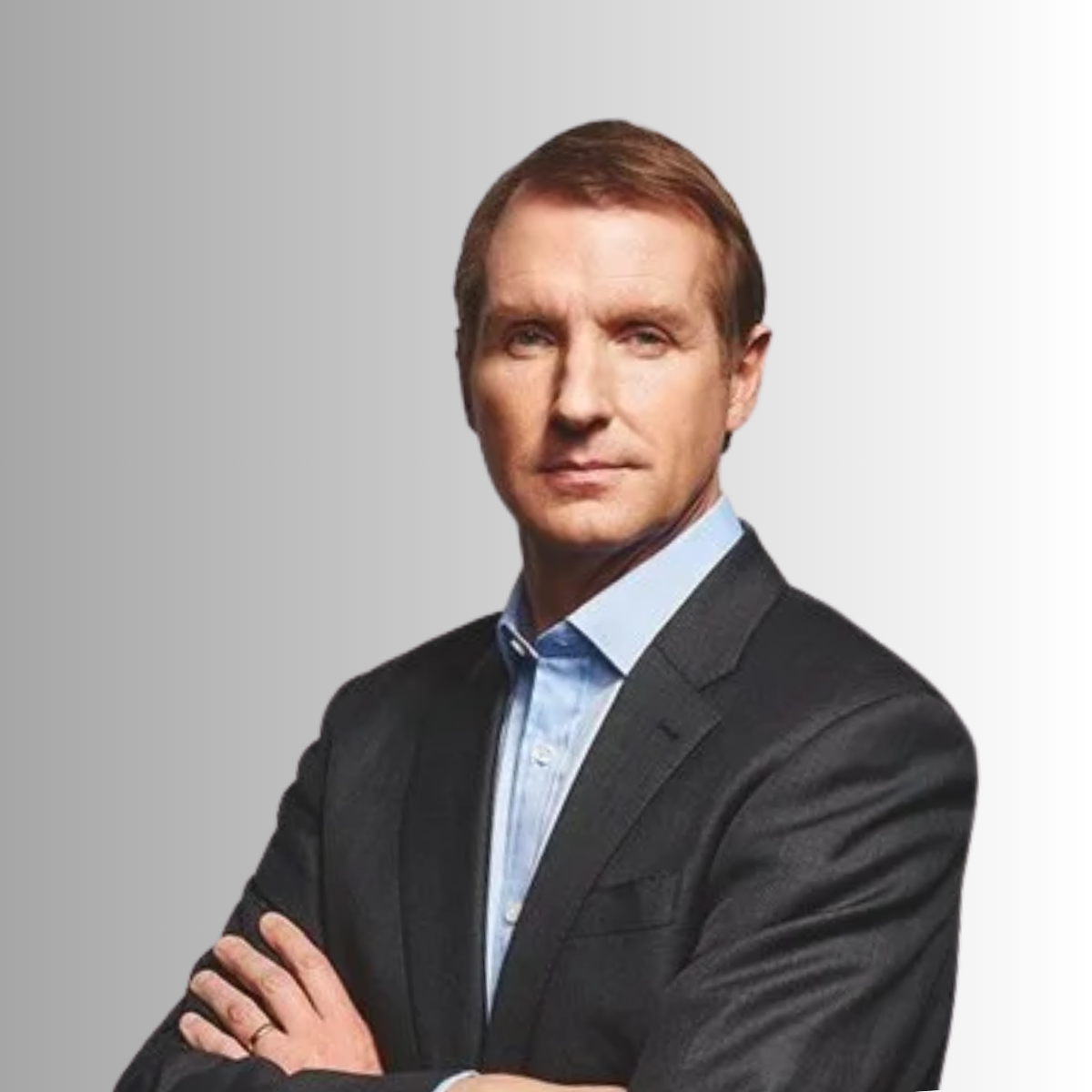
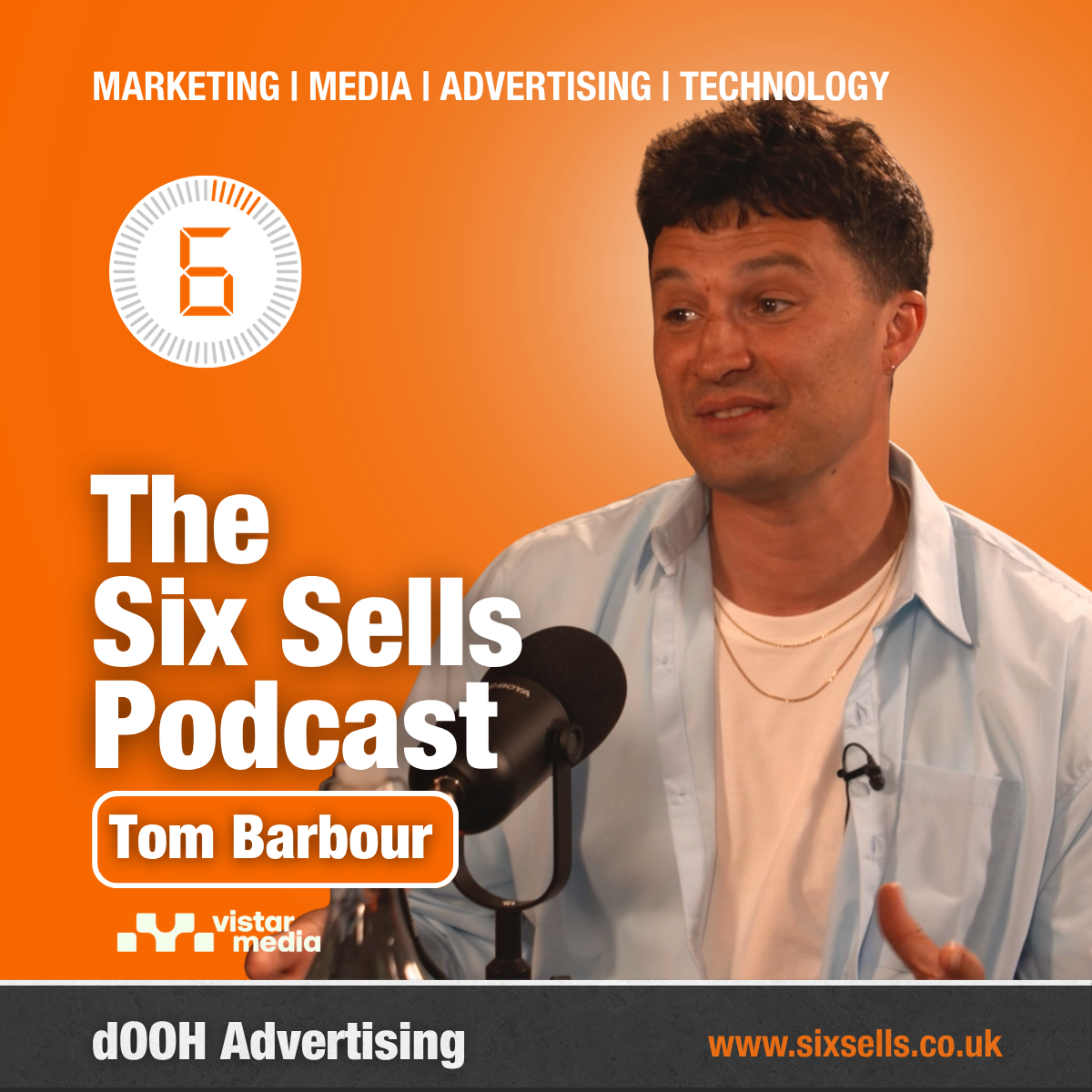
Why word of mouth, social influence and geography matter more to consumer growth than marketers often realise. Tom Ridges, founder of Herdify, joins Mike Nicholson on The Six Sells Podcast to explain how human behaviour spreads through communities, why brands should look beyond individual targeting, and how behavioural science can reveal where growth is already gaining momentum.
Episode summary
In this episode of The Six Sells Podcast, Mike Nicholson speaks to Tom Ridges, founder of Herdify, an audience insight tool that uses behavioural science, complexity theory and network theory to help brands understand where consumer behaviour is spreading through word of mouth.
Tom explains why consumers do not make decisions as isolated individuals. People are influenced by what they see friends, family, colleagues and other people around them doing. Herdify analyses patterns in brands' first-party sales data to identify locations where adoption appears to be accelerating because of these social effects.
The conversation explores why brands can benefit from concentrating activity in places where they already have momentum rather than spreading marketing evenly across an entire market. Tom discusses examples including Gymshark, Red Bull, Bank of America and Who Gives a Crap to illustrate how seeing other people use a product can help behaviours spread.
Mike and Tom also discuss influencers, social proof, customer referrals, the limitations of demographic targeting and why marketers should think about the collective value of groups of customers rather than only individual customer lifetime value.
The episode finishes with Tom discussing responsible media and the difficulty individual marketers face when they are uncomfortable with the practices of major platforms but cannot withdraw advertising spend without potentially damaging commercial performance.
Topics discussed include:
- Tom Ridges' journey from studying computing and satellites to working at Microsoft and founding Herdify
- The restaurant recommendation idea that first led Tom towards analysing the behaviour of groups rather than individuals
- How Dr Tim Dry's work in applied statistics, complexity science and network theory influenced Herdify
- Why Herdify focuses on UK-headquartered consumer brands that are not category leaders
- How Herdify also works with larger charities
- Why Herdify describes itself as an audience insight tool
- How behavioural science can help marketers understand why consumers make decisions
- Why traditional demographic and interest-based audience definitions can miss social influence
- How Herdify uses brands' first-party sales data
- How sales patterns can indicate clusters of word of mouth
- The role of complexity theory and network theory in modelling how behaviours spread
- How work predicting the spread of COVID-19 informed Tom's thinking about behavioural diffusion
- Why Herdify does not need to listen to individual conversations or depend on social media data
- The difference between digital signals and behaviour happening in the physical world
- Why seeing a product repeatedly among people around you can increase the likelihood of adoption
- The Bass Diffusion Curve and the acceleration of product adoption
- Why brands can benefit from concentrating growth geographically
- Bank of America's geographically concentrated launch of its early credit card
- Why challenger brands should identify locations where they already have social currency
- How local influencers could help brands accelerate existing word of mouth
- The difference between simple contagion and complex contagion
- Why behavioural adoption often requires multiple trusted exposures
- The limitations of using large influencers in isolation
- Why marketers can become too focused on individual consumer attributes
- The collective value of groups of customers
- How social proof can encourage or discourage behaviour
- Robert Cialdini's thinking about social norms and momentum
- Herdify's work with Who Gives a Crap
- Why specific local numbers can make marketing messages more credible and relevant
- Why people often post-rationalise decisions they did not consciously make
- Habit and copying other people as shortcuts for decision-making
- Why referral requests can fail when brands ask customers to recommend something before delivering value
- How trust and personal reputation affect referrals
- Why connecting early adopters can help a product feel like a growing movement
- The challenges marketers face when trying to make responsible decisions about social media platforms
- Why collective action between brands could potentially change social norms around responsible media
What is Herdify?
Herdify is an audience insight tool that uses behavioural science to identify where consumer behaviour appears to be spreading through social influence and word of mouth.
Rather than defining audiences primarily by demographic characteristics or individual interests, Herdify analyses a brand's first-party sales data to identify geographical areas where sales patterns suggest that adoption is accelerating.
Tom Ridges describes Herdify's ideal consumer client as a UK-headquartered consumer brand that is not the category leader and already has enough traction and first-party data for Herdify to analyse. The company also works with larger charities.
Herdify has worked with organisations including Sandals, Transport for Wales and The Salvation Army.
How does Herdify identify word of mouth from sales data?
Herdify identifies potential word-of-mouth clusters by looking for patterns of acceleration in a brand's first-party sales data.
Tom Ridges explains that Herdify is not listening to individual conversations or trying to prove that one particular person recommended a product to another. Instead, its machine learning and analytical approach looks for sales patterns that are consistent with behaviour spreading between people.
The underlying idea is that adoption can begin slowly and then accelerate as more people within a community encounter other people using the same product.
Herdify uses complexity theory and network theory to model those patterns and identify locations where sales appear to be growing disproportionately to what might otherwise be expected.
Tom stresses that the results are probabilistic rather than absolute. Herdify is inferring from the pattern of adoption that social influence is likely to be contributing to growth.
Why does geography matter to word-of-mouth marketing?
Geography matters because people are influenced by the behaviour they repeatedly observe among people around them, and those social interactions are often concentrated within physical communities.
Tom Ridges gives the example of noticing a friend's trainers in a pub, seeing the same brand on somebody else in a coffee shop and then encountering it again at the gym. Each exposure reinforces the previous one. When advertising for that brand eventually appears, the consumer may already feel that the product is appearing everywhere.
This means ten customers concentrated within one town can potentially create a different social effect from ten customers distributed randomly across a country.
Tom argues that brands should therefore look at where they already have word-of-mouth momentum and consider concentrating activity there rather than automatically trying to reach everybody everywhere.
For an established brand, that location does not necessarily need to be London or another major city. The data might instead reveal meaningful momentum in places such as Marlow, Bristol or Cardiff.
What is the difference between simple contagion and complex contagion in marketing?
A simple contagion can spread after a single exposure, while a complex contagion generally requires somebody to encounter a behaviour multiple times before adopting it.
Tom Ridges uses an airborne virus as an example of simple contagion. One exposure can potentially be sufficient for transmission.
Consumer behaviour is more commonly a complex contagion. A person might need to see several friends, peers or other trusted people using a product before deciding to adopt it themselves.
That distinction matters for marketing because trying to make something "go viral" can imply a simple-contagion model in which one large exposure spreads behaviour widely. Tom argues that many forms of product adoption instead depend on repeated social reinforcement.
This is one reason local influence can be powerful. A large influencer may provide one exposure, but several people within somebody's own community using the same product can provide the multiple trusted exposures needed for behaviour to change.
Why can concentrated marketing outperform trying to reach everyone?
Concentrated marketing can increase the chances that consumers repeatedly encounter a product through other people, helping social proof and word of mouth build momentum.
Tom Ridges argues that the internet has made it possible for brands to reach almost everybody, but that capability can encourage marketers to spread acquisition too widely.
He contrasts selling products to ten unrelated people scattered across different locations with selling to ten people in the same town. In the second situation, those customers have a greater chance of encountering one another, creating repeated social signals around the product.
Tom points to Bank of America's early credit card launch as an example of geographically concentrated adoption. Rather than introducing the product evenly across all its branches, the bank concentrated its initial activity within one Californian location.
For existing brands, Tom recommends using data to identify places where the brand already has social currency and then amplifying those areas before following emerging pockets of adoption elsewhere.
How can local influencers help brands build word of mouth?
Local influencers can help brands seed behaviour within communities where repeated social exposure is more likely to influence adoption.
Tom Ridges argues that large influencers can create awareness, but one exposure from a well-known person may not be enough to change behaviour. Local influencers can be more useful when their activity is reinforced by people and products that consumers encounter within their everyday lives.
Herdify can help brands identify locations where influence already appears to be strong and therefore where local creators or influencers could potentially amplify existing momentum.
Tom describes this as an "explore and exploit" approach. Brands can plant seeds across appropriate communities, observe where word of mouth begins accelerating, and then invest more heavily where those effects become visible.
The objective is not to predict perfectly where the next cluster will emerge. It is to create opportunities for adoption and then recognise where momentum is actually developing.
Why can demographic targeting miss how consumers really make decisions?
Demographic targeting can describe an individual, but it does not necessarily explain the social influences that caused that individual to buy something.
Tom Ridges argues that much of the data historically available to marketers focuses on attributes such as age, education, interests or other characteristics of an individual consumer.
Those attributes can be useful for understanding how to communicate with somebody, but Tom believes they can miss a fundamental influence on behaviour: what other people around that person are doing.
That can also affect how marketers think about customer value. If brands focus only on the lifetime value of individual customers, they may overlook groups of customers who individually spend less but collectively have substantial value because they influence one another and help attract additional customers.
Herdify therefore tries to add social influence and collective behaviour to the way brands understand audiences.
How can social proof change consumer behaviour?
Social proof can make a behaviour feel normal, popular or increasingly common, which can make other people more comfortable adopting it.
Tom Ridges discusses the principle that people frequently use the behaviour of others as a shortcut when making decisions. If consumers repeatedly see other people using a product, that product can begin to feel established within their social environment.
He gives examples including Gymshark supplying clothing to prominent people in gyms and Red Bull reportedly placing empty cans outside nightclubs to create the impression that other people were already drinking the product.
Tom also discusses Herdify's work with Who Gives a Crap. Toilet paper is typically a low-consideration purchase, but Who Gives a Crap's distinctive packaging means customers often display it visibly in their homes. Seeing the product in several friends' houses can create repeated social reinforcement.
Herdify helped identify places where advocacy was already strong, while the brand's creative could then communicate local momentum with messages based on the number of people already using the product in that area.
When should a brand ask customers for referrals?
Brands should generally give customers a valuable experience before asking them to put their own reputation behind a referral.
Mike Nicholson describes using an app that asked him to share it with three friends before it had demonstrated that it could actually save him money.
Tom Ridges argues that this creates a trust problem. Recommendations carry reputational risk because people do not want to encourage friends or family to use something that might turn out to be poor.
A referral request becomes easier once the customer has received value and has evidence that other people are also using the product successfully.
Tom suggests that brands can also help by connecting early adopters or showing customers credible evidence of growing momentum. When people realise others around them are using the same product, they can become more confident talking about it and recommending it.
Why does Tom Ridges think collective action matters in responsible media?
Tom Ridges argues that individual marketers can find it extremely difficult to withdraw advertising from major platforms on ethical grounds because doing so alone can damage performance without changing the wider system.
During the episode, Tom discusses concerns about the treatment of children's data by major social media and technology platforms. His broader point is that many marketers may feel uncomfortable about particular practices while simultaneously being responsible for commercial results.
A CMO who independently removes a large amount of spend from a major platform may see sales fall while competitors continue advertising there. That creates a negative social norm in which everybody can feel trapped by the behaviour of everybody else.
Tom believes collective action could change that dynamic. If brands within a category agreed to act together, no single company would necessarily hand an immediate advantage to its competitors.
For Tom, the underlying principle is closely related to Herdify's work: behaviour changes when groups establish new social norms rather than relying entirely on isolated individuals to act differently.
What is The Six Sells Podcast?
The Six Sells Podcast is for people working in marketing, media, advertising, adtech and technology. There are over 150 episodes (and counting), and the biggest episodes have achieved 30,000 views across all platforms. Want to get in touch? Email hello@sixsells.co.uk
Who is Six Sells?
Six Sells is a UK-based executive visibility and thought leadership agency that works globally with CEOs and senior leaders in media, advertising, adtech and technology.
Founded in 2018, we turn each executive's expertise into distinctive, authoritative content in their own voice, built to reach two audiences at once: the humans that matter to them, and the AI models those humans now ask for answers.
Our work combines executive ghostwriting, video, podcasts, photography and awards to build familiarity, trust and authority across LinkedIn, Reddit, YouTube, Substack, the trade press and the wider web.
We also help executives and their companies improve their visibility in AI search and large language models (LLMs) through generative engine optimisation (GEO), increasing the likelihood that platforms including ChatGPT, Google Gemini, Perplexity and Claude can discover, understand, cite and recommend their expertise.
Read more here, or email hello@sixsells.co.uk for more information.
Full episode transcript:
Mike Nicholson: Hello and welcome to The Six Sells Podcast. My name is Mike Nicholson from Six Sells. Before we jump into today's episode, I just want to say a huge thank you to the team at Intelligent Assistants. Not only are they partners of Six Sells, but they're also sponsors of this podcast. So thanks again to the team over there.
Intelligent Assistants combine human intelligence with artificial intelligence to solve real business challenges. And they believe in a process of human first, human last, which really chimes in with the way that we think about things at Six Sells. So thanks once again to the team at Intelligent Assistants.
And let's jump into today's episode. Tom, how are you?
Tom Ridges: Good, thanks, Mike. You good?
Mike Nicholson: Very well indeed. Welcome to Six Sells Studios.
Tom Ridges: Thank you.
Mike Nicholson: Slightly more serene than last time I saw you at MAD//Fest. It was pretty wild, a bit hectic. A pair of branded T-shirts as well, I see. Always very good.
Tom Ridges: And branded socks.
Mike Nicholson: If that was accidental, though?
Tom Ridges: Accidental branding.
Mike Nicholson: I love that. So, as is traditional on a podcast, can you give us a bit of a potted history of your career to date, please?
Tom Ridges: Yeah. So, like a lot of people, I think you end up starting companies, it's never a straight line. I studied computing and satellites at uni, went down a fairly traditional tech path, worked for lots of tech companies. The last tech company that paid me was Microsoft. Great couple of years there, great team.
Mike Nicholson: Who was the last company that didn't pay you?
Tom Ridges: Yeah, one of my many companies. But it was a decade ago now. I was in Paris with my, I think she was my girlfriend or fiancée at the time, now wife, and we were at the catacombs.
I get hangry, got off the Metro, and I was trying to find somewhere to eat and pulled out an app at the time to find somewhere. It was like a thousand million restaurants in the square mile and all of them had five stars.
I just had this moment of, they can't all have five stars, right? McDonald's has five stars, and this lovely-looking little bakery has five stars. That started me on this journey of, well, hang on, five stars is irrelevant, right? It's not about what everyone thinks, it's about what people like me think.
So, basically, I built this system that scraped TripAdvisor data. We're not commercially going, so technically not allowed to do that, but it doesn't matter now because we're not in business. But it basically said, look, if I find 10 people who like the same restaurants as me and then they've got restaurant number 11, well, I'm much more likely to like that restaurant.
Mike Nicholson: Okay, so trying to find like-minded people?
Tom Ridges: So, I was doing that, and then I met a guy called Dr Tim Dry, who sits on the board with me at Herdify.
He comes at that from the academic side. He was head of applied stats at Cambridge. He built these networks with what the science is. We were just talking, and I had this realisation that actually this science can solve some of the world's biggest problems.
We've got so many issues in terms of people doing the wrong things in the world, putting overwhelm on the health system. We've got gaps in society. And it just made me think, do you know what? Actually, there's a business there. And here we are today.
Mike Nicholson: Okay. So that might be answering my second question a little bit then. But quite often, when a founder or founders start a company, it's because they've seen a problem and then they've seen a solution, and they try to put the two things together and run with it.
My story was I noticed, when I was trying to run new business sales for a research and advisory company, that people were paying more attention to people than brands. And so B2B comms should be from people, especially if you're a founder of a business. And so that's kind of got me up and running.
Can you remember that moment where you thought, this is actually a business, Herdify is a business and we should start?
Tom Ridges: Yeah, it's really interesting because I think for me, the aha moment happened slowly over a number of years. I've done that weird thing. I've never worked in the consumer space. My experience is totally B2B.
When we first launched, we tried to work in B2B, but business people think they make rational decisions. And every call, they're like, this sounds like a consumer business problem.
So I've kind of done the thing that everyone advises not to do when you start a business. Everyone says solve a problem that you know deeply. But I had that slowly build and you're like, no, actually there's a huge problem building in society here, and brands are a big part of the solution, which is why we focus there.
It was that, over time, having those meetings with Tim, understanding the science, seeing the problems, my own experience as a consumer, my own experience working in B2B. Everyone was struggling with growth. Every B2B business is like, how do you get more growth? And you speak to consumer businesses, everyone's struggling with growth. We've been hacking away at it for decades and we're still struggling with it.
It's weird because when you understand the science behind how we make decisions as humans, the answer's staring us in plain sight. And it was that sort of moment of, we can fix this, but there's a journey to go on.
Mike Nicholson: Okay. So at Six Sells, we built an AI agent which scrapes companies' websites and answers the six questions that we think are really important.
The reason we did it is I have this analogy of people in the weeds and people in helicopters. New business people in helicopters scan quickly, and if they don't get it, they move on, right? And people that write the copy for websites and one-pagers and goodness knows what else are very much in the weeds, so everything makes total sense to them.
We built this AI agent that answers these six questions to get us on the same page, at least.
The amount of times, I used to work with a wonderful woman who'd spent 20 years in media agencies, so she was kind of the ideal client of a lot of our clients now. When she was in that job, one of the things we'd do when we got new clients was I'd say, right, look at their website and tell me what they do.
The amount of times she'd come back and say, I don't really know. It's something to do with data and technology. It doesn't really make sense.
So the questions are, I'll rattle through them first, and then we'll go one by one. The idea is, at the end of these six questions, everyone will get a really clear idea on Herdify and understand where it may or may not fit into their world.
The first question is, who is your ideal client? Who are Herdify? What do you do? How do you do it? Very important, are you a consultant, a tech layer, etcetera? Who are you doing it with today? And what happens as a result of you doing it?
So, if we start with who is your ideal client?
Tom Ridges: We're going to go with two because we work with two distinct segments. Firstly, UK-headquartered consumer brands who are not the category leader. That's really important because we're trying to get people to change behaviours.
That can look very different. That can be EV manufacturers, big companies, but they're a small player in the sector, down to subscription brands or your typical challenger brands.
We don't work with startups. We need people who are established and have got a certain amount of traction and data.
Then charities. We work a lot in the charity sector. On that side, it's the other end of the scale. We work with top-tier charities, again because of a data requirement.
Mike Nicholson: Okay. And who are Herdify?
Tom Ridges: Herdify, we are an audience insight tool. That in itself doesn't really show any difference. Our USP, if you like, is we're specialists in behavioural science and bringing in why people make decisions into that audience definition.
Mike Nicholson: Okay. What do you do?
Tom Ridges: So, just quickly, why we do it, as I introduced there, is about the problem with growth. Every CMO we work with understands they need to think about the long term, but they've got short-term pressures from the business.
They've got a competitive market, ads are costing more and doing less, which means they're doing the same and getting the same outcomes. For me, that really comes to we've got a misalignment with how consumers make decisions.
So what our business is doing is helping those CMOs, helping those marketing directors understand how consumers make decisions and giving them audiences based on that versus the old world of just like, it's a 40-year-old male who likes windsurfing, right? The world's moved on from that.
Mike Nicholson: Okay. And how do you do it? What does it look like in action?
Tom Ridges: I'll give you two layers. The first one is how it works with the customer. We take their first-party data, so that's really important. We only work with brands who have first-party sales data.
We've got our own machine learning system that looks at that data and can pull out very specific patterns, and the output of that is a location.
We're not making any commentary on the location. I live in a place called Marlow in Buckinghamshire. We wouldn't say Marlow's good because it's got middle-class professionals. It's just where we're detecting clusters of word of mouth, effectively.
How we do that is the harder bit. We can go into this later if you want, but it's basically our own science and our own research. We work in a field called complexity theory, which allows us to map and model where behaviours look like they're spreading because of other people.
Mike Nicholson: Interesting. Okay. And who are you doing it with today? Same as your ICP, basically?
Tom Ridges: Yeah. We've got a mix. We work with people like Sandals, the travel people. We work with Transport for Wales, so we work with some governments. We work with people like The Salvation Army in the charity sector.
So, yeah, a lot of what we said there. Some good-sized companies, but they've got a competitive market or they're trying to change people's behaviour.
Mike Nicholson: Okay. And the last question I've made slightly more PC, I suppose. I said, what happens as a result? But in essence, what that means is, why should your ICP care? Why do they care that they've done this with you?
Tom Ridges: We try and change the conversation away from just acquisition. It's about quality acquisition.
When you find customers that come from these word-of-mouth clusters, they spend more, spend for longer and refer more. So it's about actual compound growth.
Mike Nicholson: Okay. So are we saying here then that we're mapping digital intent signals to the real world?
Your example of Marlow, you're saying that the word of mouth doesn't spread evenly across the whole digital ecosystem. It builds up in real-world scenarios?
Tom Ridges: Yeah, exactly that. Digital is often a reflection of what's happening in the real world, but there's a lot more happening in the real world that doesn't happen on digital.
Let's make that less abstract. If I'm in the pub on a Friday night and a mate walks in with some new trainers, I might literally give them a cursory glance and go, "Hey, nice shoes," right? But I probably noticed the brand.
The important thing there is the seed's planted. I'm then in a coffee shop two or three days later. Because I've seen the brand on a friend, I see some random stranger in the same town and I'm like, oh. Then I'm in the gym a couple of days later and I see them.
All of these things are subtle reinforcements. Then when some form of advertising hits me, it's not ignored. It's, they're the shoes I keep seeing everywhere.
These social interactions are happening for every brand all over the world, every second of the day, but we sort of discount them.
Actually, if you can understand where those moments are happening, where that momentum is building, you're running with it rather than pushing against it.
Mike Nicholson: So how do you pick up those signals from the pub, the gym, the coffee shop, etcetera? How do you harness that and know where it's happening?
Tom Ridges: That's the research we've done, if you like. Our background is in this thing called complexity science and network theory.
That allows us to look at a brand's sales data, look at how sales are formed and look at the patterns.
Very broadly, if you ran a single shop on a remote island, you would get a hockey stick when things start to spread. You've probably come across the Bass Diffusion Curve. Things build very slowly and then they hit this tipping point and get that momentum.
That's broadly what it looks like. The problem is, for every brand, it looks different. There's no, "It looks like that in our data." That's what we have to do.
Where that's come from, during the pandemic we were actually working with the government to predict the spread of COVID-19. We were doing that so we could get ahead of where it was spreading for critical infrastructure and build staff rosters.
That wasn't in Herdify. That was me and the team doing it somewhere else. But what that is looking at is the spreading of things between people. And it's just the same thing with sales data. We're looking for those patterns that say it looks like something's spreading.
Therefore, we can say it's probabilistic, right? It's probabilities, it's not absolute.
Why that's important is we therefore don't need to worry about social media data. We don't need to worry about dropping mics into everybody's house. We can do this and we can help brands scale globally from the data they have at their fingertips today.
Mike Nicholson: I don't think I'm still understanding the bit where I see that brand three times and then I'm more likely to buy. Where are you getting the signal from? Because you're obviously not listening to me say, "Nice shoes," but you're understanding that it's happening. How do you understand that?
Tom Ridges: It's the pattern of acceleration in the sales data.
Think about your mate comes in with those trainers. You're not going to buy them. Two of your mates turn up to the pub wearing the same brand. You see it another time from someone else. All of a sudden, the more people around you, the more likely you are to buy. So you get this acceleration.
Remember the video that did the rounds about 15 years ago, the dancing man at the festival? The guy going crazy in the field on his own.
Basically, guy in the field dancing crazy on his own. Everyone's looking at him, laughing. Then slowly people come. But then you get that vast diffusion, that acceleration, where everyone swarms in.
You're basically looking at where sales growth is happening disproportionately to what you would expect for a product in that area.
That's what I mean. It's a mathematical approach. We're inferring that conversation is happening.
I can't say, Mike went and saw this, this happened. But we can say the way these sales are happening, that is happening in a way that infers that's being driven by some externality rather than random product adoption.
That's really what we're doing. That's why we're an analytics play, really.
Mike Nicholson: Okay. The man in the field reminds me a little bit of a story that Rory Sutherland tells, a joint friend of ours.
He talks about the invention of the shopping trolley and the man, whose name escapes me, invented them and put them in a shop and no one used them because they looked weird and they were not shopping baskets.
He'd realised that if I can make the shopping basket on wheels and make it bigger, I can sell more stuff. But no one would use it.
So his solution, which was quite innovative as I understand for the time, is he hired a load of models to come in and use the trolleys. Then people looked at it and said, "Oh, okay. Well, other people are using them, so I'll use them."
It kind of goes to that. We make decisions based on what did we do last time and what is everyone else doing, right? There's that social proof. So I guess you're tapping into that a little bit. You're picking up on social proof.
Tom Ridges: One hundred per cent of that. As Rory's phrase says, "We have two default modes of operating. Do what we've always done, or copy those around us." And that's the copying.
Gymshark did that. I don't know firsthand, but I've spoken to people who've worked there. They went to local gyms and gave the biggest guys, the toned guys and girls, their kit, their merch, so everyone else who wanted to look like them would see, well, what are they wearing?
I found out afterwards that actually they did that by accident because they over-ordered on stock.
Red Bull did something similar. At nightclubs, they filled bins outside the club at the end of the night with empty Red Bull cans, so everyone leaving went, "Shit, they've gone through a lot of Red Bull. Everyone else was drinking Red Bull. I missed out."
That's exactly what we're tapping into.
I come from the tech world, right? So I'm not bashing the internet. But I think the problem is once the internet came and we realised we could sell to everybody, we started to ignore how humans make decisions because we do copying as a default.
If we try and get customers everywhere, if I'm selling 10 random products to 10 random people all over the place, the chance of someone else seeing loads of other people doing it is really low.
If I sell 10 random products to people in the same town, the chance of other people in that town seeing things multiple times goes through the roof.
If you look at a lot of the large established businesses we have there, Bank of America did this in the 60s. They were a well-established bank. They launched their first credit card.
They didn't launch it across all of their branches across North America. They picked one town in California, which I think had about 120,000 residents. They sent 60,000 pre-approved cards out, right? Because they knew, oh, well, you've got one of those cards.
Today's equivalent is, well, I can reach everyone, so I'll reach everybody.
The shopping trolley example is brilliant and exactly explains where a lot of people go wrong with new product adoption. They're like, well, we want to reach 18 to 25-year-old women, let's reach all of them.
They're missing out on the fact that they're more likely to adopt it if their peers and people around them adopt it.
Mike Nicholson: So is there an argument, and do you talk to brands about, if you're going to launch this in the UK, start in London and then go to the South East and then go to the South West and try and literally roll it out like that, rather than roll it out all at the same time? Is that how you work with brands?
Tom Ridges: Yeah, absolutely. For established brands, what our business is basically doing is looking where they have word of mouth as a brand already.
So I'd be saying, it might be London, but it might be Marlow, right? It could be Bristol, it could be Cardiff. Let's let the data tell us where you've got some currency already and go with that.
Often people say, "Well, I want to launch in London." It's like, okay, but if you haven't got a brand in London, then that's really hard work.
I've always said at some point I'm going to do this. I'm going to put my money where my mouth is. I want to launch a consumer brand at some point, and I'm going to launch it in Marlow.
Because in Marlow, I have a disproportionate amount of influence to anywhere else I have influence. I'm not saying I'm hugely influential in Marlow, but I know people, I have a network, the kids have friends. So there's a good chance for me to get traction.
Then we amplify that because I can then put the banner up of, I'm the number one brand for X in Marlow. That then starts to spread.
You look for where people refer. I'll give you another random example. We've got a great brewery in Marlow called Rebellion. My brother lives in Basel in Switzerland. When he comes over, he takes the beer out there. There's this little pocket of people drinking Rebellion in Basel because they now get everyone to bring it back.
These kinds of transactions happen. Then once you see the next seed, you follow it. So rather than just chase everybody, be strategic with it.
Mike Nicholson: I was talking to somebody the other day about influencers and the creator economy. We kind of agreed, I think it was Steve Gray at SG Retail, that there will absolutely be local influencers at some point.
It will get down to the point where you might have a Marlow influencer. I think we were talking in the context of a supermarket like Tesco, let's say. Thousands of stores across the UK, but you have the relationship with the one, probably the little Tesco and the big Tesco is the way we talk about it in our house. Are we going to go for the big shop or the little one?
So you have a very local relationship with it, and creators are probably likely to show up in places, let's keep it at Marlow. They'll be able to help the local Tesco do the local Tesco things in the local area.
How would that work with your model? How could you help somebody that's maybe thinking of rolling out local influencers to do what you're doing, to marry what you're doing in real life to the digital world?
Tom Ridges: We tell them where to find those influencers.
And I agree. There's a concept called, I was seeing whether I can avoid going too much into science, but it's quite important, I think, when we start to talk about influencers. The difference between what's called simple contagion and complex contagion.
A simple contagion is what we're all very familiar with, and that's what viruses typically are. If you walk into a room and you're infected, if it's an airborne virus, then other people in that room are going to be infected through one exposure. That's what we call a simple contagion.
A complex contagion is where we need to be exposed to something multiple times. That's generally what any adoption of a behaviour is. We don't just see one person do it. We need to see multiple people do it.
The problem is when we talk about going viral, we're trying to push this simple contagion model where, go big and everyone will see it. Of course that works, right? And there are always outliers. But if we look at how most things have grown, it's not through those things.
Mike Nicholson: So advertising trusted through frequency, just multiple exposures in order to eventually...
Tom Ridges: Yeah, but the problem is the exposure we often need is through people we trust, right? Because if a brand's saying, "I'm great," I'm like, you're not going to say you're shit, are you?
That's what influencers are trying to sidestep, because someone else is saying you're great.
The problem is with these big influencers, you often only see it once. Where it works really well is if I see a super-big influencer and then I see people around me. That's the bit.
That's why I think these local influencers are a much better idea because, rather than pay these big bucks for big influencers, work out the towns, the communities, the schools, wherever you are, wherever influence is strong, and get people to amplify that.
That's where we would do it. We would say, look, these are the places where you should find those influencers.
It also then gives you your strategy of where do we go next, right? Because it's much easier to have, you know, you have to plant seeds.
Explore and exploit is a concept you've probably come across. We can't tell you where the next word-of-mouth outbreak is going to happen. Local influencers can help seed that.
You put 15 of them out in the right sorts of areas. This is where demographics are useful. People like that buy this typically.
Then you're like, whoa, where's the word of mouth exploded? Right, now we'll double down with the rest of our approach.
Mike Nicholson: Okay. I saw you speak on LinkedIn about how marketers aren't necessarily always behaving in alignment with the way that consumers make decisions. Can you talk a little bit about that, please?
Tom Ridges: Yeah. When I talk about it, I don't put the blame on marketers' doors because my commentary is more about what's available in the market today.
Like we've just been talking about, we make decisions because of the behaviours of people around us. We don't make logical decisions.
But everything that's been made available to marketers up until now is really focused on the individual attributes of someone, whether that be demographics, whether that be interests. It's all commentary about the individual. None of it's about how we actually make decisions.
What that leads us to is a path where we say, well, look, some of our best customers look like this, this age range, education range, whatever. Let's go and find more people like that.
But they're missing the core bit that those people aren't buying it just because of those individual attributes. They're buying it because of the influence around them.
A hundred years ago, when people were constrained by geography, we didn't have that problem. The internet caused this problem and we've got this whole void of everyone's trying to find more data.
It's like, I really want to know what this person does, when they last took their breath, what was their heart rate at four o'clock this morning? We'll do some causal relationship to that's why they bought our product.
It's all rubbish. Knowing what people look like is really important as a marketer so you can communicate with them. But you need to understand where influence is happening.
It's also how we understand new audiences because all we therefore do is say, well, who's our best customers? Let's hope these other people also buy.
What you miss with those approaches is the collective value of people.
This is where I think about lifetime value and quality of customers differently. If you can find customers who maybe spend less, but actually they spend as a group, their collective value to you is worth a lot more, in terms of just pure pounds but also their value to acquire new customers.
Because we're too busy thinking about the individual, we're like, well, what do our highest LTV customers look like as a single person?
That's the point. It's not that marketers are doing something wrong. It's just the data they've been provided for the last 20 years has pushed away how we actually make decisions as humans. That's what we're here to fix.
Mike Nicholson: Okay. I wanted to ask you about a couple of examples just to finish off.
Richard Shotton wrote on LinkedIn recently about Wikipedia. When you go to Wikipedia it says only 1% of people donate and, you know, we need the money to keep going and stuff like that.
His argument, I think, sort of summarising, is that's the wrong approach because you're basically conditioning people to say most people don't do this, therefore I won't do this as well.
So how would Herdify flip that and help Wikipedia get the right messaging and perhaps figure out how people are acting in real life? People in Marlow do this a lot more than everyone else, that sort of thing.
Tom Ridges: Yeah. There's a really interesting thing here, actually. I've never spoken about Marlow so much in my life. This is incredible.
Mike Nicholson: I must visit.
Tom Ridges: Exactly. We've got good gin. We've got good beer.
The Wikipedia example actually is really interesting. I've had the same observation, right?
Generally, when you're establishing social norms, you want to tell people what the masses are doing. So you want to say 95% of people do this behaviour and therefore everyone's like, well, I want to stick with the masses.
And if you can't, if you only have 1% of the market, you can't lie. What you would then do, and this comes from Robert Cialdini, he wrote the book Persuasion, which almost most people listening will know, he said, well, if you can't actually establish the majority are doing it, establish that it's accelerating.
You could say, in the last week we've had 500 more donations than we had last week. People are like, oh, there's momentum building there.
I've made the same commentary on LinkedIn about Wikipedia. They've done this, though, because they know this, and if anyone wants to read it, there are extensive blogs they've written about it.
They tried to play around with all this and it didn't actually work for them, which was really interesting. They tried to change that social proof that Richard was talking about.
Broadly, his point is spot on, and you'd always recommend that. But the guys at Wikipedia have actually attempted to reframe that and it didn't work for them.
How I would do that for most people, though, is exactly that.
We did some work with Who Gives a Crap, who you'll be aware of, the toilet paper company.
Why I love this example is because I would say toilet paper is probably one of the least considered purchases, right? Nobody walks into Tesco and goes, right, what do I want for my toilet paper? You don't sit there and get a notepad out and go, right, well, that's that thick, that costs this much.
You don't do that, right? Most people go and knock something with some puppies into their trolley and walk away.
So they've got a really hard problem with getting people to change their mind.
But if you go into someone's house, anyone who buys Who Gives a Crap has it proudly on display. It costs so much and it's pretty, right? So you proudly display it in your bathroom.
You go to your friend's house and see that. You're like, that's interesting. Then a week later you go to another person's house. You're like, they've got it too.
All of a sudden, there's momentum building. You're like, am I the only person not using this toilet roll? All of a sudden, you feel like the last kid to get picked on the football team at school.
So what we did with them is I said, look, going head-to-head with the puppy people is really hard, but let's find where advocacy is strong for you.
Their creative team was brilliant. In Putney, they did the example of, "2,013 bums have been wiped in Putney," right?
We put that in areas where word of mouth was strong, so we were more likely to hit people who were like, I'm seeing this everywhere. Not just a humorous ad, but it was also relevant and local.
They put a huge number in there. So rather than none of Putney use this, they were trying to build momentum to say 2,000 people in Putney already use this.
So, yeah, to Richard's point, you want to show the majority of people, or a good number of people, doing the behaviour you want to do.
And never use round numbers. People don't trust round numbers. Always make your numbers odd.
Mike Nicholson: I'm quite cynical, though, because 99p instead of a pound, I learned this in my first media job, I think. You have to, and I thought, okay, it made sense.
But the older I've got, the more I think I see the pattern and I think, you're just trying to make me think that isn't a quid, like it's less than a quid.
It may be on a subconscious level when I'm not being anal about it, it works, but yeah.
Tom Ridges: This is the biggest problem we have. People don't think about stuff the way that we might.
But I even think those that do, the biggest problem we have as a business is people don't like to think they're not in charge of their decisions.
People like to believe we have self-agency over everything and that every decision we make is logical and rational. It's the best decision.
This isn't our research. This is studied to death by sociologists, psychologists, behavioural economists, behavioural scientists. The evidence just isn't there.
That's why market research often doesn't work, because people are trying to post-rationalise what they did, but it isn't the reason at all. You want to sound intelligent.
"Why did you do that?"
"I'm not going to say, I can't remember. Well, actually, I sat down and I looked at the toilet rolls, and I looked at the GSM, and I looked at the price..."
You just make up all this bullshit.
But as humans, we like to think we're in control of everything. I think it's quite self-liberating when you realise that we don't.
The great Daniel Kahneman said it: "Thinking is to humans as swimming is to cats." We can do it, we prefer not to.
The brain is the most calorifically intensive organ in the body. If we thought about everything we did, we'd be knackered before breakfast.
Therefore habit, do what we've always done, or copy, is a shortcut.
Mike Nicholson: Nice. Last example. I've got a meeting very soon with a founder who's launched an app which helps consumers save money on lots of different things.
He asked me before the meeting to have a go, sign up and let him know. I think it was a brilliant app. It's very slick. It's really easy to use.
But I got about three sections in and it says, right, now share this with three of your friends. This is before it's done anything for me.
It felt to me, and I don't know whether this is just me being me or whether this is a behavioural thing, but it didn't feel like something I wanted to do.
I don't want to share this with three people until I know if this works because if I send this to my mum and say, "Oh, this will save you money, sign up," she signs up and it's crap, she's going to go, "Cheers, mate. That's brilliant."
So I felt, and I'd love to get your thoughts on this because you're in the weeds of this all day, every day, that that should happen after you get your first big saving.
At the end of the month, he says, right, we've saved you £500 this month. Now share it with three friends so they can do the same.
Tom Ridges: You've perfectly articulated the problem why it's a bad idea. What that comes down to is trust.
Our reputation, we are social creatures and our reputation matters. We recommend stuff that we have faith isn't going to make us look bad, for everything that you've just said.
So, yeah, I think it's a bad idea. If that works for them and they're successful, I'd love to be proven wrong. I'm always happy to hear the other side.
But what you need to do there is incentivise people to share it with low risk. You could be like, "I don't know, I've not used this, but give it a go," type thing.
Trying to get you to refer before you've seen any results is really bad.
Where that stuff works is when momentum is already there. We talked about this earlier, but Clubhouse, that kind of blip that happened with social media a few years ago, they couldn't keep up with the demand.
So they did some really clever referral stuff to get people to jump the queue. That sort of stuff works well there.
"Look, sign up. If you share this with three friends, we'll jump you to the front of the queue."
The reason it works there is because those three friends will have heard about it from other people. So when you give them a referral code, it's not like Mike did this. They're like, everyone else is doing this.
It just comes down to our reputation. If they can blame other people and not you, you're more likely to refer it.
I'd even argue when you've done it once, you're still going to be a bit tentative from referring it too hard. You're going to want to see who else is using it.
This is what we would say. We talk about these formations of clusters. If you're then chatting in the pub with a mate and you're like, "Oh, I've used this thing," and he's like, "Oh, do you know what? I've used it too," both of you now feel empowered.
You'll start speaking up a bit more. You're like, "Oh," and your mate's like, "What?" "Oh, we've both got this app."
It's that, once more, the more people that do it around you, you go from this shrinking, "I'm using this thing, I think it's okay," to, "Yeah, do you know what? Everyone's doing this," and you feel part of something.
So, yeah, no. I would say to them, don't do that. Give you a great experience, make you want to talk about it.
Then the key thing you need to do is connect your early adopters. If you know your early adopters are here and here, find a way to connect them.
Or show, "We've grown, thanks to people like you, Mike. We've grown 300% in the last week."
That could be from one to three people, but you're like, 300% growth, right?
Tell the story that makes them feel that a movement's building. They're part of something.
Mike Nicholson: Brilliant. I said that was the last question. It wasn't. I forgot one.
Is there anything in the industry, or it could be outside the industry, anything for humanity, a humanitarian level if you wish, that you think is important at the moment?
It could be linked to what we've already spoken about and your own business, or it could be something completely outside of that.
Is there something that we're missing or we're doing too much of, or that we should change?
Tom Ridges: Oh yeah, big one. I think just because it's quite topical, I've got a bee in my bonnet about social media and exploitation of children at the moment.
Last week we saw TikTok got handed a paltry fine of about 400 million. Yesterday in the news, as we're recording, Meta admitted, sorry, they didn't admit, they've agreed to settle, or they've offered an 18 billion dollar settlement with no admission of liability.
All these things come from the fact that they've been snooping on children, which is not allowed.
Google have done it as well. Google a few months ago were pulled over the coals because they were using signals where they couldn't identify people to identify children.
I don't think, as humans, when we read these stories, that anyone's comfortable.
I bet there are CMOs all over the UK, all over the globe, feeling deeply uncomfortable with their participation in that. And I don't blame them.
But the problem is we have this negative social norm where, if I'm spending five, 10 million on Meta today and I do a protest vote and take it off, then all that happens is my sales tank, right? And I get fired.
So it's really hard for any individual brand to take a stand against this.
We end up in this reinforcement loop of no one can take a stance because individuals coming off don't fix it.
Therefore, the platforms have no real incentive to do anything about it. An 18 billion fine is nothing for their global revenues.
Again, it's one of these really infuriating things when I look at my world about building social norms and collective decision-making.
The answer is we need to form collective groups and say, well, look, our category, we're all going to back out together, right? We might be a small category, but no one in this category is going to win by other people leaving.
You do that category by category, and all of a sudden other categories take note, and we spread this like a social movement, like a rebellion.
But to orchestrate that's really hard.
So we're all complicit, but you can't blame anyone, right? Because it's just how the system's set up.
That's the bit that's just, yeah. If I can find a way to solve that...
I actually posted this on LinkedIn at the weekend. I was really pissed off when I saw these fines and things.
I actually offered us. Look, if someone's willing to take a substantial amount off that, I'll just give them Herdify. We'll help you find your customers a better way.
We're not a media agency, by the way. So we don't make any money out of ads. It's not like I'm anti-ads. If we can find social media that works, I'm all up for it.
But I just think we can't build it at the expense of our children.
Mike Nicholson: No, 100%. Sanjeev Patel wrote about this on LinkedIn today, actually. I was reading it on the way here.
He was talking about responsible media and saying that it feels like a bit of a tick box, and you only tick it if it doesn't affect performance. Otherwise, you don't tick it because you lose your job, as you said.
Tom Ridges: That's it. It needs really brave boards to stand up and say, look, we talk about what we're trying to do and build a better society as a brand. Therefore, we need to give our teams the air cover to make those decisions.
But if it's left to the CMO, I wouldn't do that. If I've got kids to get to school, to pay for school, mortgages, all this stuff, I'm going to take a stance and all it's going to do is hurt my company, and therefore I'm going to get fired.
It's a really hard decision for any individual marketer.
I bet there are so many marketers all over the world just feeling deeply uncomfortable about their spend, but they're trapped, right?
Mike Nicholson: Brilliant. Thank you very much, Tom.
Tom Ridges: Absolute pleasure. Thanks for having me.
Mike Nicholson: Thanks for coming on. Cheers.
.png)


.png)






.png)









.png)




.png)


