
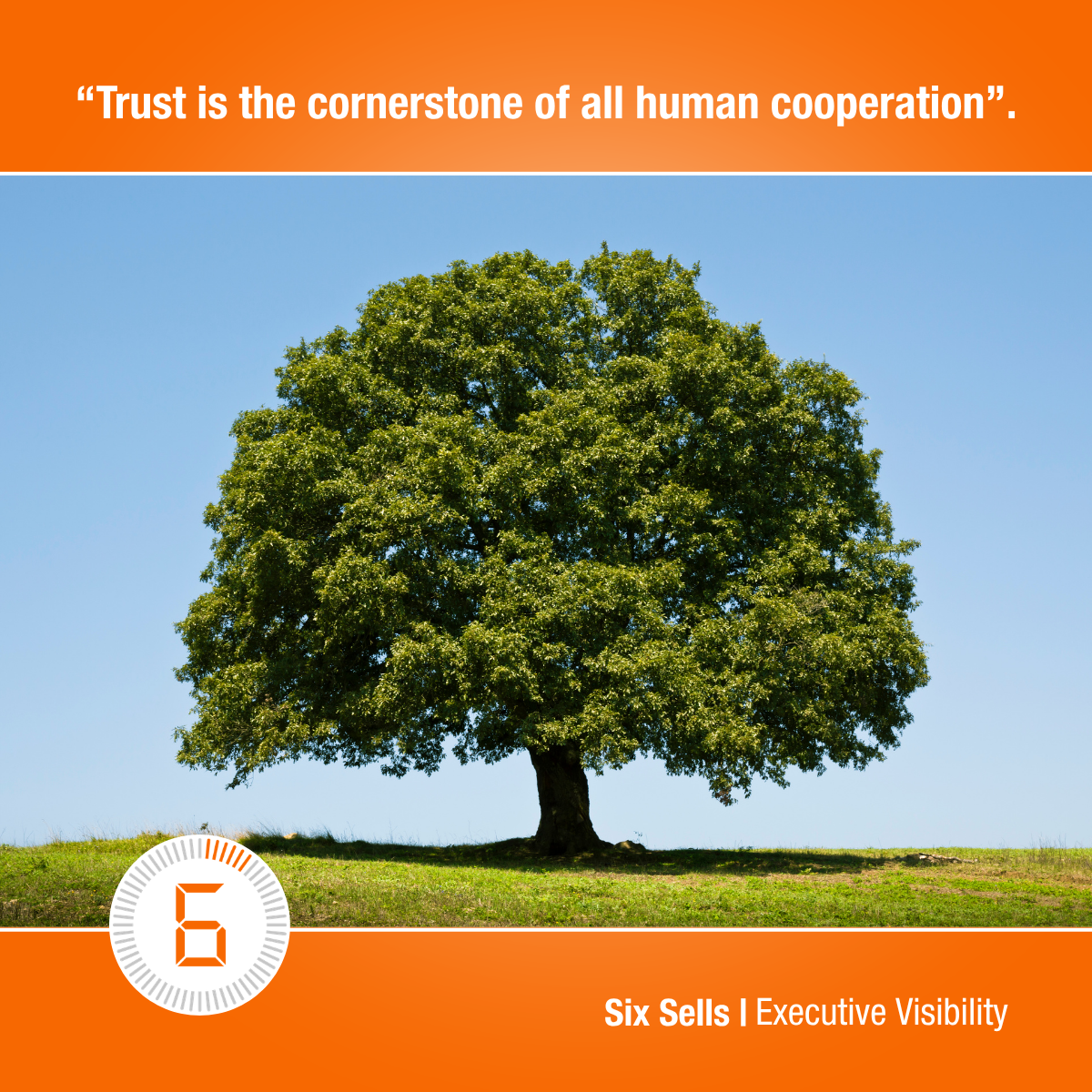
“Trust is the cornerstone of all human cooperation” That was a quote from the late, great Sam Tatam, who was Global Head of Behavioural Science at Ogilvy until he sadly passed way too young.
I am reminded of Sam's words when I think about the state of our newsfeeds, and what could happen if we don't fix them quickly. Below I have shared the three problems I am seeing, all three are interlinked.
The volume of content is up, but trust in that content is down:
The volume of content being published by companies and people is exploding, while simultaneously collapsing in trust. It is increasingly difficult to differentiate between what is real and what is generated by AI, and so I believe that brands - both people and companies - will become even more important in helping us to decide which content to trust. If you see a video of a world leader saying something utterly ridiculous, if the video was published like a brand like CNN, you will likely believe it is real. If the exact same video was posted by User 32443, perhaps you will not believe it to be real.
Quick, easy and trust are not good bedfellows:
There is a concept that behavioural scientists use known as costly signalling. Put simply, signals tend to be more credible when they require some genuine cost - time, effort, expertise or reputation.
Which means that if somebody thinks this was written in 10 seconds by Claude, it has virtually no value, because they could ask Claude themselves. They want to know what you think.
Seeing is no longer believing:
Since the 17th century, and perhaps even earlier, we have used the saying seeing is believing. Even a few short years ago, if you saw a video, you believed it.
Imagine two identical videos of a world leader declaring something ridiculous (a daily occurrence these days, it seems). Depending on who published the content, your reaction will be very different. If it was shared by CNN, then perhaps the video is real because there is a trust that CNN will only publish real content. If it's ‘user 6143’ or some unfamiliar person or company sharing it, we're more likely to believe that it's fake, or at least suspect that.
Without trust, most things collapse.
The solution?
We can only solve the corners of the internet that we can control. In business, that is our personal and company accounts online.
Make them trustworthy by acting ethically and transparently, and only publishing real content under each name. Trust builds over time, and in response to showing yourself to be trustworthy.
If we come to our news feeds every day and leave not thinking we've seen anything authentic or real, we'll stop coming.
I think the value to all of us right now is to publish real, authentic content over time so that people know if something comes from your account, it's real.
Real thoughts, real ideas, real experiences, real lived knowledge, written by real humans.
LinkedIn has the best data on this, as they have 1.3 billion on their platform. Their product roll outs swung from ‘write this post with AI’ to ‘Seems like AI slop’ and I think that should be instructive.
As the old saying goes, trust is like a great, strong oak tree. It could take decades to grow, but can be cut down in a morning.
Is it really worth trusting a predictive, quick and easy button with that?
Who is Six Sells?
Six Sells is a UK-based executive visibility and thought leadership agency that works globally with CEOs and senior leaders in media, advertising, adtech and technology.
Founded in 2018, we turn each executive's expertise into distinctive, authoritative content in their own voice, built to reach two audiences at once: the humans that matter to them, and the AI models those humans now ask for answers.
Our work combines executive ghostwriting, video, podcasts, photography and awards to build familiarity, trust and authority across LinkedIn, Reddit, YouTube, Substack, the trade press and the wider web.
We also help executives and their companies improve their visibility in AI search and large language models (LLMs) through generative engine optimisation (GEO), increasing the likelihood that platforms including ChatGPT, Google Gemini, Perplexity and Claude can discover, understand, cite and recommend their expertise.
Email hello@sixsells.co.uk for more information.
.png)

.png)



.png)








.png)




.png)


