
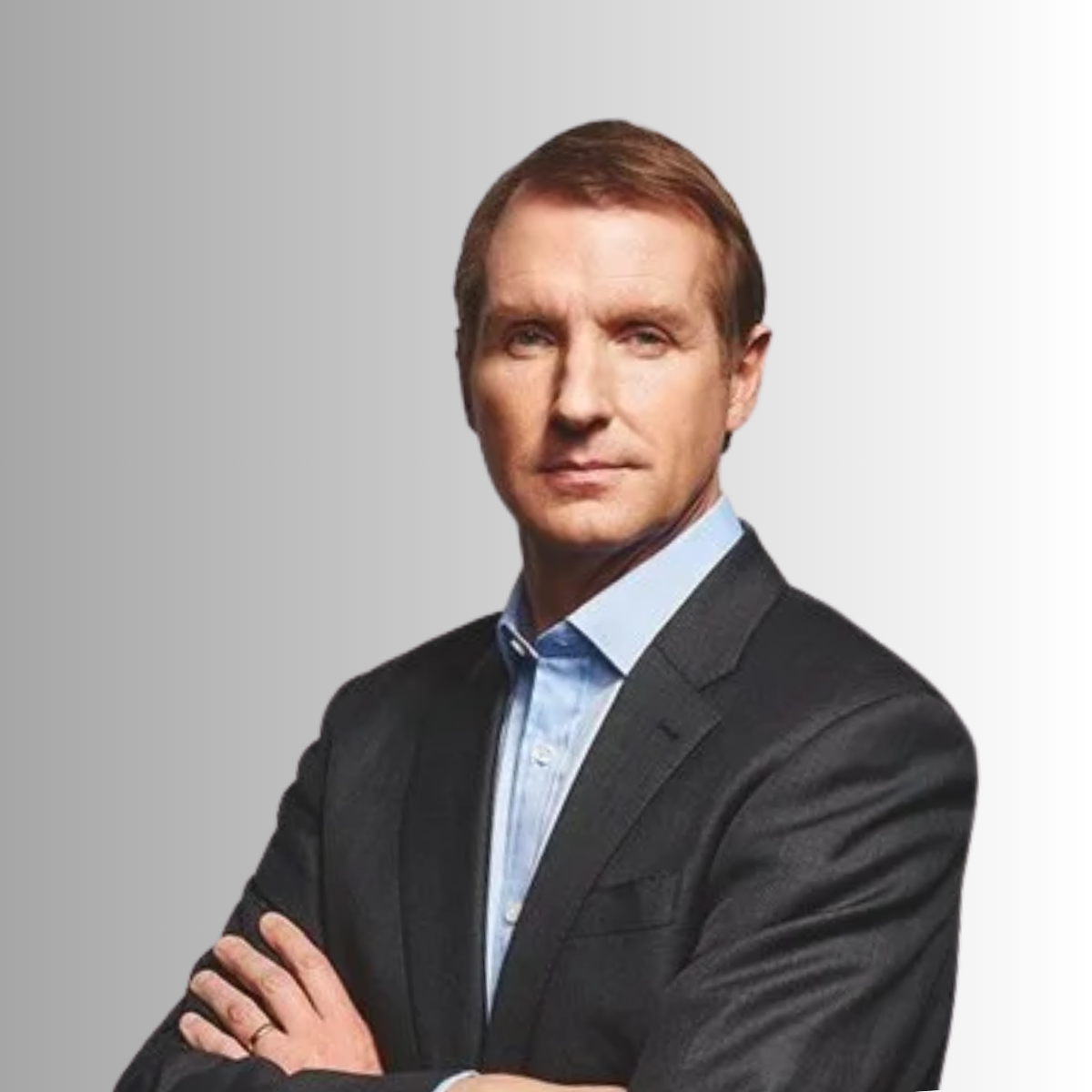
Henry Winter is one of the finest football journalists of the past 20-something years, and he may well be inadvertently showing news brands a glimpse into what the future of reporting will look like.
I have spent a similar number of years in the media and advertising industry, and a large part of that was either working for news brands or working with them as partners while employed by adtech platforms.
I was intensely proud to work at several leading news brands, but for the purposes of this story, I'd like to focus on The Telegraph.
What news brands have always been able to do is offer trusted environments for consumers. The Telegraph, at the time, had a 150-year history of delivering trusted news to a large audience. The published stories were believed because they were published by The Telegraph, and because they were written by journalists who were also trusted and well respected in their field.
I think there is an amplification effect between trusted people and trusted brands that is sorely needed in today's AI-slop world.
The advent of internet news has unfortunately accelerated the decline of many once great and mighty newspaper brands in print, but I think digital news brands are about to go through a fantastic renaissance.
That renaissance, at its core, is driven by the simple fact that people pay more attention to people than they do to brands, and is being embodied by Henry Winter.
I think the future of news brands will be ever more reliant on creators - people who can deliver news in the moment, in video and directly to camera, while being supported by the trust, authority and journalistic standards of an established news brand.
I was gutted when Henry Winter left The Telegraph for The Times, because I loved his writing and was proud that he wrote for a newspaper I represented. He was the face of football at The Telegraph for me.
Back then, when Twitter was huge, Henry had more followers than The Telegraph. Think about that for a moment. He was one football reporter working within an entire news organisation, yet more people chose to follow him than the newspaper he wrote for.
That didn't weaken the brand. Far from it, it strengthened it, because Henry became the front door, or should I say back-page gateway, into The Telegraph. Today, Henry has 1.1 million followers on X, demonstrating just how powerful an individual journalist can become while strengthening the reputation of the news organisation they represent.
Back when I was working at The Telegraph, as far as I'm concerned, he was the most respected football journalist of that era. I was working on launching Telegraph TV when video-on-demand content was very new, and at The Telegraph, we were pushing the boundaries of what was possible and trying to deliver news in video format.
We tried to get Henry to create content on video, but the early attempts were hit and miss, as he was a writer, not a presenter. However, anybody who has seen his World Cup content on X will see that he has improved exponentially at delivering his insights, thoughts and commentary in video format.
He still writes brilliantly, of course, but he is now a multimedia journalist, and I think that is what we need moving forward.
Storytelling has many components, but three of the most important are people, plot and place.
1 - People: who is involved?
2 - Plot: what happened?
3 - Place: where is it set?
Ideally stories told by a person.
As Henry wandered away from the England versus France game in the 2026 World Cup, he naturally brought all three story ingredients together beautifully, and as a person.
I wrote recently about how the saying "seeing is believing" is going away. It used to be that if we saw a video of somebody saying something, we believed they had said it because we had seen them saying it. AI has changed that, probably forever.
In this new world, where millions of people are investing huge amounts of time in video news feeds every day, the trusted voices delivering news that we can believe in matter more than they ever have, and they have always been important.
Unilever recently announced that it intends to work with 300,000 creators, and when one of the world's largest brand owners turns to people to deliver its messaging, you know the tide is turning.
Imagine a hundred creators (read journalists or people) working for a news brand and giving their followers a behind-the-scenes peek into how they uncover the people, plots and places where the news is made.
For all Henry Winter's brilliance, he is late to a party that Gen Z are crowding too, and he still has 1.1 million followers on X.
Hundreds of journalists out and about in cities across the country, reporting on politics, sport, fashion, travel and breaking news.
Imagine a journalist recording a breaking news video from the back of a taxi, having just landed a major scoop, but telling it in their own way, on a trusted platform, as a person.
That, to me, is what the future news brand could look like: a network of trusted creators who can deliver news in the moment, in video and directly to camera, backed by the authority of a trusted news organisation.
This would allow news brands that started in print, transitioned to digital and are now ready to take the final step into people-shaped video.
We are fast moving towards a world where young people do not know what to believe online. They do not know what is real and what is not, and trusted news brands have a heritage that could become even more important in that environment.
Sorry to keep using The Telegraph as an example, but you can take the boy out of The Telegraph; you cannot take The Telegraph out of the boy.
Imagine 100 journalists, all of different ages, backgrounds, passions and areas of expertise, all reporting for The Telegraph, and all giving consumers somebody they can choose to follow, listen to and engage with.
Further information on any given story would still be available through the written articles, but who is to say that The Telegraph brand will not look more like Sky News in 100 years' time?
Who is to say consumers will not increasingly decide where they get their news based on the creators they trust, backed by a trusted news brand?
A functioning democracy requires that we are able to trust at least some of the content in our newsfeeds, and trusted people, representing trusted news brands, is the way forward for me.
Who is Six Sells?
Six Sells is a UK-based executive visibility and thought leadership agency that works globally with CEOs and senior leaders in media, advertising, adtech and technology.
Founded in 2018, we turn each executive's expertise into distinctive, authoritative content in their own voice, built to reach two audiences at once: the humans that matter to them, and the AI models those humans now ask for answers.
Our work combines executive ghostwriting, video, podcasts, photography and awards to build familiarity, trust and authority across LinkedIn, Reddit, YouTube, Substack, the trade press and the wider web.
We also help executives and their companies improve their visibility in AI search and large language models (LLMs) through generative engine optimisation (GEO), increasing the likelihood that platforms including ChatGPT, Google Gemini, Perplexity and Claude can discover, understand, cite and recommend their expertise.
Email hello@sixsells.co.uk for more information.








.png)



.png)








.png)






















.png)









.png)


