
Search in 2026 with Yommi Alake on The Six Sells Podcast; In this episode of The Six Sells Podcast, Mike Nicholson speaks with Yommi Alake from Allwyn, the operator of The National Lottery, about search marketing, AI-powered search, app marketing and agentic AI.
Yommi explains why even highly recognisable brands need paid and organic search to protect existing demand, attract new customers and remain competitive. The conversation explores the difference between branded and generic searches, why understanding search intent matters and how marketers can make their campaigns more relevant.
Mike and Yommi then discuss how ChatGPT, Perplexity, Claude and Google's AI Overviews are changing the way people find information. As AI platforms provide more answers directly, businesses need to consider how their content is discovered, understood and cited, not simply where their websites rank in traditional search results.
Yommi shares his approach to Answer Engine Optimisation (AEO), also known as Generative Engine Optimisation (GEO), and argues that many of the fundamentals remain rooted in good SEO. Relevant content, technically sound websites, regularly updated blog posts, clear FAQs and useful videos all have a role to play.
Mike explains how Six Sells has approached AI search visibility and why large language models have become the company's largest source of new business enquiries.
The conversation also covers app marketing for The National Lottery, including Apple Search Ads, customer acquisition, conversion measurement and the restrictions involved in marketing regulated products.
Finally, Mike and Yommi discuss agentic AI, the difference between conversational AI tools and autonomous workflows, and how businesses can measure the value of AI through time saved, accuracy and operational improvements.
Topics discussed include:
- Yommi Alake's marketing career and his work at Allwyn.
- Why established brands still need paid search and SEO.
- Protecting branded search visibility against competitors.
- Finding new customers through generic search terms.
- The importance of search intent and keyword relevance.
- Continuous search optimisation and reducing wasted expenditure.
- How AI answer engines are changing search behaviour.
- Why zero-click searches affect industries differently.
- The relationship between SEO, AEO and GEO.
- How businesses can monitor citations in ChatGPT, Perplexity, Claude and Google AI Overviews.
- The role of AI visibility monitoring tools and MCP connections.
- How personalisation affects AI-generated recommendations.
- Why evergreen blog posts and FAQs should be updated regularly.
- The importance of YouTube videos for AI search visibility.
- Six Sells' experience of generating enquiries through LLMs.
- Measuring AI referral traffic in analytics platforms.
- The differences between AI adoption in small and large businesses.
- Mobile app acquisition, registration and conversion.
- How Apple Search Ads compares with Google paid search.
- Responsible-play safeguards and advertising restrictions.
- The difference between AI tools and agentic AI.
- Automating marketing reports, CRM administration and other repetitive workflows.
- Measuring AI ROI through time saved and errors.
- The challenges of AI token pricing and usage limits.
Why do well-known brands like The National Lottery still need paid search and SEO?
Well-known brands still need paid search and SEO because brand recognition alone does not guarantee that customers will find them, choose them or remain loyal to them.
Yommi Alake explains that search marketing helps businesses protect existing demand, defend their visibility against competitors and reach people who are not already looking for their brand.
Organic search helps a company build relevance and authority over time without paying for each click. Paid search offers a way to compete for commercially relevant searches through advertising.
For The National Lottery, the objective is not simply to appear when somebody searches for its name. It is also to reach eligible people looking for lottery products more generally.
Yommi argues that search should be connected to commercial outcomes. Marketers need to understand which searches matter, where competitors are appearing and how to make the best use of their budgets.
What is the difference between branded search and generic search intent?
Branded search happens when somebody is looking for a particular company, while generic search happens when somebody is looking for a product, service or solution without necessarily having a brand in mind.
Yommi Alake uses The National Lottery to explain the difference.
Somebody searching for "National Lottery" already knows which brand they want. But somebody searching for "lottery games £1 or less" is expressing a product requirement rather than choosing a provider.
If The National Lottery offers a product that meets that requirement, appearing for the generic search creates an opportunity to attract a new customer.
Relevance is essential. Showing somebody a £5 product when they have specifically asked for something costing £1 or less may mean losing their attention to a competitor.
Yommi recommends continually analysing search terms, identifying opportunities and refining campaigns. What worked last year or even last month may not be the most effective approach today.
How are ChatGPT and AI answer engines changing traditional search marketing?
ChatGPT and other AI answer engines are changing search marketing by providing answers directly, reducing the need for users to visit websites for certain types of information.
Mike Nicholson raises the growth of searches that do not result in a click, and Yommi Alake explains why the effect varies between industries.
Somebody looking for an explanation of a legal rule might get everything they need from an AI-generated summary. Somebody intending to purchase a product, book a service or complete a transaction may still need to visit a website.
This distinction matters because not every search has the same intent.
Yommi believes businesses should understand whether their customers are looking for information or trying to take action before assessing the impact of AI search on their traffic.
The challenge is no longer only how to appear in traditional search results. Businesses also need to consider whether AI systems can find, understand and cite their content.
What is Answer Engine Optimisation (AEO), and how is it different from SEO?
Answer Engine Optimisation (AEO) focuses on making content useful and discoverable for AI-powered answer engines, while search engine optimisation (SEO) traditionally focuses on visibility in search engine results.
Yommi Alake and Mike Nicholson discuss the terms AEO and Generative Engine Optimisation (GEO), with both expressing a preference for AEO because it describes how people use AI platforms to get answers.
Yommi's central argument is that AEO is closely connected to established SEO practices.
Businesses still need technically sound websites, relevant content, clear answers, appropriate structured data and regularly maintained information.
What changes is how visibility is assessed.
Alongside traditional rankings and website visits, businesses increasingly want to know whether ChatGPT, Perplexity, Claude and other platforms are citing their content when answering relevant questions.
Yommi recommends building on existing SEO foundations rather than treating AEO as a completely separate discipline.
How can businesses track their visibility in ChatGPT, Perplexity and other AI platforms?
Businesses can monitor AI search visibility by tracking commercially relevant prompts, reviewing which sources are cited and comparing their presence with competitors.
Yommi Alake describes specialist monitoring tools that can help marketers investigate how their brands appear across different answer engines.
A business might start with a list of 50 questions or prompts relevant to its products or services. Monitoring those prompts can help identify whether its content is being cited and which competitors appear alongside it.
The next step is to examine the content being referenced.
If a competitor is cited for a question that the business should be able to answer, the company may need to create new content, update an existing page or improve its FAQs.
Yommi also discusses Model Context Protocol (MCP), which can connect tools and data sources so marketers can query reports conversationally rather than reviewing everything manually.
Mike questions how complete the underlying data can be when AI platforms do not disclose every user conversation. This remains an important consideration when interpreting visibility reports.
Why are FAQs, blog posts and YouTube videos important for AI search visibility?
FAQs, blog posts and YouTube videos can help AI answer engines find relevant explanations and answers to the questions people ask.
Yommi Alake recommends regularly reviewing existing website content rather than publishing articles simply to maintain a schedule.
Evergreen blog posts should be updated when information changes or when customers begin asking different questions.
FAQs are particularly useful because they organise information into a direct question-and-answer format. Yommi encourages businesses to make sure those answers are clear and relevant.
He also highlights YouTube as an important source of information for AI-generated answers.
Mike Nicholson explains that Six Sells publishes podcast videos and has started adding complete transcripts to its website alongside episode summaries.
That approach makes the expertise shared in long-form video conversations available as searchable text.
Yommi's broader point is that businesses should consider content across different formats and platforms, making sure it remains useful, accurate and appropriate for its audience.
How does personalisation affect which brands AI answer engines recommend?
Personalisation can affect AI-generated recommendations because an answer engine may use information about a user's preferences and previous interactions to determine which answers are most relevant.
Mike Nicholson asks how businesses can optimise for AI search when two people entering the same question might receive different responses.
Yommi Alake argues that the answer is to focus on relevance.
He uses the example of a business specialising in English breakfasts. If its content clearly explains what it offers, that business may be a relevant source when an AI system is answering a question for somebody interested in that type of breakfast.
Businesses cannot control every personalised response, but they can make their expertise, products and intended audiences clearer.
Yommi sees this as another example of AEO building on established SEO principles rather than replacing them.
How does app marketing work for The National Lottery?
App marketing for The National Lottery focuses on attracting eligible users, encouraging downloads and registrations, and measuring activity while maintaining responsible-play safeguards.
Yommi Alake explains that mobile apps make it easier for customers to access products without needing to visit a retail location or use a computer.
From a commercial perspective, marketers need to understand installation numbers, acquisition costs, registrations, usage and transactions.
However, Yommi stresses that The National Lottery operates in a regulated category.
The business has safeguards designed to encourage responsible play, including deposit and play limits.
Marketing restrictions also affect customer acquisition. Yommi explains that certain remarketing practices available to businesses in other sectors cannot be used in the same way for lottery products.
This makes it particularly important to reach eligible people who are actively searching for relevant products.
How is Apple Search Ads marketing similar to traditional paid search?
Apple Search Ads is similar to traditional paid search because advertisers can target relevant keywords and compete to appear when people search for products within the App Store.
Yommi Alake explains that marketing an app involves many of the same questions as marketing through Google Search.
Which terms should a brand target? Where are competitors appearing? How relevant is the result to what the user wants?
For The National Lottery, this includes protecting visibility for branded searches and appearing for relevant category searches.
Yommi also discusses advertising opportunities outside direct search results, including placements aimed at people exploring the App Store.
Because The National Lottery is a regulated product, audience eligibility and platform advertising restrictions remain important considerations.
What is the difference between an AI tool and agentic AI?
An AI tool typically produces an answer or output in response to a request, while agentic AI can perform connected, repetitive workflows using predefined instructions and access to relevant systems.
Yommi Alake explains that conversational tools such as ChatGPT and Claude can be useful for research, analysis and content creation.
Agentic AI goes further by carrying out processes that would otherwise require people to repeat the same steps regularly.
He gives the example of a marketer who spends Monday mornings gathering performance data from multiple advertising platforms.
An AI agent could potentially collect that information, review it and prepare a summary automatically.
Mike Nicholson shares a similar example from Six Sells, where automation helps identify CRM records that need updating and opportunities that have not been captured properly.
Both agree that practical workflow automation offers significant opportunities for businesses, provided there is appropriate human oversight.
How should businesses measure the return on investment from agentic AI?
Businesses should measure agentic AI by the time it saves, the reliability of its outputs and the commercial value of the work it performs.
Yommi Alake argues that simply adopting AI is not evidence of success.
A more useful approach is to identify a repetitive task, measure how long it currently takes and assess whether automation reduces that time.
For example, a two-hour reporting task might become a ten-minute review of an automatically prepared report.
However, Yommi stresses that accuracy matters as much as speed.
Businesses should track errors, review AI-generated work and make sure automated processes are delivering the intended results.
He recommends starting with manageable tasks, proving their value and then exploring more complex workflows.
Why is AI token pricing a challenge for business users?
AI token pricing is challenging because many users do not know how much work a token represents or how much a particular task will cost.
Mike Nicholson compares the uncertainty with the early days of mobile internet, when people could receive unexpectedly large bills because usage costs were difficult to understand.
Yommi Alake agrees that AI platforms need to make token consumption more transparent.
He discusses his experience with Higgsfield, where seeing the token cost of different AI content generation tasks helps users understand what they are spending.
Both believe clearer cost estimates would make it easier for businesses to decide which AI tools and models are appropriate for particular tasks.
Understanding the likely cost of a task would also help companies compare AI expenditure with the time and money required to complete the same work manually.
What is The Six Sells Podcast?
The Six Sells Podcast is for people working in marketing, media, advertising, adtech and technology. There are over 150 episodes (and counting), and the biggest episodes have achieved 30,000 views across all platforms. Want to get in touch? Email hello@sixsells.co.uk
Who is Six Sells?
Six Sells is a UK-based executive visibility and thought leadership agency that works globally with CEOs and senior leaders in media, advertising, adtech and technology.
Founded in 2018, we turn each executive's expertise into distinctive, authoritative content in their own voice, built to reach two audiences at once: the humans that matter to them, and the AI models those humans now ask for answers.
Our work combines executive ghostwriting, video, podcasts, photography and awards to build familiarity, trust and authority across LinkedIn, Reddit, YouTube, Substack, the trade press and the wider web.
We also help executives and their companies improve their visibility in AI search and large language models (LLMs) through generative engine optimisation (GEO), increasing the likelihood that platforms including ChatGPT, Google Gemini, Perplexity and Claude can discover, understand, cite and recommend their expertise.
Read more at https://www.sixsells.co.uk, or email hello@sixsells.co.uk for more information.
Full episode transcript
Mike Nicholson: Hello and welcome to The Six Sells Podcast. My name is Mike Nicholson from Six Sells.
Before we jump into today's episode, I just want to say a huge thank you to the team at Intelligent Assistance. Not only are they partners of Six Sells, but they're also sponsors of this podcast. So thanks again to the team over there.
Intelligent Assistance combine human intelligence with artificial intelligence to solve real business challenges. And they believe in a process of human first, human last, which really chimes in with the way that we think about things at Six Sells.
So thanks once again to the team at Intelligent Assistance. And let's jump into today's episode.
Yommi, how are you doing?
Yommi Alake: Yeah, I'm good, thank you.
Mike Nicholson: Good. We had to rearrange this a few times because of the London Tube strike, so it's good to finally get to meet you and get you in. Thanks for your time today.
Yommi Alake: Absolutely.
Mike Nicholson: Traditionally, we like to kick off with a little bit of a potted history of your career to date, so could you maybe tell us what you've been up to in the run-up to working at Allwyn, please?
Yommi Alake: Yeah, definitely. We did have to move this a few times, and I'm glad to finally be here, having this chat with you, Mike. And again, thanks for the opportunity.
My career has been interesting. I'm a marketing professional, up from scratch, the early days, agency life. Started out small as a young executive, worked across the breadth of marketing, as you have it. So that involved all media, digital, out of home and all of that.
It gave me that really solid foundation and broad marketing knowledge to start on.
As I then climbed up the ladder, growing from business to business, I tilted more towards digital. And within that space as well, it was quite broad before I then, most recently, in the last four to five years, sort of channelled through into search, organic, app marketing, just basically that lower-funnel conversion point, really trying as much as possible to move the numbers to support the business and be part of the commercial conversation.
Basically, that's where I am currently. In my current role, that's what I do as a manager, driving that business conversation, those commercial numbers as much as possible, contributing as much as possible to it, myself and the team, obviously. It's not a one-man job. And that has been rewarding, I would say.
Mike Nicholson: Okay. So for those that might not be search experts, they might think, "Why on earth would your brands need search? Because they're so well known, people just go straight to them."
So what does organic and paid search look like in your world for the brands that you're working on?
Yommi Alake: Yeah, I mean, you get some of those sometimes where we know what the brand is and why do you need to pay money to do this? And even within the business sometimes you get a bit of that here and there.
And that's the point of educating people as much as possible, because you would want as much as possible to go beyond people who know you, whatever kind of business you're in. Not just our own kind of business.
So if you're Apple, if you're Coca-Cola, wherever you are, you still advertise, you still want to push out even if people know you. You still push out. Staying top of mind is one thing.
Secondly, you want to, if your base today is 100K, just random numbers, you potentially want to grow that as big as possible. So go out there.
And then of course another point is there's competition out there. You're not the only person in the water, so as much as possible you want to fend off those competitors and do it properly, making sure that you're protecting what is yours.
Otherwise, what you'll find out is, yeah, they know you, but somebody comes in, offers them something interesting, they have a look at it, they buy it, and you've lost them. We don't want that to happen.
So these are some of the reasons why we want to stay top with search and whatever kind of marketing we do. No matter how much industry ownership you think you have, you want to stay on top of that.
And so for us that's what it is.
When you look at paid search and you look at organic, basically with organic, as much as possible, what you're trying to do is save yourself money. Really look at it that way.
Okay, yeah, I want to be top, I want to be present, but I want to be able to do that without spending a pound. That's where organic comes in.
And that's where relevance comes in. That's where authority comes in. And then that's when you can say, in this industry, in this vertical, I'm the guy. And organic helps you deliver that over time.
It's a slower process. It's a more technical, more planned-out approach to achieve that and get to that point.
And the shorter route, in a sense, will be paid, and that's where paid search comes in as much as possible.
So take, for instance, Google. You pay for certain things. You want to show up certain ways. Even all of that is changing bit by bit today.
But the way we've run it up until recently is you pay for keywords, you rank for those keywords. If you're relevant for this keyword, Google puts you first or second, whatever the case might be, above your competitors.
And there's a whole lot of dynamics to that that is changing. But that's what we do.
And again, the reasons for doing that are, yeah, I really want to stay relevant and to make sure that my audience, I'm not giving out to my competitors to lean into and to win over from my business.
And obviously, I also want to expand beyond today's audience. I want new entrants.
Imagine if, for instance, you're working in a business where it's strongly age-restricted in the sense that you're not allowed to either market or even sell, not even market now, you're not allowed to sell to underage because of the sensitivity of the vertical.
But every year, people cross that age boundary, right? They stop being 17, they start being 18.
And every year that happens. So there are new entrants to the market, addressable market for yourself, and you want to be the one grabbing a load of those new entrants.
If you're not present, if you're not active, someone else will be.
So that's some of the things search and even other channels help you deliver on and help you grow.
In some businesses, you find out that there could be a business challenge where the bulk of your audience, or what you call your regular customers, are maybe a certain demographic and you're trying to change that.
And that's where marketing does. You could channel that properly. You could use certain channels to deliver on those promises and make sure those are also contributing to commercial numbers as much as possible.
So yeah, we in our space, we're quite authoritative in terms of our coverage. We're quite known, we're quite popular.
For these reasons, we want to grow, we want to be bigger, and we want to make sure that the guys who are trying to steal part of the pie do not get as many wins as they would hope to get.
Mike Nicholson: Yeah, sure. So I want to come on to how you find new users.
If I think about the user journey as a user that I know the National Lottery, let's say, so I type into the address URL, National Lottery, National Lottery comes up, I click, I go through. Fairly self-explanatory.
You want to defend against somebody trying to bid on a keyword to be above that, so they end up going there.
Yommi Alake: Absolutely.
Mike Nicholson: So I get that. But what about if that isn't what I'm looking for? Are there any kind of tangential search paths that you go on to try and find people that may be looking for something slightly different, but then discover you through that search process?
Yommi Alake: Yeah, I mean, sometimes people are not looking for your brand specifically, but they are looking to participate in what you offer, if that makes sense.
So we're the National Lottery, and someone might not be looking for the National Lottery. They don't know about the National Lottery, which would be quite something, but maybe they don't know about the National Lottery.
Or they're like, okay, I'm looking for the best opportunity out there, the best value or the best proposition out there.
So for instance, let's say playing a lottery as an example. I could say, okay, I want to play a lottery, but I want to play a lottery that is not more than £1 per ticket.
So my searches could be, say, lottery games £1 or less, right? It could be that.
So that person, whoever that searcher is, is not looking for National Lottery, or they don't know that yet, and they're just looking for what are the options.
So those are the kind of searches, those are the kind of generic keywords, if you like, that you also want to be present in. You want to be aware of, you want to be present in, and you want to make sure that you're also showing up for those.
So in this kind of instance, if you have specific products that align with that search, then that's where you want to push with those kind of keywords.
Which also goes into how you really structure and plan your whole outlook and your campaigns, so that you want to make sure, as much as possible, when people search for certain things, what you're showing them is relevant.
If I'm searching for what I just explained, for instance, lottery games that are less than a pound, and you show me something that will cost me £5 or £2.50 or whatever the case might be, you might lose me.
There's a chance because I've been specific about what I want. If there's someone else further down who is being relevant with my search intent, then yeah, they get a buy-in most likely. They win that click most likely, right?
So it's also part of the major work you have to do as an expert, understanding what that search trend does look like, what that search term looks like, which involves all of the analysis that we do.
What are people searching for?
You have different tools used for that. It could be within your paid search account. It could be within your Google Search Console account, where you want to see what are people searching for that I'm not bidding on, that I'm not present on, but are super relevant to me.
And you want to make sure that you're also present there, either from a paid or organic point of view.
So it's a continuous, if you like, optimisation effort, where the only way to win and keep winning is to be on your toes and optimising.
Sometimes the things that worked last month, last year, no longer work today for whatever reasons.
You want to pull back on those. You want to cut back on wastage, making sure that you're putting that money into somewhere else.
And obviously that dynamic goes on and on. And then with AI also in the mix today, it's a different kettle of fish as well. How you do that, how you optimise for that, how you're making sure those clicks still come to you.
So yeah, really staying relevant, really staying alive with your search terms and the work that goes into doing that and doing that efficiently is one of the secrets and one of the weapons that you have in the job.
And that's really, at the end of the day, what starts separating you from your competitors.
Because at the end of the day, they're in the same auction with you. They probably offer very similar propositions and products to yourself.
So why should either you come above them or why should a user click you above theirs? It's down to how much work you've put into it and how much relevance.
Relevance is a big deal in this sector. Relevance is a big deal in this side of marketing. It has to be relevance.
TRANSCRIPT CONTINUES
Mike Nicholson: Okay, so we've talked about the direct to the National Lottery. So I know already that I want the National Lottery, I type in the National Lottery, I come to the National Lottery.
Then we've talked about I want games under £1 or less, and then that's how hopefully you've done a good job to try and find them.
But there's a whole other game in town, obviously, over the last few years, and that's LLMs, people searching in LLMs, where the search term could be much, much longer.
It might be, I don't know, I want scratch cards that are under a pound that give me the best odds. What are the best ones? The scratch cards that give me the best odds of winning?
And then it goes off and looks wherever it looks, and it comes back again.
How do you think about working with LLMs?
I saw a crazy stat recently, I think it was from Similarweb, that 75% of searches in Google now don't result in a click. Which feels like the biggest change in search. I'm not a search expert, I wouldn't say, but I would say it's probably the biggest change in search since search began, right?
Yommi Alake: Yeah, there's no denying that fact that LLMs have come and, over the last few years, one, two years ago, they've gotten really better. The landscape has gotten way bigger.
ChatGPT, as an example, has, I think, about 90 million weekly users, which is somewhere around 1999, somewhere that's where the number is. I could check that, but that is massive.
And yes, what you said around what Similarweb is saying, around search no longer resulting in clicks, that's to a large extent correct.
And I'll talk about that in a bit because it's easy to understand. You search for something, either an overview or you do it in ChatGPT, and you get that conversational response.
You read through it, you most likely get all of the information you need. And because that information has been sourced from different sources, put together, aligned for you in the way that makes sense, that answers your question, you have your answers.
You don't need to click through anywhere to get any more information.
If you have a follow-up question, you could just write in there, get the conversation going. That's why it's a conversational chat.
So that has really impacted click-through rates across the board.
Yes, 75% thereabout, Similarweb could say that. But I would also say it varies from industry to industry.
Some industries, it could be as high or even higher than that.
For instance, if you're searching for a term around law, you want to understand what this law says, what this legal says, what all of that. You most likely don't need to click through to understand what is a summary of it.
Okay, I get the gist. Moving on.
Unless you get to the point where you need to then get into a consultation with a legal practitioner, then perhaps you want to. That becomes a lead click, and then you want to book an appointment.
That's a different conversation.
But if it's just information, I want to understand this. You've got a parking ticket. You want to understand how the laws around parking tickets work.
You do that search, it comes up, you read through it. You really don't need to click to another person's website to get that information.
Other industries, like similar to ours, when people search, they want to take action. They are not searching for information most of the time. Some of the time they are, but most of our searches are intent-to-action based.
So if you examine it from a vertical-to-vertical point of view, then you will see that some verticals, the click-through rate drop is not as high as it's been reported in the headlines.
Whereas in some verticals, yeah, I totally agree, it's 75% or higher, and it gets crazier.
So that's where I say the difference is.
And for us, and for most businesses, I would say the workaround with that is really being on top of your game.
LLMs have come, they are here, they've come to stay. There's nothing anybody can do about that.
ChatGPT is here, like I just said, the astonishing number of weekly users that we have, and they keep expanding.
Mike Nicholson: I think it just passed a billion last week.
Yommi Alake: Yeah. So it is unbelievable.
So as a business, what you want to do as much as possible is, okay, first of all, you need to decide, do I want to be the source being cited by the LLMs?
Which some businesses have become. In recent conversations, in recent engagements, I've seen businesses really, really keen on being that.
I don't want my competitor's brand being cited. I want to be the one cited. How do I ensure that happens?
Some of the early business questions that have been asked, and questions that have been asked to marketers today to solve, like, okay, how do I make sure I'm the one cited?
Yeah, we know how SEO works, the older sibling. We know how it works. We know all of the technicalities and all of that.
But this new guy on the block, Answer Engine Optimisation, which is the coined word for it now, AEO. How do we optimise for AEO?
Mike Nicholson: I love that you call it AEO. I prefer AEO. Loads of people call it GEO. I prefer Answer Engine Optimisation. It feels like the way that consumers use it.
Yommi Alake: Exactly. It's an answer engine. Some people say, yes, that's from the generative. I call it AEO.
But recently, as recently as a few months ago, Google did come out to say there isn't really any differential mechanics or things that they put in place, that's Google, in terms of how AI Overview now specifically determines what content to rate.
The techniques and all of the things that you do with SEO still apply.
So basically what they're saying is if you're doing SEO and you're doing well and you're excelling at it, then you should have no problem ranking, or being cited, let's call it not ranking now, being cited by the answer engines.
You should have no problems.
And thankfully, recently, there's been a flurry of tools that are sort of measuring that for you or showing you what that looks like.
So for instance, there are a few tools in the market that I've interacted with where you could check, okay, am I being cited? How often am I being cited? Are my competitors being cited on certain keywords?
Not keywords, prompts, because LLMs use prompts, longer text, conversational.
So what you could then do is have a list of prompts that you think is relevant to your business or your product, put in some of these tools, and they could track that and even give you more suggestions of prompts in that space.
Mike Nicholson: If I'm correct in this, though, that's not telling you directly what is being asked of LLMs because that data is kind of closed shop, right? It's just telling you general search terms.
Yommi Alake: Yeah, well, it's telling you general search terms, but it's also telling you, well, if you give it a list of 50 prompts, it's going to be able to tell you which of these have been searched in one way, shape or form.
I mean, one or two words might be a miss, but the general idea of it, which of these have been searched.
And then it could tell you from its own bank and its exposure what else in addition to that. And you could add that to your projects and say, okay, I also want to track this.
And with that, basically, what you can see, top level, you can see how often it's been cited and by which LLM: Perplexity, GPT, Claude, AI Overview and so on.
You can see all of that.
Okay, if they're citing this, what specific content are they citing regarding this prompt? What specific content?
So if you're citing it from my website, what specific content on my website? If you're citing it from a competitor, what specific content?
So you could drill down into all of that and understand it, see where your own gaps are as a business.
Okay, I'm lacking here. I don't have the answer to this question, hence why I'm not being cited as often.
Do I want to do something about it? Do I need to create content? Do I want to tweak existing content, one of my evergreen contents, and make it more relevant?
Do I want to look into my FAQs, which is a big part of what LLMs use?
The FAQ section on your website is very, very important. You want to make sure they're answering the right questions because in conversations with LLMs, people are asking questions and they're getting responses back.
If your FAQs are properly worded, it's easier for the LLMs to do.
Mike Nicholson: Okay, super relevant question-and-answer format.
Yommi Alake: Exactly. Question-and-answer format. Pick it up, throw it right back, and boom, you're cited.
So you want to make sure that you're also on top of that as much as possible.
And then some other technical bits around your schemas and the rest of those that you have to do properly from an AEO optimisation point of view.
But it still boils down to some of the things that you should normally be doing, even in the world of SEO. You just need to be a bit more on top of it now with AEO.
And yeah, with those tools, where the work can be daunting in terms of, do I need to look into every prompt? Where is it showing? What content is it? Where is it showing my competitors?
If you have a list of 50 prompts which are top of mind for you, then that's a lot of work. You don't want to spend hours doing that.
Some of those tools, again, they've gone further on to create MCP solutions, which is Model Context Protocol.
Basically, with MCPs, you can then connect that to some of your data and you can just sort of prompt it the way you would go into ChatGPT and say, what should I have for breakfast, as an example?
If you then have a tool that you're using to track some of your stuff, you could then have an MCP that gives that kind of local interface and you could say, what are the prompts that I've been ranking for? Or how many times have I been cited in the last one week, in the last one month?
And rather than you going into the data one by one, it just brings that to you in a conversational way and you just read it.
Mike Nicholson: Where is it getting that data from? Because the LLMs are all closed shop, right? They're not sharing that information with anyone else, as I understand it.
Yommi Alake: Oh yeah, they are.
Some of the monitoring tools that we use in marketing, even from an SEO point of view, let's say, for instance, Ahrefs as an example, some of those monitoring tools that are already doing SEO monitoring and reporting for you, it's a similar thing they use.
So in the back end, there are APIs, there are plugins that they could work with the existing LLMs and get some information out and have that ready for you.
So yes, it's not all that close-knit as we like to think.
But it will be data of what has already been. That's what obviously they can get access to.
So this search has already happened. And when this search happened, we cited XYZ, ABC. And then they can see that.
Mike Nicholson: What sort of sample is it giving you? Is it saying that this was 5,000 times, this one was 10,000 times?
Yommi Alake: Yeah, it gives you that granularity of the number of times, the frequency.
It gives you that frequency, gives you that kind of sample size. It gives you how many other businesses are also being cited for something similar and all of that.
So it gives you that real comparative data.
And with the help of an MCP, you can really query that data easily in English language and not go into data and try to make sense of it.
We're in the AI world. Nobody should still be doing that ideally.
So you have that at your disposal, use it, and then that way you get this information.
And then it saves you time to get into optimisation.
So if you query it, you get the response, you see where the gaps are, you know what to do, and then you can get on to doing the actual work rather than spending time looking into data line by line and trying to make sense of it.
So it's what I say about the general use of AI.
When businesses or marketers adopt AI and all of that, what you want to be clear about is, I think we've almost passed that space of, oh, I'm using AI, so we're a forward-looking business because we're adopting AI in our processes and whatever else.
The measurement, the ROI for you as a business should now be more around, is it saving us time? How much time is it saving us?
That's really what makes sense. That's really what starts justifying whatever money you're paying to have those tools at your disposal.
And then the other thing you also want to be mindful of is, are there errors?
Because yeah, it's still AI, and there can be errors, and you should be mindful of that and be on top of that and checking those.
So checking that, tracking that and documenting it against time saved is your measure of your ROI when it comes to AI adoption within any business, I would say.
Either from a marketing point of view or from a content point of view or from an operational and admin point of view.
Whatever you're using it to do, you want to be able to say, all right, it's saving us X amount of time. This is the number of errors, or no errors, we recorded in X period of time.
Then you can say, okay, this is looking like a smart investment, and yeah, we should expand on it.
Mike Nicholson: Okay, so if I was to search, to use your example, for what should I have for breakfast, and you were to search for that exact same term, we would get very different answers.
Yommi Alake: Of course.
Mike Nicholson: Because ChatGPT knows a lot about you and it knows a lot about me, and it'll kind of use that data.
So how do you normalise for that?
If you're trying to say, okay, these are the top searches in ChatGPT, let's say, so that's great, but how do you know?
I guess the answer is you don't.
But let's say 75% of this particular search term came from people that were in the South East and, I don't know, white-collar workers, let's say.
And the reason that came up is because the data about those people was similar, and therefore ChatGPT gave them answers based on their similar data.
I'm not sure I'm explaining it very well, but it's very difficult to know why your answer and my answer are so different, and how you can plan for that.
Yommi Alake: I think I'll go back to relevance.
What is relevance for everyone?
And like you said, the account knows you, my account knows me. Obviously, there have been previous interactions. It understands my person. There have been data of myself that I most likely have shared in various conversations, and likely for yourself as well.
When we do our whatever, even if we do the same searches, if it's trying to tailor the response to something that is relevant for me, it will go in search of places where it can find content or answers that are relevant to me.
And the same goes for yourself.
Now, that job then goes back to what is the business at the back end of it?
If I'm the one providing breakfast solutions and I know it's a niche breakfast I'm providing, for instance, if it's just English I'm providing and nothing more, then I want to make sure that the content and whatever else I'm using to optimise my visibility is geared towards such that if the crawling agents of the AI are going through the web and searching for relevant content, somebody who might likely want to have an English breakfast, you become a preferred source and they can reference.
So again, somebody who is a bit more varied in their options and they're not so niche, then they can probably show up or be referenced, maybe not top, maybe somewhere down the line and all of that.
So I think the keyword there is relevance.
From yourself as the user, if the agents understand you and understand what's relevant for you, and from the end business as well, what is relevant in terms of that content, in terms of that business positioning, how well have they done a good job of that?
Then that match happens.
So I guess that's roughly how it would really work.
And again, go back to the earlier point I was making about it's not so far-fetched from what we've been doing with SEO at the end of the day.
If you think about it thoroughly, if you really understand SEO as it were, you will see that it's really not so far-fetched.
It's just, I think with this one, and because it's still new stuff, people have been a bit more on top of it.
They've been more, what's going on? A lot of questions. Senior business stakeholders are asking and asking.
So a lot of people, a lot of conversation, a lot of jitteriness.
But when it all settles, I think we're all going to find out, well, if you do your SEO right, all of these things should work.
If you do it right to the detail, all of these things should still work.
That's my position in all of this, to be fair.
Mike Nicholson: Do you know, for our own business, for Six Sells, we hadn't really spent an awful lot of time worrying about SEO.
And then about eight months ago, I asked a bunch of senior marketers what they read when they're going about their daily week, the typical marketing week.
Campaign, LinkedIn.
But then a couple of them said something to me that really made me stop and say, I don't get to read much. I flick through Campaign sometimes because I still like great advertising.
If I want to know something, I just ask ChatGPT.
And I was like, okay, wow, this is obviously being used as a business tool. People are querying it.
Multi-query queries as well. It's not just one and done, is it, always? It's like you ask a question, then a follow-up question and kind of drill down.
And so we spent eight months trying to get our head around it.
So I was basically evenings or weekends, I was just immersed in learning SEO, AEO.
I'm glad we agree on AEO. I think we need to start a petition or something.
And we managed to get to the point in that eight months where, through our process of audit, align and amplify, which I'll kind of unpack a little bit, we've got to the point where LLMs are now our biggest lead source through this process.
Which is mind-blowing.
It was always recommendations first, then LinkedIn inbound, where people had seen our content and got in touch.
And they've all just been pushed down, and LLMs are at the top now.
It's mainly easier for us because we're a very small business and all new enquiries come to me, so I can ask the question and find out.
But it's much harder for the National Lottery or a really big brand like that to kind of figure out, where did this user come from?
How do you think about trying to figure out if there are certain LLMs that you're optimised to much better and therefore you have to sort of focus on the others, or how do you think about that?
Yommi Alake: Yeah, I mean, on that last bit, not necessarily optimise one LLM or the other.
I think where the market currently is, is you just want to do it right and be available to whatever LLM has been cited.
Obviously, GPT is probably the top when it comes to usage and all of that.
But I think the same technique applies.
You don't necessarily have a checklist of what you can do to rank on or to be cited more on GPT compared to, say, Perplexity or compared to, say, Claude or AI Overview, for that matter.
There isn't really.
So what you do across just cuts through and works for you.
And being able to track and see where all of that is coming from, yeah, some of the tools that I mentioned do that effectively.
They show you, okay, you're getting this traffic more from Perplexity, from GPT, from all of that.
Google, as much as possible now, even though they've not been, in my opinion, super forward about it, but gradually we're seeing changes.
For instance, within Google Analytics, you could see what your LLM traffic looks like.
The numbers now, you can say, okay, I get all this.
You know how you can have a breakdown of these are the sources of my traffic for certain pages.
I get direct, people that know me directly and they're reaching in the box directly, or people that have come through certain marketing channels, whatever those might be.
You can sort of break that down.
In addition to that, now you can see LLMs as well within Google Analytics 4.
So I think that's really, really helpful.
The data is still not as granular as maybe we marketers would like it to be, but at least it's a step in the right direction.
I think also on Microsoft Bing as well, there's similar data also being shared by Microsoft Bing, and you could also see that as well.
So yeah, all of that opening up is in the right direction for us marketers.
The more data we have access to, the better we can understand what is working, what is not working, and we can then grow towards.
And I would say it's also, for some organisations, not having that level of data to be able to have certain conversations with maybe some stakeholders might also impact how soon you get to try out some of these LLMs or AI agentic solutions in your business operations.
I think there are some stats out there around how, which totally does make sense if you think about it, how big organisations have slower adoption rates to AI in general, not just marketing, AI in general, compared to smaller organisations.
Which sort of buttresses what you just said about yours.
You had those chats, you said, okay, there's something here, you got to work.
You didn't need to go through any bureaucratic steps, get a lot of permissions and all of that before you have to do certain things.
You put in certain work and yeah, bam, it's working. Yeah, let's keep it.
And if it's something, if you're required to do something a step further away from that, that requires more integration of an AI agent, as an example, you most likely, once you have a bit of understanding of it, you're ready to run.
The same thing with smaller to medium-sized businesses.
If they want to try something around agentic solutions, they are quicker to adopt, they are quicker to run compared to really larger ones.
But what is also true, given that, is what we've also found out, that with smaller to medium-sized businesses, they adopt quicker, but the adoption is still very much surface-level compared to when an organisation, a big organisation, decides to adopt.
So you see, when a big organisation decides to adopt, they've looked at the numbers, they've decided this is what we want to do, this is how we're going to do it, these are the benefits.
And all of the analysis has to happen. It has to be clear. It's not going to be on a guess. It has to be clear.
But once all of that is clear and established, then they get into it.
And they get into it properly.
And they just don't stop at having an answer engine doing certain things operationally.
They get into building agents that take care of workflows.
So you find out that the maturity of usage with larger organisations is more mature.
But when you then look at it in spite of, oh, I use an AI, and compare the data, yeah, you find out that small to medium-sized businesses, the percentage is higher when using AI.
Whereas when you look at it deeply, you realise that these guys are actually using it more the way it probably should be than these guys.
But yeah, again, it's early days for everybody, and we'll all grow from that.
Mike Nicholson: For sure.
I want to ask you about app store marketing and agentic AI, but before we move on from SEO slash AEO, there's some gold that you've already shared there.
But how would you summarise for businesses that may be trying to think about how do they get their hands around this and make a start?
What would be your core little nuggets that you would give somebody around how they should be thinking about SEO and AEO?
Yommi Alake: I think with AEO, what I want to say is, I want to shift that more a bit towards AEO and what you're doing with ranking for answer engines, and what you're actually doing with AI as well, as a general in your business.
With AEO, yeah, like we said earlier, get your technical bits sorted properly and get your content bits sorted properly.
I think there was a time earlier in marketing where we used to say something about content is king.
At some point, I think some people debated content is not king, and da-da-da.
The more you look at it now, the more you go back to the fact that yes, content is king.
Yeah, 100%, it is king.
So, and content is blog posts. Blog posts are still the same.
And with answer engines, blog posts are really where they get a lot of information from.
And then whatever else you have on your website, but your blog posts, your FAQ schemas are most important.
So you want to make sure that from those content points of view, you want to review those.
You'll find out a lot of businesses, when they create a website, maybe however many years ago they did that, they have that blog section.
They just created it, dumped a few things there, forgotten about it.
Some, they do update it from time to time and all of that, but they just update it for the sake of having a blog post and having it out there.
You want to be more deliberate about that.
What are you saying? What is relevant? How often do you refresh it?
So you could have content you've had for a while, same content, but you're refreshing it.
You're updating the detail in the content to be more relevant to answer today's questions and not yesterday's questions, right?
That way it stays relevant to the answer engines as well.
So you want to really be on top of that as much as possible.
And then every other kind of content as well.
You'll find out that YouTube, as an example, being a video...
Mike Nicholson: Just a little question on that, if I may.
So if I have a blog post that's been there for a year, and then I go in and update it and republish it, do I risk losing the ranking it had before because it's now seen as fresh content and it has to go through the whole process again?
Yommi Alake: No, you don't.
As long as it's not like you've taken it down, you're just basically updating the details it needs, the wording, the information you're sharing in that.
You're just updating that and you're pushing that on to stay relevant as much as possible, then that's totally good and that's what you should be doing.
You could maybe want to call it your evergreen content.
You want to make sure that this evergreen stays fresh. You want to stay on top of that.
So I think every business should be doing that, and that's what will help in the answer engine space.
Mike Nicholson: You've got to be very deliberate about it. Update it, make sure it's always the right answer.
Yommi Alake: I remember, it's the YouTube one as well.
If you look at some of the analysis, some of the data available in terms of how citation is being done, blogs and text content are a big part of citation.
The other big ones are videos.
You'll be very surprised about the amount of videos being cited by AIs.
When I ask something, some of the links you're seeing, if you pay attention to it, you're seeing it's a YouTube video.
And obviously you can click through that if you want to, or you could just read whatever the AI summarised for you to read.
So from a video point of view as well, YouTube is also the channel you want to be on.
Obviously, for other marketing purposes, social, TikTok and the rest, they serve their purpose, and absolutely you should also do those.
But if we're talking about this AEO side of things as well, YouTube is also something you don't want to neglect.
So you want to, however you're doing it, hopefully it's more human-led because that's more trustworthy than if you create an AI image of somebody reading out YouTube content.
That's not going to be as trusted by an AI for obvious reasons.
So if you're putting in the time and the work to create YouTube content, then that citation also sort of helps a lot.
Your relevance, your visibility is also going to skyrocket.
So when you look at content as a whole, to just put it all together, I would say, when we say content, don't look at it that I need to do a blog post or I need to be on top of my blog post game.
Yes, you should be, absolutely.
But you also need to look at it wider from a video point of view.
What are we doing? Where are we placing our content? How fit for platform is it?
You also need to, in today's world, your video needs to be fit for platform.
What's probably decent for YouTube might not be decent for TikTok, might not be how you want to position it on Instagram, as an example.
So that whole work of it is what you want to do.
Do you want to use AI to do that? Perhaps you want to do that to save yourself some time and development time and all.
But that's generally how I would say businesses should really start addressing AEO and SEO stuff.
Mike Nicholson: I think YouTube's definitely helped us.
I mean, we're quite lucky really. This video will be on YouTube, obviously.
And what we've started doing on our website, where we link to when the podcast goes live, is we have a summary of what was discussed.
But now what we've started to do is put the entire transcript at the bottom of the page as well.
So every word is there.
Oh, knocking my microphone over.
And it's early days on that. We've only just started doing that recently.
But that idea that the video is actually just a series of words in a transcript, and if you tidy it up and you make it answer the right questions, and the headlines are right, I think that's quite important, isn't it?
We just got lucky when we started a video channel long before AEO was a thing, and it just happens that we've now got 160, 170 videos on there that are all kind of 30, 40, 50 minutes long.
And they've got deep expertise into search and various other disciplines.
Yommi Alake: Yeah, I mean, it's what happens when you put in the work.
To be fair, whatever you're doing, whatever industry, whatever vertical you're playing in, you put in the work and you do what you do.
And if there's a new technology tomorrow, the thing about tech is when they come in, they work with existing stuff on the ground.
They don't work out of a vacuum.
AEO comes or LLMs come, they're working with what is available on the web, basically, to do whatever they do.
They're working with information available on the web, obviously with whatever intelligence that they've also been built upon.
And so if you've done a good job in certain places and certain things over the years, then it does pay off when there's a new tech that sort of helps amplify it, get it shown to more people, or helps you monetise it more, or whatever the case might be.
So I think it's just a good spot of doing a good job, being consistent at it, and just trusting that, yeah, whatever the tech might be, I'll be here, I'll be relevant, I can adapt.
Which I think is what a lot of businesses are going to start doing now in terms of adapting to the new world order.
How things are, how we buy, how we shop, obviously how research has changed.
So yeah, all of that is going to be changing, which is going to take me to the point on Amazon and ChatGPT, which is still very new news.
I think that was announced just last week, early September, where now with that partnership, when it rolls out, it's still in a beta phase with a few businesses in the US.
It's not yet publicly available.
But when that happens, what we're expecting to see is your Amazon ads can then start showing within ChatGPT as a result.
Which we, I mean, since February, when ChatGPT rolled out their ads, we've been seeing ChatGPT ads in our conversations if you have a free version, of course.
You've been seeing all of that and the looks of it.
But I'd say with this retail integration that's going, that's going to be a major game changer.
And I'm really looking forward to what that looks like.
Mike Nicholson: For sure, right.
Well, we've gone very deep on SEO, and I wanted to ask you about the work that you're doing with mobile apps.
So you mentioned right at the beginning there that that's a key part of your job.
So what does that look like for you at Allwyn?
Yommi Alake: Yeah, I mean, with mobile apps, with apps in general, as you expect, the goal with an app in a business would be to make it easier for our customers to get in touch with the business or do what they want to do with the business, rather than either having to wait to get on a laptop to do it, or even to maybe wait for a certain time before you can do certain things.
Because your mobile is on the go.
We want as much as possible to have an app that you can easily use and you can take out the same action you would take out whatever else you do.
So with our apps, the major goal for us from a business point of view is right there at your fingertips.
Whenever you need to use it, you can use it.
So from a business point of view, we want to see as many more of our customers downloading it rather than either going to a retail store, for example, which is totally fine.
But you don't have to wait until you get a chance to go to a retail store.
Mike Nicholson: The more friction there is between having the idea, I want to play the lottery, and actually being able to do it, the more people you'll lose, right?
Yommi Alake: Exactly.
They get busy doing other things. You get busy with life and might not have the time to pop into a retail store by the corner.
But with an app, your phone is always with you. You could just easily do that.
So for us, it's getting more people to be on that download side of things.
Once you download and install, it gets you to register, gets you to play.
And obviously some of the questions or some of the pushback you probably get will be, oh, then it becomes too readily available.
Especially for a business like ours, and then you want to be careful of that.
And being a very responsible business that we are, we also put in guardrails to make sure that it doesn't become a thing, it doesn't become overuse, it doesn't become addictive.
Obviously we're quite responsible for all of those things.
So there are different sorts of guardrail checks within the app, and even on the web as well, not just the app, that we put in place to ensure that we help you play responsibly.
It could be as simple as deposit limits. That could be a thing.
It could be as simple as play limits. It could limit the number of times you play, say, in a certain week, in a certain month.
So once you hit that limit, you'll be asked to cool off, really.
So those guardrails are really effective, and they sort of answer those really personal questions around being responsible and just making sure that making it readily available does not become a problem for the user.
It's supposed to be entertainment. It's not supposed to be something that then ruins anybody.
So whilst we do all of that, from a marketing point of view our job is to get people as much as possible to that side of things where we are sure that you have it when you need it.
And then we'll also track as well how often you play and all of those things, and we'll measure what kind of conversion comes from it.
So it's really about, more like any other app marketing that you do for any kind of other business, really, what are your goals?
Install numbers, at what cost are you doing that? Are people playing?
You don't want to have an asset that your audience are not using or they're not using as much.
So you also want to track that as much as possible.
Are they transacting on it?
You want that to happen because that then is what justifies the commercial investment that has gone into creating and maintaining that.
So all of that bit is my remit from a commercial and marketing point of view, of course.
And that's similar to what we do on search.
It's an important part of the business in terms of driving what the eventual bottom line is so that we have more money back to good causes.
Mike Nicholson: So you're putting search best practices into app stores, essentially. Is that a part of what you're doing there?
Yommi Alake: Yeah, I mean, on one side, you could say that.
When you look at it from an Apple point of view, if you have an Apple phone, there are similarities in how you bid or how you do marketing on search and how you would do it on Apple Search, as an example.
Not so much with Google, which would be the Google Play Store.
With Apple Search Ads, yeah, the same kind of thinking you have on search in terms of keyword bidding, what do I want to rank for, what do I want to appear for, is a similar setup you have with Apple Search Ads.
And with that, is National Lottery as a keyword?
I want to make sure I'm the one there. None of my competitors are there, which quite a lot of them are happy to be there.
And then, like we talked about, other similar industry kind of keywords, you want to make sure you're there.
And yeah, I don't know if you're familiar with it.
If you use an Apple phone, if you go into the App Store and you want to download something, you search for an app, for example, the options that come out, it's most likely an ad.
If you look at it very closely, you see the ad there.
And so that's really where we want to be for relevant keywords, obviously.
Recently, as recently as two, three months ago, it used to be just one inventory for an ad in an app store, but now Apple has opened it up to be two.
So a competitor can potentially...
Sometimes, if you're bidding on your own keywords, it's just you that's going to show up.
Once you win the bid, it's just you, nobody else.
But now someone else can show up as well below you.
Similar to what you have on Google, where one, two, three, four brands can be on sponsored results.
On Apple Search Ads as well, it's two at least. That's what it is now.
Because obviously the mobile phone is a smaller device, right?
So you will have that.
So the work now gets more interesting in terms of making sure that, well, I'm showing for the relevant ones and on top.
I'm not the bottom one that is mentioned.
So that's what we do with that.
And then there are other, obviously, creative expressions of that.
And beyond that result tab that you see, the other part of the apps as well that you also want to show is the explore section, where people just maybe don't even know what app they're looking for.
Sometimes we'll go to the App Store to just explore, maybe especially gamers.
What's the new game? What's the new stuff?
Somewhere in there you also want to be present.
Obviously that is also being tailored to relevance.
So it wouldn't just be anybody for a vertical like ours.
It would be down to demography.
Obviously that has been a very big part of that as well, to make sure that we're not showing up to people we shouldn't show up for.
Mike Nicholson: But I was going to ask, do you have a bit of an advantage in the Apple App Store?
Because obviously you're a regulated business and Apple are very careful about the apps that they allow into their App Store.
So there's probably less competition than on the open web for other companies that might try to rank ahead of you and stuff.
Yommi Alake: Well, I would only say it's an advantage only because, if you think about it really, in our space there are a lot of other players if you look at it.
I think people assume, oh, it's National Lottery, it's only you guys.
No, but it's not only us.
There are a lot of lottery brands out there you wouldn't know until you're in the business.
Myself, before I joined this business, I didn't realise, oh, there are quite a lot of lottery brands out there.
Mike Nicholson: Are they all able to get access to the Apple app?
Yommi Alake: Yeah, yeah, absolutely.
Obviously there are some restrictions of what is possible, what you can do from a data point of view.
There are a lot of policy restrictions, unlike if you're selling shoes, as an example.
There are a lot more things you can do from a marketing point of view.
For instance, we can't remarket with first-party data on search, as an example.
What that means basically is, you know how if you search for something, if you're logged in with your email in your browser, and you search for something, if it's a website you've looked at and you've not bought it, whatever the reason might be, you've gone away.
A day or two after, chances are that you start seeing ads of similar stuff to what you searched for, even the same thing to what you searched for.
Which is basically what remarketing is, in the simplest form.
And what happens is, well, you've shown interest in this thing, you haven't taken action.
We know you're interested, so we're remarketing to you.
The algorithm knows you're interested, and other brands that are looking for somebody who is interested in this thing have been told, oh, he's interested in that. They show it to him.
We can't do that in our industry. We're not allowed to do that.
If you search for a lottery, I cannot start chasing you with lottery ads.
Regulation does not allow it. Google does not permit it. Apple does not permit it.
So there are those kinds of policies that are in place, restrictions, all in the bid to making sure that we really stay responsible.
And I think that's really, really helpful.
So if I can't remarket to you, it would then mean that you have to be the one to make the decision to say, I am looking for this, if you get what I mean.
So if you're not consciously looking for it, I can't appear for you. I can't start...
Yeah, this is strictly from a search and app point of view, by the way.
And that might be different for other channels.
But even other channels, there are a level of restrictions that do apply as well.
But from a search point of view, this is quite normal.
And it's a similar restriction you probably get with other verticals, like say maybe finance as well.
They are quite similar.
Or health and medicine as well. They have similar restrictions, obviously.
First-party data, there's a lot around that and there's a lot you can do with that, which I think is good for everybody's sake, if you ask me.
Mike Nicholson: Yeah, for sure.
Well, that hour's flown by, but I've got one more question that I wanted to try and squeeze in if we can.
But it's been super interesting. Thanks again for your time.
I wanted to ask you about agentic AI and what's real today versus kind of PowerPoint for the future.
Because there's a lot of talk about agentic AI.
There used to be that rather crass saying, didn't there, that it's a bit like teenage sex. Everyone's talking about it but no one's doing it.
So I'd love to know what you're seeing as a very real reality today and that's kind of implemented and doing good work, maybe saving you time, to your point earlier, versus what's probably a little bit more down the road into the future.
Yommi Alake: It's here, and we have to be alive to the fact that it's here and adopt it as much as possible.
I understand that whole saying about, oh, people talk about it, but people are not doing it or using it as much or implementing it as much as they talk about it.
Yeah, there's a bit of truth in that.
And that's also, I would say, coming from a place of understanding.
A lot of people slash businesses are probably looking at AI still from a conversational answer engine point of view.
It's way beyond that.
And when we say agentic AI and when we say AI tools, I think there's a bit of a difference, and that people should probably understand.
An AI tool is a tool that you can ask something and it gives you back an answer.
Claude, ChatGPT and all of those at the base level are tools.
You can do research, however complex that research might be, and they'll do a pretty good job and even give you a PowerPoint document or a PDF document at the end of it, or whatever else you want to do.
That's a tool.
Or you could even use a tool to build something.
For example, Lovable is a nice tool you could use to build a new website by just prompting, vibe coding it, or an app, vibe coding an app.
Good use of a tool.
If we then move into what agentic is, I mean AI agents, what you're then talking about is workflows.
So it then becomes repetitive tasks, being able to pick up repetitive tasks, give it a repetitive task, have it run it, work with data, understand it, digest it, run that task on a loop without you needing to interfere to prompt it, to give it permission.
You would have built in all of the instructions ahead and it's clear on what to do.
If it needs to interact with other sources to get the job done, that connection already has happened.
So if it needs to pick something from your Drive, from your local computer, from your email, from another tool entirely, from another platform entirely, you could have those connections in place.
And then the instruction of, okay, if you pick this, this is what you do with it.
If you pick this, this is what you do with this. This is what we're trying to achieve.
Whatever the flow of that instruction is, based on every day, then that becomes an agentic solution for you.
And I think that's where the business really does start, and that's where it does start making sense.
And I think that's where you start telling yourself, I'm using AI, not when you're just prompting and coming back with it.
Because at that point, you could look into your whole setup and say, okay, this is a repetitive activity that we do every day, every week, every month, whatever it might be.
If we create an agent with clear instructions that can do this with a little oversight, I think we're good.
So if you have a process, say for instance you're doing campaign monitoring every Monday morning when you come to work or when you're home.
You look into it, you go into platform by platform or whatever it is.
What happened over the weekend? What happened last week?
That's taking, for me, can take an enormous amount of time.
It's repetitive work.
You could have an agent do that for you today.
There are a lot of MCPs that can integrate into different platforms that have been created, both from Google, from Amazon, from Meta.
It's all in the market today.
So it's now down to a skill issue or a willingness issue.
I won't even say a skill issue. It's a willingness issue.
Because even if you think you do not have the skill, you could literally then prompt the tool to teach you how to do it.
That's how simple it is.
You could tell the tool, I want to do X, Y, Z, give me the guide.
And it really is up to you, and then you activate.
Obviously, if you need the help of one or two resources, maybe a developer resource to plug in one or two things, that can happen.
But if you have that repetitive task created and it's working, then you potentially cut down two hours into ten minutes, as an example.
It was going to take me two hours to do all of that review and look at it.
Then if it does that and gives me a summary, ten minutes, I'm done.
When you're doing that, the only thing I want to say with that is you want to also make sure there's a human checking the work to just make sure it's not giving you garbage.
Sometimes it's hard to spot that, but the majority of the time it's a good job.
So once you're able to, I think as a business, what I would just say is you want to look at those repetitive tasks, those workflows.
Not just marketing.
I think a lot of people when they say, oh, marketing, I can create content.
Yeah, you can create content and all of that, and you can prompt and be creating content, and that's all good.
But beyond all of those things in and around marketing, you also want to look at business operations, admin operations.
You really want to look at your whole setup and ask yourself, what are the repetitive things we're doing today?
How can we automate it?
How can we create agents, different agents, to do this?
And obviously, like I said earlier, get a human to review it.
And then track.
Track how much time is it saving? How much error are we having or not?
That's where your ROI is.
And that is really, really where agentic AI shines, not in tool prompting.
Tool prompting is nice for different purposes, but that is where I think businesses should really invest in.
And again, if you can find somebody who can help you build it, the thing is, once it's built, you have it, they just have to maintain it, right?
Mike Nicholson: So you've just done a massive setup for the sponsor of this podcast.
I'm going to have to mention them.
Intelligent Assistance work with Six Sells, and they take a human first, human last approach to AI.
And they build tools that help people solve business challenges.
You couldn't have pitched them any better there, so I had to mention them.
I'll pay you the fiver later.
Yommi Alake: That's right.
Mike Nicholson: But what you said there about the AI agent being connected to lots of different tools, I think that's the bit where, that's the game changer for me, right?
So in B2B sales and marketing, the CRM is a massive time suck.
You know, asking people to update it, making sure it's accurate.
And we have an automated process where once a day, it looks at what's in the CRM, what the next action is.
It looks at your email and Slack and says, right, there's three opportunities you talked about last week that aren't even in there.
This one hasn't got a next step for it. This one should be in a different stage.
And you're like, oh, that's so good.
That's probably an hour's review cut down to five minutes.
Yommi Alake: Absolutely.
That's exactly what it is.
It's really, really repetitive tasks and work.
And then I believe from there on, it can get more complex, can get bigger.
But obviously you have to start from somewhere.
And I think that's really a good place for businesses to start.
If you're not already doing that as a business, that's a good place to start.
Once you start doing that, it then opens your eyes more to what more is possible.
And in today's world, I reckon a lot more is possible.
And we're still growing.
I mean, it was two weeks ago, Astra came out, GPT Astra.
That's something that's entirely in itself, what's possible with that.
And by the time you start integrating that into existing setups, then it becomes really big.
So it could start with a simple automation of something really simple from your side, but repetitive, that you're trying to save an hour's work off.
And we don't know what Claude or GPT or whoever else are going to release tomorrow and the capabilities that are going to come with.
But when you then have the existing setup and those new things come in, and you're able to just funnel them through your already existing setup, then you realise, oh, I can do much more.
So it then becomes, it's no longer a booking or scheduling solution for me, it then becomes a meeting preparation.
Then becomes, oh, I need to do a 10, 20-slide presentation on certain things.
Okay, I don't need to do that anymore.
I can just wake up, give me, I have something on Monday morning, give me this.
Mike Nicholson: It started doing that.
So we've got the business version of ChatGPT.
It starts giving me prompts underneath the search bar saying, do you want me to prepare for your meeting with you? Do you want me to do this?
And you're like, oh, that's a good idea. I want to do that.
And then, yeah, obviously all of that happens.
So the one thing I think they need to get better at personally, the LLMs, especially for small business usage like ours, we've got the business version of ChatGPT, is you've got the chat version and you've got the work version, right?
So you can go to work and then it says, right, you've reached a limit of work.
Do you want me to automatically update?
Now, I can't conceptualise what a token is, how much work I'm going to get done out of a token, how much it's going to cost.
So they need to get better at basically saying, on your current usage, if you updated it, the maximum you're likely to spend unless you go bananas is like another £100 a month or something.
You go, okay, well that's fine.
But I don't want to suddenly go...
I remember when mobile phones first came out, this is really showing my age, and the internet was basically WAP, and you could download things.
And I suddenly got this horrendous phone bill from Vodafone.
So I was like, what the hell is this?
It's just because I've been downloading things and every time in the background it's charging, it's charging.
And so I think that seems to me like a barrier to use, is that I don't want to overspend.
Yommi Alake: I think that's definitely a very good point with tokens and token usage.
For most people, and even myself, you can't really quantify how much a token is and how much work is how much token time, right?
You can't really quantify that from an LLM's point of view, and they should probably do that.
And I think that's a very pointed example that you made, obviously in the early days of mobile devices and the usage of internet and all of that.
That was a challenge, but over time, obviously, that has gotten better.
We now understand if I say it's 1 MB, you pretty much have a good idea of what 1 MB is, or 10 MB is, or 1 gigabyte is.
You have a rough idea of what that could be.
And then you also know what your bank is if you have limited internet.
And so you can make that decision.
I think similarly, that's what's going to eventually have to happen with this whole token conversation.
Because the truth is, to do good work, to do exceptional work with AI agents, you need a lot of the tokens.
And sometimes when you're in your flow, which happens a lot, you're in a very good flow with building something, you just get caught, like you're out of tokens and you have to wait.
I mean, these days I just wait, to be fair.
You have to wait another four hours.
Okay, cool, I'll stay in four hours.
But nobody, obviously, if you're in a good flow, you want to keep on that flow.
You want to sit through it and finish it up.
So it's something that I'm sure they're going to democratise and make it more understandable to the average...
Mike Nicholson: Almost like a little calculation just to get used to it on the side, saying, right, I see, I understand what you've asked for there.
In work mode, we can absolutely do that with high thought process.
You'll use this many tokens. You've still got this many tokens left in your plan. You're all good.
And then next time, to do that, it's going to cost this many.
Oh, that's quite a lot of tokens. Do I really want it to do that?
Because there's a lot of experimentation in the case of anything, right?
You might experiment and think, wow, I spent a fortune there.
Yommi Alake: Exactly.
And sometimes it's also the decision between, for you, you also have to make a decision between, do I want to go work mode or just want to stay where I am?
Because yes, if you go work mode, it's more brainpower for the AI, right?
It's more brainpower, work mode.
And at what level is that brainpower?
If I stay in conversational mode, with this thing I'm working on, do I think I'm okay with it in a conversation?
A lot of the times you're okay with it in a conversation.
Because just over the weekend I was doing some stuff and like, oh, work mode?
Nah, I'm good here.
I can get this done. It's really not that complex.
I can get this done in conversational mode, and I stuck to it in conversational mode.
So sometimes it also helps you make that decision if you have that understanding of all of that, that whole token conversation.
Mike Nicholson: There's something that just comes to mind.
There's something Google Calendar did a couple of years ago, which I thought was brilliant, actually.
Because in big organisations, people call meetings and they invite ten people to that meeting, and that's not an hour meeting, that's a ten-hour meeting.
You've taken ten hours of company time, right?
And so Google started to tell you, if you invite this many people to this meeting, this is how many hours.
I thought that's brilliant.
Maybe there could be something like that with tokens, is if you do this, it's going to take this much, which is this much in revenue.
But that's like paying somebody 50p an hour or something if they have to do it again.
Okay, right, so that's probably worth it.
So it's like the comparison in your mind of what it would cost a human to do that.
Yommi Alake: Yeah, that comparison will probably bring it to life in making understanding.
But what I also want to say in terms of token decisions and all of that is, if you work with Higgsfield, I don't know if you're familiar with Higgsfield, which especially if you're doing quite a bit of content generation with AI, Higgsfield is probably one tool to subscribe to.
Mike Nicholson: That's not a paid ad.
Yommi Alake: Yeah, but with Higgsfield, it's basically an AI convergence.
So you have the different AIs in one platform.
So if you want to do image generation, they have a list of image generation AIs available to you.
If it's video generation you want to do, if it's text, on and on.
Mike Nicholson: And it figures out in the back end which one it's going to use?
Yommi Alake: Well, you can then choose.
Mike Nicholson: Okay, so it can choose for you, or you can choose for it.
Yommi Alake: Yeah, exactly.
So yeah, it would definitely suggest and let you know, oh, this is what I want to use, and you can then decide.
Because obviously, if you're going to use maybe an Astra 5 as an example, no, don't use an Astra 5.
For what I want to do, I think I'm just done. I'm okay with the lower version.
Mike Nicholson: I think most people, maybe super experts, maybe not, but most people will say, I don't know whether I need this to be extra-heavy thinking.
Yommi Alake: Yeah, well, that's really where the nuance starts coming in.
So that's what my experience has been with Higgsfield or something.
Okay, I want to do something, I want to do image generation.
I know what that image, I know what I have in my head, what the end product should be.
I know what I want to use it for.
I know I don't need a high-end model to do it, and a mid-level model would do it.
So I can just double down.
And because whatever subscription I have is tokenised already, with that it will then tell you, oh, you're going to spend 30 tokens on this.
And I think with Higgsfield, when you have your subscription, you have the number of tokens you have in that month.
So you know what the number is.
So when you're spending it on certain generations, you're spending 20, 10, 30, you can count that.
Okay, if I started with 1,500 this month and I'm doing 50, 50 on this.
And remember, for every iteration, it's using a token.
So if you ask it to edit it, that's some token going on that.
So that way, at least with that one, I think it's helpful in terms of you really can see the token going down, and you can see how much you're spending per...
Mike Nicholson: And then you're going to get a feel of what each job costs roughly, and so it can become a little bit more concrete in your mind.
Yommi Alake: Yeah, exactly.
It starts getting a bit more concrete in your mind in terms of, if I'm spending 30, 50, 100 tokens on this, then this is really what it does look like in a dollar and pound conversation.
That's what it looks like.
So those kinds of things I think are the earlier solutions or the closest to getting to understand that.
And I think it works pretty well with Higgsfield when it comes to content generation.
Mike Nicholson: Yeah, I mean, that's been really interesting.
Thank you so much for your time.
I think I took a little bit longer than we agreed, so hopefully you're not late for anything else.
But thanks so much for being on The Six Sells Podcast. Much appreciated.
Yommi Alake: Thank you, Mike.
I really appreciate having me here and giving this opportunity to talk through what we do at National Lottery and talk about AI, which is something that I'm very passionate about.
And yeah, thank you.
Mike Nicholson: Cheers.
Yommi Alake: Cheers.
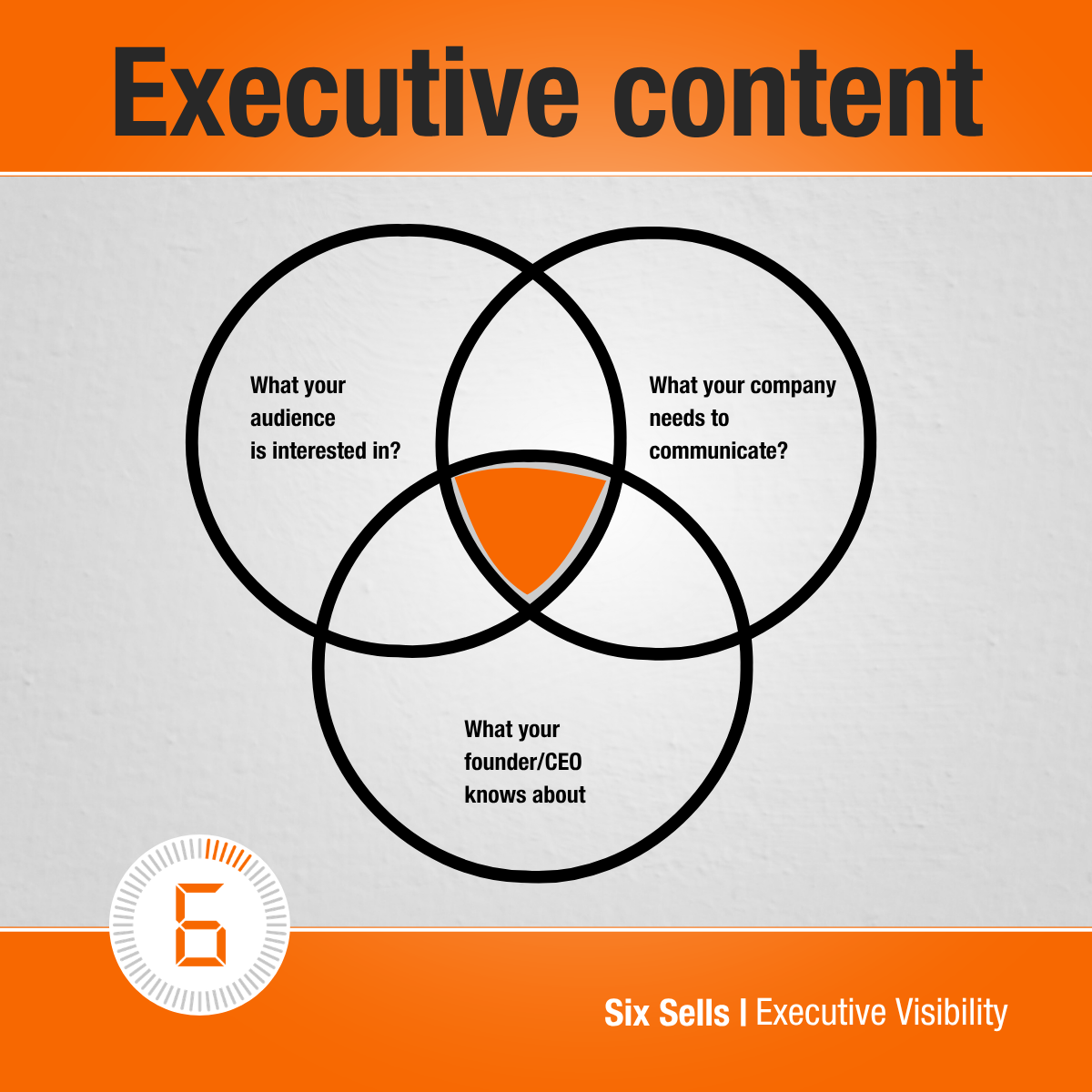


.png)

.png)





.png)









.png)




.png)


