Why attention needs to move from a measurement metric to a practical part of media planning and buying
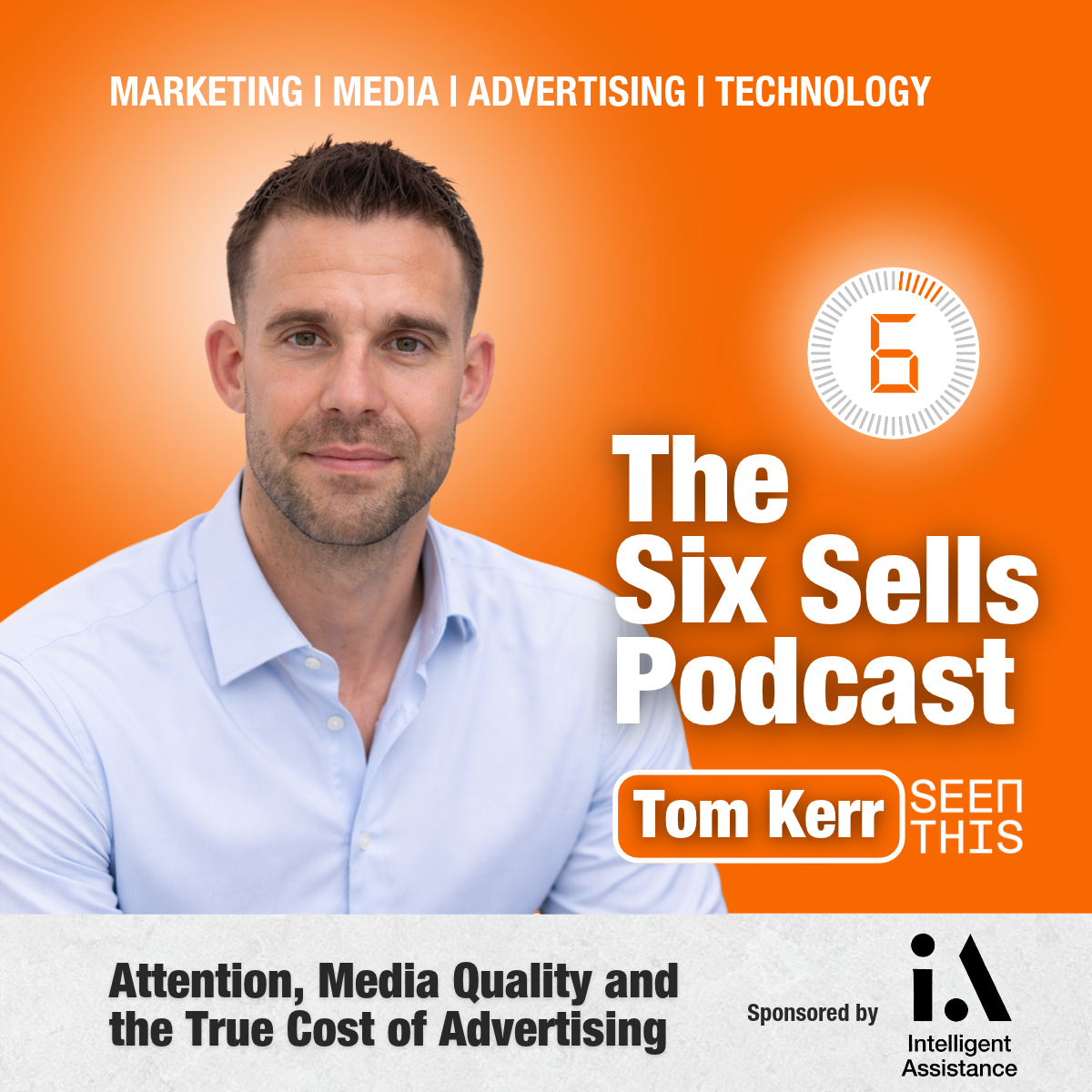
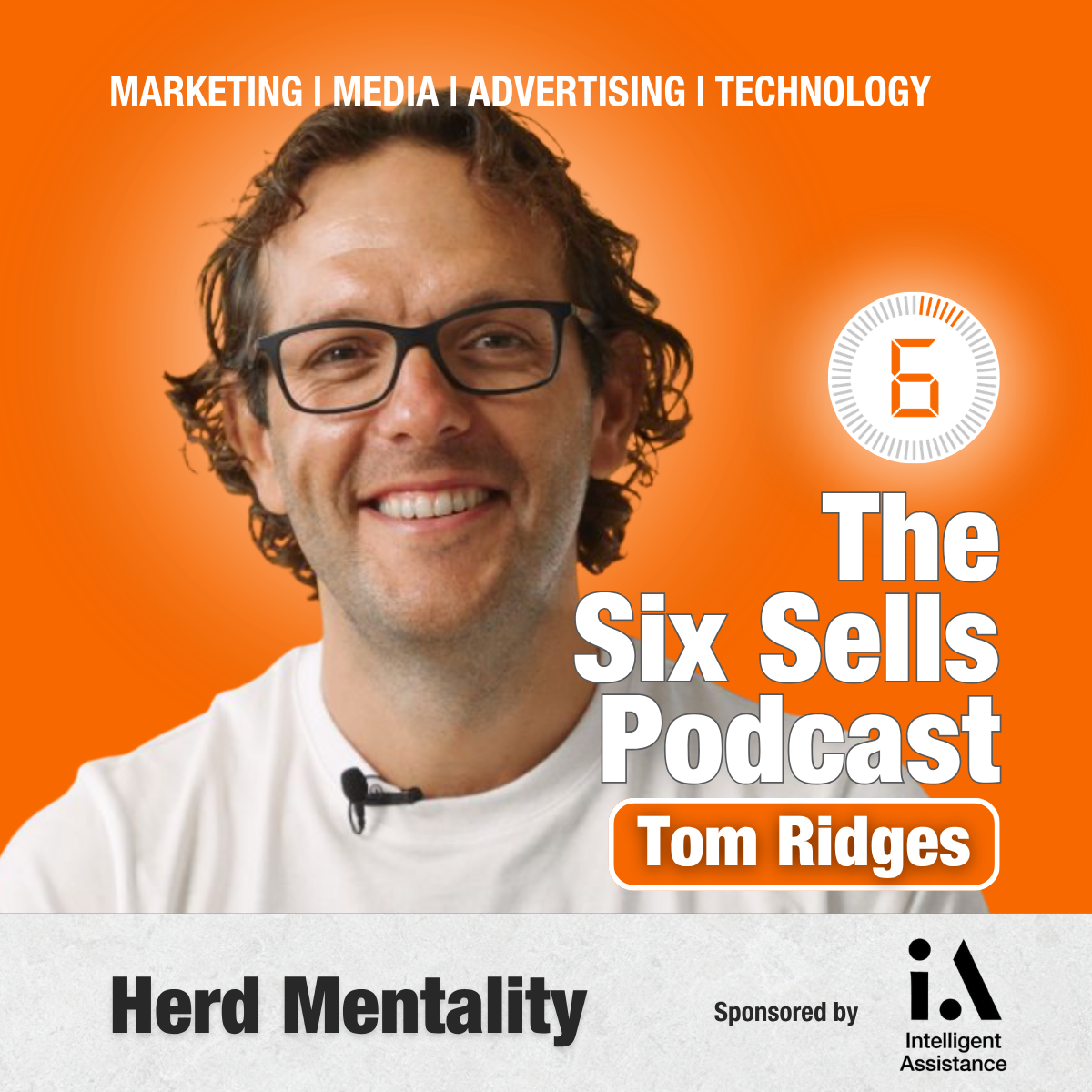
In this episode of The Six Sells Podcast, Mike Nicholson is joined by Tom Kerr from SeenThis to talk about attention, media quality, video delivery and what advertisers should really be measuring when deciding where their money goes.
Tom has spent more than 20 years working across agencies and adtech, including roles at Posterscope, Dentsu and Teads, before moving to SeenThis. That gives him a perspective from both the buy side and sell side of the advertising industry.
The conversation looks at how media planning has moved from assuming attention, through viewability, towards measuring whether people actually look at advertising. Tom argues that attention gives advertisers a better way to understand media quality, but that the industry now needs to move beyond simply reporting attention after a campaign.
For Tom, the bigger opportunity is to combine attention with price, use it to influence planning and buying decisions, and make it easier to optimise media and creative around the amount of attention people actually give.
The episode also explores SeenThis' work with Lumen Research, why the speed at which video loads can influence attention, why simplicity matters when adtech companies sell to agencies, and how publishers can use lightweight video to improve both commercial performance and the user experience.
Topics discussed include:
- Tom Kerr's career across Posterscope, Dentsu, Teads and SeenThis
- The difference between working agency side and sell side
- Why partnerships between agencies and technology companies matter
- The importance of differentiation and being easy to buy
- Why adtech companies often make their propositions too complicated
- How vendors can communicate more effectively with agency planners, client teams and investment teams
- Why focusing on one clear problem can be more effective than trying to appeal to everyone
- How attention has evolved from assumed exposure and viewability towards real human engagement
- The relationship between reach, cost and quality in media planning
- Why viewability does not tell advertisers whether somebody actually looked at an ad
- How attention can provide a more useful measure of media quality
- Why Tom believes attention should be combined with CPM
- How an attention-adjusted CPM can change the apparent value of media
- How Dentsu used attention in planning work for Coca-Cola
- Why social media can perform differently when attention is factored into a media plan
- How Heineken used attention as part of its measurement and learning agenda
- Why attention requirements can vary by advertiser, audience, category and creative
- Why distinctive brand assets need to appear early when attention is limited
- SeenThis' research with Lumen Research
- Why faster video delivery can improve attention
- The difference between streaming video and downloading a video file before playback
- How SeenThis works with advertisers, platforms and publishers
- The role of creative formats across awareness, consideration and commerce
- Why lightweight video matters to retail media and publisher websites
- How publishers balance page experience with commercial opportunities
- Three practical rules for using attention in media planning and buying
- Why Tom wants attention to become more usable and more standardised
- How attention could become embedded directly into agency planning and buying workflows
Episode summary
Tom Kerr believes attention has given the advertising industry something it had been missing for years: a meaningful way to understand media quality.
Media planning has traditionally balanced reach and cost relatively well. The more difficult variable has been quality. Advertisers could measure whether an ad was technically viewable, how large it appeared on screen or whether the sound was on, but those measures did not tell them whether somebody actually paid attention.
Tom describes attention as an extension of quality because it moves measurement closer to genuine human behaviour. Instead of asking whether somebody had the opportunity to see an advertisement, attention asks whether they actually engaged with it and for how long.
That distinction becomes particularly important when comparing the apparent cost of different media environments. A low CPM does not necessarily mean good value if nobody notices the advertising. Equally, a more expensive impression may represent better value if it generates significantly more attention.
Tom therefore argues that advertisers should combine attention with the price they are already paying for media. He discusses using an attention-adjusted CPM as a way to understand the real value of different impressions, placements and channels.
But measurement is only the first step.
Tom wants attention to become more operational. Rather than adding an attention score to a campaign report after the money has already been spent, he believes it should increasingly influence planning, buying and optimisation.
That means using attention to decide how budgets are allocated, integrating attention signals into agency planning platforms and buying tools, and adapting creative to the amount of time people genuinely spend looking at advertising.
The same principle sits behind SeenThis' work with Lumen Research.
SeenThis streams video rather than relying on the conventional process of downloading a full video file before it can be displayed. Tom says that reducing the delay before an ad appears is particularly important in digital environments where people are scrolling quickly and small amounts of friction can determine whether an advertisement gets noticed at all.
His argument is simple: speed and quality together help create attention.
That also creates an opportunity for publishers. Faster, lighter video can help them create more video inventory and generate more commercial value without slowing down the page or damaging the editorial experience.
Across the conversation, Tom repeatedly returns to another principle: simplicity.
The advertising and adtech industry has become increasingly complicated, but the fundamental job remains straightforward. Brands are trying to influence people to buy a product or service. For technology companies trying to sell into agencies, Tom believes the winners are often the businesses that can explain one problem clearly, demonstrate how they solve it, show why they are different and make themselves easy to buy.
How has attention changed media planning and buying?
Attention has given media planners a way to measure quality through real human engagement rather than relying only on technical proxies such as viewability.
Tom Kerr describes media planning as a constant balance between reach, cost and quality. Reach and cost have historically been relatively measurable, but quality has been harder to quantify.
Traditional quality measures often focused on physical characteristics such as where an ad appeared, how large it was, whether the sound was on or whether the advertisement met a viewability threshold.
The problem is that viewability only proves that somebody had an opportunity to see an ad. It does not prove that they actually looked at it.
Attention measurement takes the industry closer to that answer by looking at genuine human engagement. Tom sees that as a significant step forward because advertisers can begin to compare media based not just on how cheaply an impression was delivered, but on the quality of the exposure they actually received.
Why is viewability different from attention?
Viewability measures whether an advertisement had the technical opportunity to be seen, while attention measures whether people actually looked at it.
Tom argues that the distinction matters because an ad can be completely viewable without receiving meaningful human attention.
The same problem applies to video metrics such as completed views. A video player may register that an advertisement played for six, ten or 15 seconds, but that does not necessarily mean a person watched it for that amount of time.
Attention therefore introduces a human behaviour signal into media quality.
For Tom, this is the important evolution. The industry moved from basic CPM to viewable CPM, and attention creates the opportunity to take another step by considering what those impressions were genuinely worth once human engagement is included.
What is an attention-adjusted CPM and why does it matter?
An attention-adjusted CPM combines the price of media with the attention it generates so advertisers can compare value rather than looking at cost alone.
Tom's argument is that CPM in isolation can be misleading.
A very cheap campaign is not necessarily efficient if hardly anybody notices the advertising. As Mike puts it during the conversation, a 10p CPM on a campaign nobody looked at is expensive.
The opposite can also be true. An impression with a higher headline CPM could represent better value if it generates substantially more attention than a cheaper alternative.
By combining price with an attention score, advertisers can make more informed decisions about which channels, platforms and formats are genuinely cost effective.
Tom believes this link between attention and existing buying currencies is also important for adoption. CPM is not going away. Procurement teams, agencies and advertisers still rely on it. Connecting attention to the metrics the industry already uses can make attention more practical rather than leaving it as an additional measurement line in a campaign report.
How can advertisers use attention before and during a campaign?
Advertisers can use attention to improve planning, influence budget allocation, optimise media and adapt creative to the amount of time people actually spend looking at an ad.
Tom believes the industry needs to move beyond using attention primarily as a post-campaign measurement tool.
He gives the example of work at Dentsu where attention data was overlaid onto traditional planning information. A planning tool might identify where the greatest reach opportunity existed, and attention could then change the relative attractiveness of those channels.
That means something that initially looked like the strongest media option based on reach could move down the plan once quality was considered.
Tom says the next opportunity is to make that process increasingly automated and usable in real time.
If attention can be integrated directly into planning systems, buying platforms and agency technology stacks, it can become a live input into decisions rather than another score examined once the campaign has finished.
Why does creative need to be designed around attention?
Creative needs to reflect the amount of attention an advertisement is realistically likely to receive, because advertisers often have far less time to communicate than the full length of the asset suggests.
Tom says a six-second video should not be treated as though every viewer will watch for six seconds.
If people only give an advertisement a short amount of attention, the brand and the most important message need to appear early enough to be seen.
That means advertisers should think carefully about distinctive brand assets, the order in which information appears and the message somebody would take away if they only watched the opening part of an advertisement.
The amount of attention available can also vary considerably.
Tom says the advertiser's category, target audience, time of year and creative approach can all affect attention. An entertainment release may naturally attract more attention than a functional financial product, while different audiences may also behave differently when consuming digital media.
Rather than expecting every impression to produce the same level of engagement, advertisers can use attention to identify where wastage is occurring and then optimise media and creative accordingly.
How does SeenThis use streaming technology to improve video advertising?
SeenThis streams video into digital advertising rather than relying on conventional video files that need to be downloaded before they can be displayed.
Tom explains that this matters because even very small delays can make a difference when somebody is scrolling through digital content.
Traditional video advertising can involve relatively heavy files. The time required to download those files can vary according to bandwidth, connectivity, browser and other technical factors.
SeenThis instead begins streaming the content as soon as the first data packets reach the page.
Tom compares the difference to the shift from downloading a piece of entertainment before consuming it to streaming content through services such as Netflix.
The aim is to get high-quality video in front of the audience faster without making the page unnecessarily heavy.
Tom summarises SeenThis' approach as "speed times quality equals attention". The technology helps deliver the video quickly, while the creative experience is designed to keep somebody engaged once the ad has appeared.
What did SeenThis want to learn from its work with Lumen Research?
SeenThis wanted to test whether the speed at which an advertisement is delivered has a measurable impact on human attention.
Tom says different businesses approach attention research with different hypotheses. A contextual advertising company might want to understand whether placing an ad next to relevant editorial increases attention, for example.
SeenThis wanted to examine the technology used to deliver the advertisement itself.
The hypothesis was straightforward: if an advertisement appears more quickly, people have a better opportunity to notice it before moving on.
That is particularly important on mobile and other fast-moving digital experiences, where milliseconds of delay can matter.
Tom says the research supported SeenThis' belief that faster delivery can increase the number of people who actually see an advertisement and improve the attention generated per thousand impressions.
For SeenThis, the work provides evidence that advertising performance is not determined only by the audience, placement and creative. The underlying delivery technology can also influence the opportunity an advertisement has to earn attention.
Why does lightweight video matter to publishers and retail media businesses?
Lightweight video can help publishers and retail media businesses monetise video without creating the same risk of slower pages and a poorer user experience.
Tom says publishers inevitably have to balance commercial requirements with technical performance.
Commercial teams want video inventory because it can create valuable advertising opportunities. Technical and editorial teams do not want advertising to slow down the page or frustrate users.
That is especially important in retail media. A heavy video file that slows a commerce experience can create friction at exactly the point somebody is considering a purchase.
SeenThis works with publishers and platforms to deliver video in a lighter way, while fitting into their existing advertising setup.
Tom says the commercial opportunity for publishers is to create more video liquidity, improve monetisation and retain more of the value generated by advertising while still meeting the technical requirement of protecting the web experience.
What are Tom Kerr's three rules for using attention in media planning and buying?
Tom Kerr's three rules are to use attention as a quality measure, combine it with the price of media, and use it to optimise both media and creative.
First, advertisers should use attention because Tom believes it is one of the strongest universal measures available for understanding media quality.
Second, they should not look at attention separately from cost. Combining attention with the price paid for media creates a more useful view of whether an impression represents value for money.
Third, advertisers should use attention to improve what happens next.
That can mean reallocating media towards environments that generate stronger attention, incorporating attention into planning and buying systems, or changing the creative so the most important information appears within the amount of time audiences realistically give it.
For Tom, attention becomes considerably more useful when it changes a decision rather than simply describing what happened.
What does the future of attention measurement look like?
Tom Kerr wants attention to become easier to use, more integrated into advertising workflows and more consistent across the industry.
He does not believe advertising needs another standalone metric simply for the sake of having one.
Instead, he wants attention to work alongside the currencies and systems advertisers already use.
That means combining attention with CPM, building it into planning tools and buying platforms, automating more of the process and making attention a practical signal for allocating investment.
Tom also believes some standardisation would help.
Different attention companies can approach the subject in different ways, and Tom accepts that there is legitimate complexity in defining and measuring attention. But greater commonality could make it easier for agencies and advertisers to understand how the different approaches relate to one another.
Ultimately, his ambition is for attention to become sufficiently embedded in agency workflows that it directly improves the likelihood of higher-quality media being recommended and bought.
What is The Six Sells Podcast?
The Six Sells Podcast is for people working in marketing, media, advertising, adtech and technology. There are over 150 episodes (and counting), and the biggest episodes have achieved 30,000 views across all platforms. Want to get in touch? Email hello@sixsells.co.uk
Who is Six Sells?
Six Sells is a UK-based executive visibility and thought leadership agency that works globally with CEOs and senior leaders in media, advertising, adtech and technology.
Founded in 2018, we turn each executive's expertise into distinctive, authoritative content in their own voice, built to reach two audiences at once: the humans that matter to them, and the AI models those humans now ask for answers.
Our work combines executive ghostwriting, video, podcasts, photography and awards to build familiarity, trust and authority across LinkedIn, Reddit, YouTube, Substack, the trade press and the wider web.
We also help executives and their companies improve their visibility in AI search and large language models (LLMs) through generative engine optimisation (GEO), increasing the likelihood that platforms including ChatGPT, Google Gemini, Perplexity and Claude can discover, understand, cite and recommend their expertise.
Read more here, or email hello@sixsells.co.uk for more information.
Full episode transcript:
Mike Nicholson: Hello and welcome to The Six Sells Podcast. My name is Mike Nicholson from Six Sells. Before we jump into today's episode, I just want to say a huge thank you to the team at Intelligent Assistants.
Not only are they partners of Six Sells, but they're also sponsors of this podcast. So thanks again to the team over there.
Intelligent Assistants combine human intelligence with artificial intelligence to solve real business challenges. And they believe in a process of human first, human last, which really chimes in with the way that we think about things at Six Sells.
So thanks once again to the team at Intelligent Assistants. And let's jump into today's episode.
So, how are you doing?
Tom Kerr: I'm good, Mike. Great to be here.
Mike Nicholson: Good. Monday morning, bright and breezy, sort of. It's been quite a busy weekend, but yeah, good to see you finally. And I'm sorry we had to rearrange this.
Tom Kerr: I know.
Mike Nicholson: So, good to finally get you here. Traditionally, we like to kick off with a little snapshot of your career to date. So if you could maybe start with that, that'd be great, please.
Tom Kerr: Sure. Where do I start? So, I've been in the industry now for a little over 20 years. Trying not to give my age away here.
Mike Nicholson: Do you think it'll always be? That's an interesting one. Because I recently always had 25-plus years and I just had my 30th year in media and advertising and I moved to 30. I think, is that too much? Maybe it should always just be 20-plus.
Tom Kerr: I think 20-plus is a good one.
Mike Nicholson: Yeah. I think that's a good one. That leaves a bit of wiggle room in terms of interpretation.
Tom Kerr: Interesting. Maybe I need to downgrade that a little bit and go back to 25-plus.
Mike Nicholson: I think that would be a wise move.
Tom Kerr: I'm going to stick with 20-plus for the next 10 years or so.
Mike Nicholson: Yeah, we'll stick with that one. Nice one. Sorry, I interrupted you anyway.
Tom Kerr: Not a problem. So I first started off in outdoor. I left university and was one of the people who actually wanted to get into this industry, as opposed to many people kind of falling into this industry.
I had grand ambitions of working for a big creative agency and realised that was a bit trickier. So I thought media would be a good place to go.
I started life out in Posterscope, in the wonderful medium of out of home at the time, and really loved that medium. Ubiquitous, great medium. Went through the whole digitisation phase of everything going to digital out of home.
I moved through into different areas of the Dentsu business. So I've always been agency side up until then.
I moved within Dentsu into Amplifi, into product and partnerships, where we worked with all of the big enterprise data, tech and media businesses, developing partnerships with them to improve Dentsu's capability for their clients and deliver more value to their clients.
Then I got a bit of an itch and thought, I've been buy side for quite a bit of time, 16-odd years. I'm going to move into sell side and get into the adtech space.
I went over to Teads, where I ran agency partnerships, partnering with agencies to help them deliver better capabilities and working on big investment trading agreements.
More recently, I've moved to a company called SeenThis, where we specialise in a very specific area of the industry, which is all about how your video advertising delivers to audiences and how it loads on publisher pages.
We have a very unique piece of technology which streams video as opposed to legacy technology which downloads video to a page.
Mike Nicholson: Can I just touch upon your first job, if you like, going from buy side to sell side? This has happened a lot over the years.
I'm 20-plus years in the industry, and even back when I was at the Evening Standard, we started to hire people that initially grew up in agencies, if you like. And I've kind of seen internally how that's worked.
How did you feel in that first job when you came out of an agency? It must have been very different, or maybe it wasn't. I don't know, you'll tell me.
But when you went into Teads and now you're running the agency partnerships from the other side, what were the big differences that you saw moving out of the agency world?
Tom Kerr: I think there's probably one big difference in terms of the day to day.
When I was agency side, I was in a pretty lucky role. I got to work with lots of different businesses and, I guess, be a little bit selective in terms of who we would work with, whether that was to build a unique capability or do a partnership with a Heineken or a Microsoft, whoever that might be.
Really, when I was in that role, it was all about partnering. Partnerships were critical.
I'm quite vocal that it's very hard for agencies to out-tech the tech businesses. And the agencies who I think really win and move most quickly, although that's starting to change a little bit as agencies pivot from more people to product-based organisations, are the ones that partner very well.
Dentsu have always been fantastic at doing that and understanding that, by working with tech partners and accessing engineering resources, they can develop unique products that they layer onto their capabilities to deliver value.
When you go into the sales side and you work in the tech industry and the adtech business, you still need to partner with the agencies, but you're actually building the solutions that are ultimately going to deliver value for the agency.
So I think in my role now, it's about understanding: okay, where is the industry going? What are the value adds that we can provide agencies and what do we need to build? How do we connect into what they're doing from a data and technology standpoint so that we're as viable as possible?
I think from a tech standpoint, there are really two things that are going to help you win as much of that budget as possible: high differentiation and ease of buying.
You can have high differentiation and be hard to buy. You're probably not going to get as much of the budget as you could get.
You can have relatively low differentiation and be easy to buy. You're going to get some money, but not as much as what you'd typically get.
If you can maximise differentiation and be easy to buy, removing friction, that's when you're going to really get as far as you want to get with an agency or advertiser.
So I'm very much focused on how can we differentiate and how can we be as easy to buy as possible?
In this world of algorithms and homogenisation, where you switch a button and everyone's being told to do the same thing, how do you really win in that world? It's quite hard.
Probably the brand who has the biggest budget is going to win. And that's not great if you're an advertiser who doesn't have the same sort of budget levels.
So for me, it's about how do you use data, how do you use tech, how do you use creative to provide competitive advantage in a world of algorithms? And how do we fit into those agency models to make us as viable as possible?
Mike Nicholson: One of the things in my 20-plus years that I've found has changed in the adtech-agency relationship is it's much harder to get meetings with agencies.
You were talking about working in partnerships at Dentsu, right? Everyone would want to meet with you. So I would imagine, "Oh, we need to talk to Lumen." I know we're going to talk about them later. They'll be on the phone pretty quickly.
Whereas when you come out of that and go the other side, did you find that suddenly it was a little bit more challenging, should we say, to try and get the right people in the room to have the right conversations in the sort of timeframe that you would like?
Tom Kerr: Yeah. At times it's frustrating. But at the same time, I put my agency hat back on and understand from an agency perspective that, certainly in the last 10 years, the abundance of choice has grown.
Sometimes you just have to look at your day job and go, "Well, I've only got X number of hours in the day, X number of days in the week."
I'm going to look at investment. Where am I investing most of my spend? And that's probably going to dictate who I'm talking to as much as possible.
At the same time, when you're a company like us and you're highly innovative, you hope that agencies will look at the innovation side of things and think, "Well, this is a unique opportunity."
So sometimes it can be difficult to get meetings, and sometimes agencies have to look at the size of investment, but also they have to look at innovation as well.
I think the agency job is probably more complex than it's ever been. With digitisation, disruption, data, AI, technology, it's a very complicated landscape now.
Sometimes you have to focus on things like investment and understand that I probably need to focus my time with partners where I'm spending more.
At the same time, when you're a scale-up, when you're a high-innovation business, you hope that agencies also look at that as well, which many of them do to determine how and when they're going to have meetings with certain people.
Again, going back to this world of algorithms and the walled gardens, I think agencies are now much more focused on, okay, what are the innovation sources?
It's not just about investment. Who are the partners that I can really innovate with that's going to give me a competitive advantage?
That will always come back to data, tech and creativity as enablers on top of what they're currently doing that's going to help them deliver more.
Some agencies are better at that than others. But increasingly, innovation will always help support getting meetings if you can show a unique value offering.
Mike Nicholson: Yeah. So your advice then, partly at least, it sounds like...
At Six Sells, we help people like you get into agencies and communicate with them on a kind of always-on basis through thought leadership and various other ways.
So if you can communicate differentiation and easy to buy and perhaps the problem that you're solving...
Tom Kerr: Simplicity.
Mike Nicholson: Simplicity, yeah.
Tom Kerr: I'd hate to be starting out now in the industry knowing what it is. I still would be very interested in joining the industry. It's a great, dynamic, innovative industry.
But the speed of change, certainly in the last five years, has been huge compared to the speed of change over the last 20 years.
So I think innovation is important, but I think simplicity.
I think we have massively overcomplicated the industry.
When you boil it down, we are in the business of selling a brand, product or service to someone. And the role for media is to influence that decision-making journey within that.
Sometimes we can overcomplicate things.
When I was buy side at Dentsu, the best people could simplify. And I think there are some people who like to overcomplicate things because it makes their role seem very important in that ecosystem.
But ultimately, if you're going to confuse people, typically most people who are confused will avoid something. That's a natural human behaviour.
Rarely will you get someone who goes, "Well, I'm going to learn more about that. I'm going to do this." Sometimes you do. But typically, if you're confused, your short-term human instinct is to maybe pull away.
I think those who simplify things, they're the people who can really win people, whether that's a media director or a marketing director, an agency planner or an investment person, whoever that might be.
Simplification. What is the problem you're trying to address? How does your product help you deliver that? And how can you buy us?
Mike Nicholson: I'm going to put you on the spot now, and you don't have to answer. It'd be quite brave to answer, I suppose.
But I've often had... I totally agree with you, simplicity is so important. And in media and advertising, we seem really good at making everything abstract and confusing.
Have you ever been in a lunch and learn or a breakfast meeting where a vendor's come in to talk to the agency, and then when they've gone away again afterwards, people are a little bit like, "I don't really know what they do still", because it was so bloody complicated?
Tom Kerr: Well, firstly, I'm not a big fan of lunch and learns.
When you're trying to present and you can hear there's a backdrop of McCoy's being crunched while you're trying to present, and people are reaching for the best sandwiches as you're trying to deliver a message, it's not the best way. But it's an important way in which we do business.
I think when you throw too much at people, people don't really know what it is that they're meant to take away.
So my biggest advice is try and focus on one thing and do it very well, as opposed to focusing on lots of different things that you might do okay.
There have been times where I walk away from a meeting thinking, we didn't get a question or we didn't get engagement.
I think, in the role that I'm in now, I'm quite lucky in that everyone's leaned in because not many people talk about how videos are showing up to audiences or how they're appearing on a publisher page.
But I think the ones that don't necessarily resonate are the ones that don't...
You've got to do your job. You've got to understand who's in the room.
You're going to have different stakeholders. You might have a planner, you might have a client person, you might have an investment person.
Each of those are going to be looking for slightly different things.
The client person is thinking about innovation and how they're delivering their scope to their client. The planner wants to see cost-effective reach, better attention. The investment person wants to see something else.
So delivering a solution that reaches all of those needs and finding key things that are going to engage with that person is going to help.
Understanding the person, focusing, but also linking that to clear outcomes, that's always the best way in which you're going to get engagement. If you try and be too broad, typically they don't resonate.
Mike Nicholson: Do you think that people are trying to be too broad because they don't want to niche down on one little bit which might not be interesting to person two and three in the room?
So if they keep it broad, I hope that everyone will be interested and then they can answer the individual questions as they come.
Tom Kerr: I think so.
Sometimes, actually, it's better to be very focused and it might not resonate with everyone.
So you might think, okay, I need to speak to the planner. This is the person who I really need to engage with.
Sometimes it's better for 50% of the people to like you really well than 100% of the people to think you're okay.
Mike Nicholson: Yeah. Because some actions aren't okay, are they?
Tom Kerr: Yeah.
Understand who's in the room. Understand the person who it is you want to influence.
If you can deliver a message that resonates to everyone, great. But sometimes it's best just to pick the person who you think you need to win over, deliver that message really well to that individual, be hyper-focused, and it may not tick all of the boxes, but you know that you'll get momentum with that individual person.
Mike Nicholson: Later this week, Six Sells will be eight years old, and over that time we've kind of built a framework of the questions that we think companies need to answer.
We've actually built an AI agent that searches the website of the company in question and all other touchpoints to try and answer these questions in plain English because they don't do it themselves quite often.
One of my most fun things to do when we onboarded a new client is I used to work with a wonderful woman who spent 20 years in agencies at Carat and Havas, and she worked with us at Six Sells.
I'd send the company website or About section to her and say, "What do they do?"
And she's like, "I don't know."
Because I think what it is is people that write that copy are so in the weeds of that business, they can't think what it would be like to be at a helicopter view.
So they can't unlearn what they've learned in order to talk to somebody that's coming in at a very light, shallow level because they're so deep.
But those questions are: who are you? What do you do? Who do you do it with? How do you do it? Why is it valuable? And what happens after you've done it?
If you can answer those six questions in a couple of sentences, you're probably going to be in much better shape.
But people find that quite hard, I think, because the people writing that content are so deep in the business.
They can't think, what does an agency planner that's not heard of this company before need to know in order to get to the next level down?
Tom Kerr: I think that's the same principle.
What do you do? Why is it different and better? And how can you use it moving forward?
I think that's exactly the same thing.
And happy birthday, by the way, for your agency.
Mike Nicholson: Thank you very much. Hopefully nothing happens between now and Thursday, the 1st of October. We should just about limp over to eight years.
So we're going to talk about media attention in media planning and buying.
Obviously, that's really interesting. We worked with Lumen for about 18 months or so, and so we've kind of been under the hood to a certain extent.
It's really super interesting, I think.
Would it be fair to say that back in the day, in our 20-plus years in this industry, attention used to be assumed?
It was kind of a build it and they will come sort of thing. If you get the right reach and frequency, you'll get the attention, and then everything will happen.
I think it's important to say that was the best job that anyone could do with the information that they had at the time.
But of course, attention's taken the game to... we've kind of gone from assumed to viewability to actual viewed and attention, right?
So how have you seen that evolve?
If I can take you back to your Dentsu days, I think you were quite instrumental in the early work that Dentsu were doing with attention. How have you seen that sort of change media planning and buying over the years?
Tom Kerr: I think it's had a huge impact, and I think it's shifted the industry forward from a measurement perspective.
When I was at Dentsu, we always used a phrase which has never left me: we knew the cost of everything, but the value of nothing.
And that's true.
I think, again, when you simplify what we do, you're ultimately balancing three variables constantly as part of a media plan to deliver a desired outcome for a client: reach, cost and quality.
How do I maximise those variables to deliver a KPI?
Then within that, how do I use data, tech and creativity to amplify the impact?
We've always known how much reach we're generating. We've always known the cost. What we didn't necessarily know was quality.
Traditional measures of quality before the introduction of attention had been very much input-focused.
How big is something on a screen? What is the position on a screen? Is it sound on? How much clutter is there?
So there were very much physical characteristics and measures of quality, which didn't really have a reflection on how people were engaging.
You mentioned viewability. Viewability is a technical pass, right?
You can have something, you can have a pixel on a screen that is viewable. The opportunity to see is there. Whether someone actually chooses to engage with that is a very different thing.
Cost per view, these metrics, it's not actually a view, it's a play.
So you might get a six-second play. But it doesn't mean that someone has actually viewed that ad for six seconds.
Mike Nicholson: You mean autoplay?
Tom Kerr: Well, just any kind of standard cost-per-view, cost-per-completed-view metric for a six-second, ten-second, 15-second video.
That's the metric you get. You get, "I got a 0.05 cost per completed view", but it doesn't mean that a human has actually viewed that ad.
What I love about Lumen is that they've moved the industry forward in looking at real human attention.
Okay, how are people engaging?
It removes some of those traditional measures of quality around size and physical characteristics and inputs to actual human engagement.
We know that attention is largely built up on those factors, but it creates a weighted score to that using real human eye tracking.
So for me, attention is an extension of quality.
Up until now, we haven't really had a measurement solution that helps us look at quality. And now we genuinely do have something that helps us better understand quality.
We always started with CPM, then we went to viewable CPM.
What we're trying to implement now at SeenThis is an attention CPM.
You can have the price of something, but until you overlay quality, you don't really have a true understanding of how cost-effective that impression or view is.
When you layer on quality, when you layer on attention, that can either have a powerful positive effect on the price, in that something gets more cost-efficient when you layer on quality.
But ultimately, if you have very low attention scores, that price may get more expensive.
Mike Nicholson: 10p CPM for a campaign that nobody looked at is expensive.
Tom Kerr: Exactly.
Equally, you might be paying... I've got three options. I've got a £10 CPM, I've got a £5 and I've got a £7.
If that £10 is delivering three times more in attention, it's more cost-effective than the other options.
So I think really one of the currencies we're looking at is attention CPM.
You start with your CPM, divide it by your attention score, multiply it by 1,000, very similar to viewable CPM.
That gives you a true reflection on the cost of media when factoring in quality.
That helps us make informed planning and buying decisions.
I think the biggest thing that I'm looking for now from the industry is we've got to move past measurement.
It's still a bit of a box ticker. We did this campaign. We delivered this CPM. We delivered viewability. Oh, great. We also got an attention score.
Making it more viable is critical, which is why things like attention CPM and linking attention to traditional measures, which will still be important from a productivity standpoint, from a procurement standpoint, CPM is still going to be important.
But linking attention more to those currencies which we buy on today, that'll help us use it more for activation purposes, to influence how impressions are being delivered to certain publishers or businesses or platforms, but also from a planning perspective.
Mike Nicholson: Have you got any examples off the top of your head where you've calculated something as a CPM and then you've calculated it as an attention CPM and it's shown some quite eye-opening insights where you think, well, actually, that's a much better campaign than that, but at first glance it didn't look so?
Tom Kerr: If I go back to my agency days, I'll never forget the Coca-Cola pitch, I think.
Coca-Cola is always the example that we use in advertising. It's like no one else has ever advertised.
It was probably the biggest, most marquee brand going in terms of their advertising journey and wanting to have them as a business.
I think that was the first time where I really saw attention being used in practice to inform planning.
Up until then, planning was done... You had panel-based data.
It still made me laugh back then. We used to use a panel, we'd send a questionnaire to someone and go, "Did you see or use this?"
And someone would go, "What did I do two weeks ago?" They normally just go, "Yes."
It's not the best source of data to inform planning.
Mike Nicholson: And also Coca-Cola. I've definitely seen Coca-Cola in the last two weeks. I've no idea where, but...
Tom Kerr: Exactly.
Mike Nicholson: My fridge, probably.
Tom Kerr: Yeah, probably.
Data's moved on.
You've gone from panel-based to more deterministic data sources.
You've got agencies buying identity businesses, whether it's Merkle, LiveRamp, et cetera.
So the planning process has changed.
We're not reliant on these panel-based studies to inform planning decisions. We're now reliant on actual identity data that informs things.
But now we also have a verification currency using attention that helps us optimise.
I think the Coca-Cola pitch was the example that probably stands out.
Again, coming into the sell side, there are certain channels that perform well.
I'm not here to badmouth different channels because social has a great role, ubiquitous reach.
But unfortunately, the fast-paced nature of social means people scroll past it, particularly past the ad experience in-feed.
There are placements that get good engagement and good attention.
So they perform slightly worse on attention, but they're very cost-effective.
Outstream is a very effective medium. They have high attention scores, so actually their CPM gets more cost-effective.
What we do is we run really high-quality video into display, which means you get very cost-effective media.
And because our ads and our videos start more quickly because we stream, attention is very high. So our CPM gets even more cost-effective.
All I would ask people to do is, when you're planning and you're looking at the cost of media, always overlay attention to inform how you're planning and buying.
Mike Nicholson: Can you remember any of the details of the Coca-Cola campaign that sort of made you sit back and think, okay, this is a real thing?
What was it that you thought, well, this is attention in action and it's really working?
Tom Kerr: I remember grids and lots of red grids and beautiful slides.
I think, and she'll probably hate me for mentioning her, Joanne Leong was instrumental in this, and it was a brilliant piece of work.
But we would look at, okay, what does our planning tool say to do?
Okay, it says this is where the reach opportunity is, but then attention was used to optimise that.
So certain channels would get better, certain other channels slightly worse.
For me, it was just a great example of how that can be used to inform planning.
I still think it is used to inform planning now.
I think where it's slightly harder is real-time activation and using attention signals to really influence how you're doing things on a real-time basis, whether that's pre-bid optimisation.
A lot of it is still post-bid. It's measurement that is being used to go, okay, how I delivered this budget programmatically, how did it work?
So I think it is increasingly being used more for planning purposes.
Now it's used for measurement.
What I would like to see more is how we can use it to optimise campaigns in real time.
Mike Nicholson: So you've got your planning tool that says this is where the reach opportunity is, and then you overlay attention, and then maybe the grid changes a little bit.
So you get something that was top, maybe is now sixth, or whatever it might be.
Can you remember, I'm not asking you to name any names, but can you remember any surprises?
You think, oh, that seems to have gone down quite a lot more than I would have thought once we've overlaid attention.
Tom Kerr: I think probably social is always the one where it comes out slightly worse.
But if I go back to what I was talking about previously, differentiation, ease of buying. They are so good in both areas.
Whether it's Meta, whether it's TikTok, YouTube, high differentiation and really easy to buy.
That will always, always win.
So I think social is the one that always stood out in terms of, okay, I'm spending X percent of my digital investment here. I should probably downweight it.
But that being said, social does very well in other areas, whether it's top-of-mind awareness or performance conversion.
It depends on how you're using attention, whether it's upper funnel or lower funnel.
Mike Nicholson: Tom, were you client-facing when you were at Dentsu?
Tom Kerr: Yes.
Mike Nicholson: Were clients interested, leaning-in interested in attention, or was it more of an agency metric that you were using to get better results?
Or were clients actively going, "How do we buy into this attention economy that's blown up?"
What was the...
Tom Kerr: Let me use Heineken. I think Heineken is a good example.
I was very much involved with Heineken globally.
Mike Nicholson: We just had Heineken on, actually. We just had Dan Glynn on.
Tom Kerr: Okay. Very good.
So I worked, I was responsible for all of their global partnerships at Dentsu.
They were the ones that leaned into attention the most.
And still, whether I talk to Sam Brown or someone else over there, it's still a really important metric for them.
So I think when I was there, they were leaning into it. It was being used from a measurement perspective.
Now it is more of a hygiene factor. We will only work with partners that are using attention as a currency.
So they were the ones that definitely leaned into it most.
I think they are using it as part of their learning agendas and measurement frameworks to understand how different channels are reacting and performing from an attention perspective.
I think that is being passed back through into planning.
So Heineken was always the one that stood out for me as the business that were leaders in terms of a brand that would use attention to understand the quality of media.
Mike Nicholson: Do you think there were certain dynamics within certain clients that would lead them to lean more or less into attention based on the type of brand?
So Heineken, a lot of that I'm assuming would have been brand advertising as opposed to direct response. I might be completely wrong.
If somebody's getting three seconds of attention, then more likely the distinctive assets are going in. Maybe that's why they leaned in.
Whereas maybe a more DR-focused client was saying, "Well, we don't really need to know how long they looked at it, as long as they looked and bought."
Do you think that, or is it just the people that are more curious and interested in certain clients than others?
What do you think kind of determines that?
Tom Kerr: I think you're absolutely right.
Heineken, CPG business. Typically the rules for CPG businesses are just reach, high reach, repetition, being at the forefront of someone's mind.
So RCQ, the reach, cost, quality model is very strong, and actually that was a model we used for Heineken.
Reach was always important.
Whenever you're thinking about a brand lift study, reach is probably the one variable that is most likely to impact someone.
It's not rocket science, right?
The more you reach someone and engage with someone, the more likely you are to have an impact in terms of brand lift.
Quality became much more of a focal point because, for them, it wasn't just about reaching someone, it was about engaging with someone.
It was definitely about the upper funnel.
But also, in a world where you have competitors who might have a higher budget, it's like, okay, how do you make that exposure? How do you make that reach work harder?
I think they really understood the concept of that.
The most interesting thing you touch upon is a really good point.
There are certain factors that are going to impact attention.
You're much more likely to be attentive to a film studio release than you are to a credit card, let's be honest.
You're going to be more interested in certain things.
Heineken is a great example. They would use talent or scenarios creatively that are going to make you lean in, versus a direct-response client. They're showing a credit card. It's transactional, it's rational, it's probably not as emotional, which is going to generate as much attention.
So the vertical is always going to have an impact on attention, the client type.
Also, your targeting approach is going to have an impact.
Certain audiences are more likely to be attentive than others.
Younger audiences, typically we see, can have less attention because they're digitally native audiences who are more likely to filter and tune stuff out versus older audiences or more affluent audiences, however you want to categorise them.
So the category, the vertical, the target audience, time of year, there are certain variables that will impact attention.
And then within that, creative is so important.
There was a stat that we use: 85% of digital impressions receive under two and a half seconds of attention. 85%.
So we're delivering a six-second video and 85% of that, only two and a half seconds is being consumed.
There is a huge amount of wastage.
How can we use attention to identify the pockets of wastage? How can we use it to then suppress that wastage and go from two and a half seconds to three and a half seconds so that we are using as much of that six-second video to engage with someone?
In times where you can't, just make sure you're optimising that creative to ensure you're delivering the key messages as early as possible.
Make sure you're delivering the brand in view within that first second.
Make sure you're giving people a key message with distinctive brand assets that are going to make them remember that experience.
People aren't always going to engage for six seconds, but how do we find channels and platforms that are performing worse?
How do we suppress that?
How do we use the things that we have control of, such as creative, to ensure we're maximising attention as much as possible?
Mike Nicholson: Cool. So I believe SeenThis recently engaged with Lumen Research to do your own research.
You worked with them at Dentsu, and now you're working with them again at SeenThis.
So what were you trying to learn from that engagement?
Tom Kerr: Everyone will have a different reason for wanting to use Lumen to understand attention.
If you're a contextual business, you'll be saying to Lumen, right, okay, what is the impact of delivering this ad experience next to a contextually relevant piece of editorial?
Lo and behold, the synergies between the two will have a boost on attention because there's relevance.
We had a very simple hypothesis in that the speed in which your ads get delivered impacts attention.
And it isn't rocket science.
The faster you can get an ad in front of someone, the more likely they are to notice it, engage with it, and stay and view that ad for longer.
I don't know where the stats are, but it's frightening how resistant we are to any sort of friction online now.
Amazon optimised their pages to within hundredths of a second because they know for every hundredth of a second slower it is, they lose money.
So it's not rocket science, but it is actually super important.
Mike Nicholson: People just won't wait.
Tom Kerr: Exactly.
Amazon is a big partner of ours.
Again, it's not rocket science.
You have retail media platforms where it's a real big issue.
Heavy video file sizes downloading to a retail platform will slow the webpage down, and that can have a massive, billions-of-dollars impact in terms of lost revenue with someone aborting a transaction.
It's the same for publishers.
If you're downloading heavy video file sizes to the page, it's going to slow down the editorial experience, which is going to annoy and piss off, quite frankly, that audience.
But it's also going to mean that it takes longer to render on the page.
So if you're an advertiser, you're using heavy file sizes which take a while to download on-page, and that time can be impacted by browser type, connectivity, bandwidth, lots of different things.
We're talking milliseconds here, but milliseconds are big when you're engaging with someone who's scanning past content.
So we stream.
We like to use ourselves... Traditionally, if you wanted to listen to a video on the Apple Store, you'd download a video file. You now go on Netflix and, we're doing a podcast so similar analogy, you can stream it.
As soon as that first data packet is streamed to the page, you can watch all of the content and there's no impact on quality.
That's how we operate, and we deliver that more quickly.
So we have a very simple rule: speed times quality equals attention.
Our technology delivers the ad more quickly. Our creative formats hold the experience. That delivers attention. That delivers the outcome.
That was the simple premise with Lumen.
No one had looked at the technology that's being used to deliver an ad.
We proved that the impact on speed is significant and that massively boosts attention.
Mike Nicholson: Okay. So you've got speed of loading.
You mentioned ad formats there. So you have your own ad formats at SeenThis?
Tom Kerr: We have a studio and a variety of different ad formats based on the funnel.
Awareness: full-screen, immersive, high-impact formats.
Consideration formats that have static or interactive elements where you can participate in product discovery.
Then we have shoppable formats that link directly to first-party commerce pages or third-party retail media networks.
That lower-funnel, shoppable commerce, retail media space is one of our fastest-growing sectors.
Amazon uses us for the exact reason you said.
They can run high-quality, fast, lightweight video on-site and off-site, which not only solves a problem in terms of delivering video on-site and stopping it from being heavy, but also delivers more performance to their advertisers.
Mike Nicholson: Going back to those six questions that I think it is important for every business to ask.
Agencies and clients like to put tech into buckets. You have to be a thing.
What would you say you are? What is SeenThis?
Tom Kerr: It's a really good question because we could be put in lots of different buckets, but we are an ad delivery solution. We're a creative adtech solution.
We're not an ad server.
Essentially, we just enable you to stream video into programmatic.
We work with publishers who use our technology to deliver lightweight video on-page. We work with platforms...
Mike Nicholson: So that's not in place of their current video player as well as?
Tom Kerr: Exactly that.
If you look at traditional solutions, you've got companies who have code on-page.
We don't have any code on-page. We don't have a fixed video player on the page.
Our video player is built within our files and our data packets.
You don't need these solutions anymore.
The technology exists to allow you to deliver high-quality video into display, into premium editorial placements without having to rely on fixed players, video players or code-on-page businesses, which can often charge a higher CPM because they can either mask that CPM with those elements, code on-page or video players, or by bundling it with other services such as creative or data.
Mike Nicholson: So publishers can work with you alongside the current video player or instead of a video player altogether?
Tom Kerr: Exactly.
They can work with us within their existing setup. They'll just run our tags to deliver high-quality video.
Mike Nicholson: Okay. So going back to the study you did with Lumen, have you got any headline stats on how that speed and quality delivered versus the standard?
Tom Kerr: I'm pleased to say that we...
APM is essentially the kind of attention quality score. All that is is the percentage of an audience who are attentive multiplied by the attentive seconds times 1,000.
Social roughly has an APM score of 700. Static display is about 500. Standard outstream is roughly about 1,100 to 1,200.
Our model is based on 1,600.
So we're delivering 45% more attention than standard outstream or open-web video.
What we're actually seeing when we're delivering guaranteed attention campaigns, which we will always do for clients now, not only will we report against it, we will guarantee it, we're getting attention scores of above 3,000, in some instances above 4,000.
That's with us doing the optimisations to different audiences or optimising certain creatives.
So the benchmarks are phenomenal. We're getting really great results.
And when you layer on how cost-effective it is from a CPM standpoint, because you're buying at display prices but delivering really high quality, it gets even better.
Mike Nicholson: I've worked in publishers over the years, in those 20-plus years we talked about.
I know there are different stakeholders, as there are in any business.
But within a publisher, there's the commercial people that want to know how they are going to make more money from it.
Then there's the technical people that want to know how they can make the user experience better.
Who do you typically work with within a publisher? Who's leading these conversations?
Is it the editor and their tech team trying to make the user experience just that little bit better than it was before, like in those milliseconds quicker?
Or is it the commercial team saying, I can make more money from this?
And if it's the commercial team, is it more defensive, we need to get better attention scores otherwise we don't get on plans, or is it more aggressive? They want to go out and say we've got the best video in the land, as it were.
Tom Kerr: I think it's both.
If you're going to offer a video solution to a publisher and it's going to slow down their webpage and mess up the experience, you're done. It's not going to go forward.
So we always have to go through RFIs and RFPs to make sure that ultimately we're not going to have a negative impact on page speed or experience.
We work predominantly with commercial people.
Our position is that, particularly for publishers, we want to help them monetise more video.
As we know, in recent years the publisher space is a challenging one.
They've lost revenue over the years through social media, revenue through brand-safety restrictions and people being more restrictive with how they spend on publishers.
They've lost revenue to ad networks who are taking a high share of the CPM and not much going back to them.
Mike Nicholson: No big secret.
Tom Kerr: Exactly.
So we're there to say we can help you deliver more video liquidity.
We can help you make that more monetisable.
You can take a greater share of the revenue and you can deliver better performance.
So it's more of a commercial conversation.
But unless you can deliver against the job to be done technically, which is making sure that it isn't ultimately going to slow down, in fact it's going to enhance the web experience, you'll never be able to get anywhere.
Mike Nicholson: Just to finish us off then, it's been really interesting. Thank you so much for your time.
If there were three golden rules for thinking about how you integrate attention into planning and buying, what would they be?
Tom Kerr: Good question.
Firstly, use it.
It's really, for me, the only universal quality measure that gives you a true sense of how you are investing. So use it from a measurement standpoint.
Secondly, I would say use it and overlay it with price, which is what we were saying earlier.
If you're buying and trading on a CPM, don't just use it for measurement purposes.
Understand how you can get a true sense of the price of media which you're buying and whether that's real value for money.
Then finally, make sure you are optimising to give your ads the greatest amount of attention.
So whether that's from a planning perspective or from a creative perspective, ensuring your ads are built for the amount of attention that is being generated, that is when you can really make sure you're delivering the message and influencing people in the right way based on the amount of time that they're engaging with it.
So use it. Make sure you're factoring it in with price. And understand how you can use that to optimise what you're doing as best as possible.
Mike Nicholson: Okay. I said that was the last question, but I've got one more for you.
What do you think attention will look like in five years' time? How do you think it's going to evolve?
How would you like for it to evolve?
Tom Kerr: I just want it to be more viable.
I want it to be used more freely, not just for measurement.
I think it's being used more for planning, but I just want it to be more viable.
I don't think the industry needs another metric.
We've got an APM score, we've got a CPM score. Let's try and combine these things to make attention more viable.
But I also think we need to have some commonality.
You've got lots of different attention businesses. You've got lots of people defining it differently.
That's fine because it's quite a cerebral way of thinking.
But I think a bit of standardisation wouldn't be a bad thing.
Making it more viable, I think, is the big thing.
Mike Nicholson: You mentioned when you were in your Dentsu days, there was the planning tool that you used and that gave you the picture of what your audience should look like, what your media plan should look like from a reach point of view.
And then you overlaid attention.
Today, is that all one now?
So the reach planning will also factor in attention without you having to do a second sum?
Tom Kerr: Yeah, that's exactly right.
I think the agencies that are automating attention within their workflows and their tech stacks are the ones that are really, really winning because it is still quite manual, I think.
People are going, okay, what is my reach and how do I optimise?
But I think now most planning tools will incorporate attention as a live signal or as just a general signal which factors in how investment should be carved up.
I think all agencies are working in that way.
So automating attention, whether that's planning and buying as well, so that it's easier to use, it's differentiated, but now let's make it easier to use, will hopefully increase adoption.
Mike Nicholson: One sort of sub-question to that, and it's quite detailed, and you might not have this detail.
But I'm assuming if you go from running whatever video you were running before and then you plug this in, it goes much quicker, you get the quality and you're getting up to 4,000 APM.
Then when the planning tools do their jobs, the video goes much higher towards the top of that list, right?
So you're much more likely to get bought.
While you might not see that happen, that's basically what's going to happen.
If they're doing a calculation between quality and attention and then ranking the media plan by that, you're going to get more money.
Tom Kerr: That's the goal.
And that's a big thing I'm focused on now.
Let's build the differentiation. Let's prove it with attention. Let's make us more viable and integrate into agency stacks, whether that's buying platforms or planning platforms, and give us a greater chance of being recommended more often at the planning phase.
We are starting to see the results of that and us being recommended more because we deliver cost efficiency and high quality as well.
Mike Nicholson: So that's a big, super-niche random question. I don't know why I even want to know the answer to this.
But when it shows up in a planning tool, does it show up as Telegraph video, or does it show up as SeenThis slash Telegraph video?
Tom Kerr: Again, it's been a while since I've gone into those tools.
Typically it was just channel level.
You should spend X on linear TV, X on press, X on programmatic, X on social.
But I think now it goes much more granular.
So if you went into programmatic, it would go into different variations of programmatic investment opportunity.
Typically it was at a channel level, and now there will be sub-components by channel, such as programmatic, I'm sure of it.
That's absolutely what we want to do.
Have a sub-component that is SeenThis video so that people can really compare between the different options and use that to influence their planning and purchasing decisions.
Mike Nicholson: Okay. So is the planning and buying still separate?
So the planning will be at a channel level, maybe social, news, whatever, and then it goes over to the buying team and they'll decide which news channels and which social channels?
Tom Kerr: Typically, yeah.
Typically you'll have a planning team who'll go, we need... there are these jobs to be done.
We need to do reach. We need to do X, Y and Z.
Okay, these are the best channels. These are the roles that they're going to satisfy within the media plan.
Then that will go to the trading team or activation team, who'll go, okay, how do I maximise efficiency and efficacy within each of those channels?
So that's typically how it's done.
But again, it's been a few years since I've seen the exact workflow.
Typically, yeah.
Mike Nicholson: Nice.
Well, Tom, thank you so much for coming in. Much appreciated.
I really enjoyed the conversation.
You can get Tom on LinkedIn, I'm sure.
So if you've got any questions, share the link to this and ask him. I'm sure you'll be happy to answer any questions coming.
Tom Kerr: Absolutely.
Mike Nicholson: Thanks again. Really appreciate it. Cheers, mate.
Tom Kerr: Thank you.