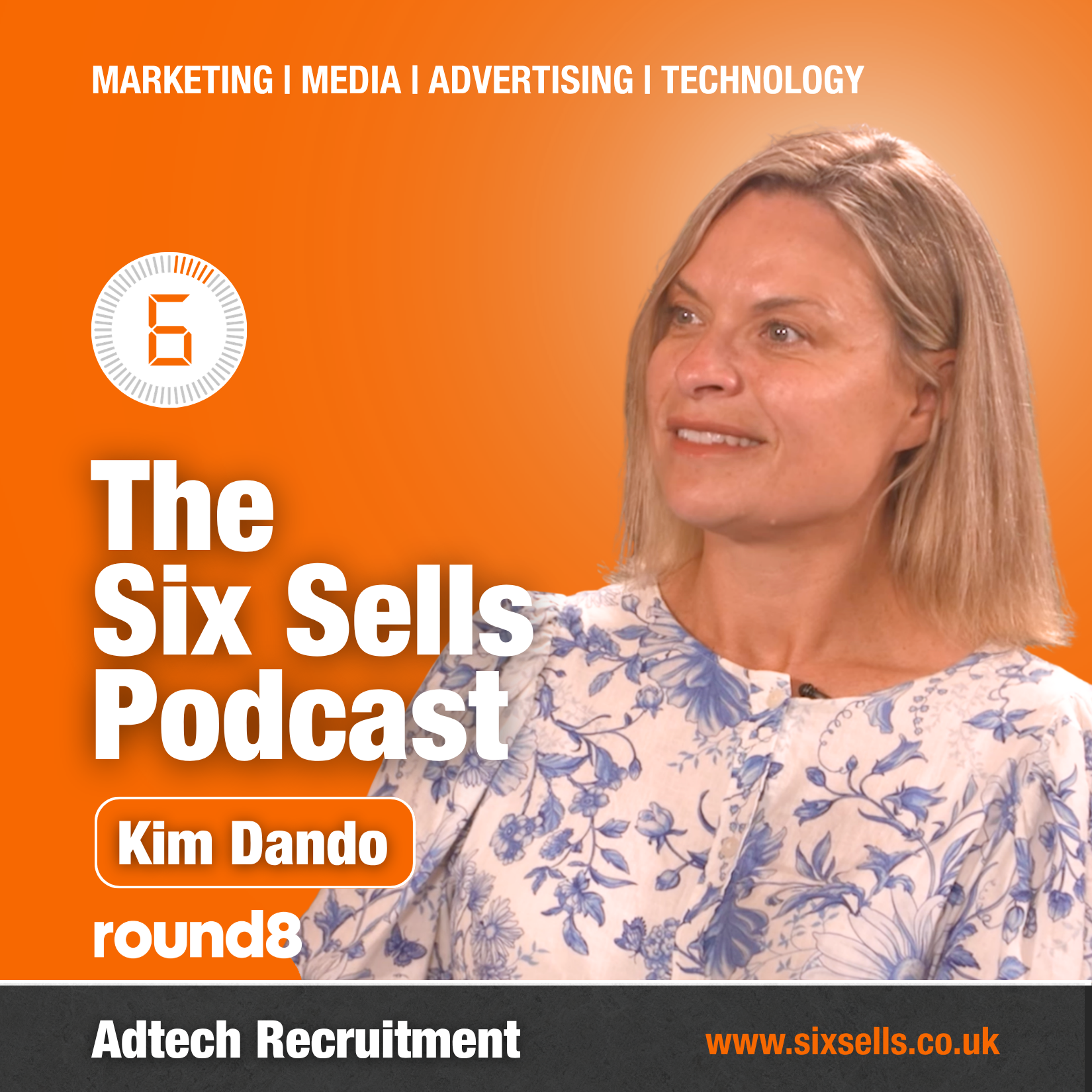
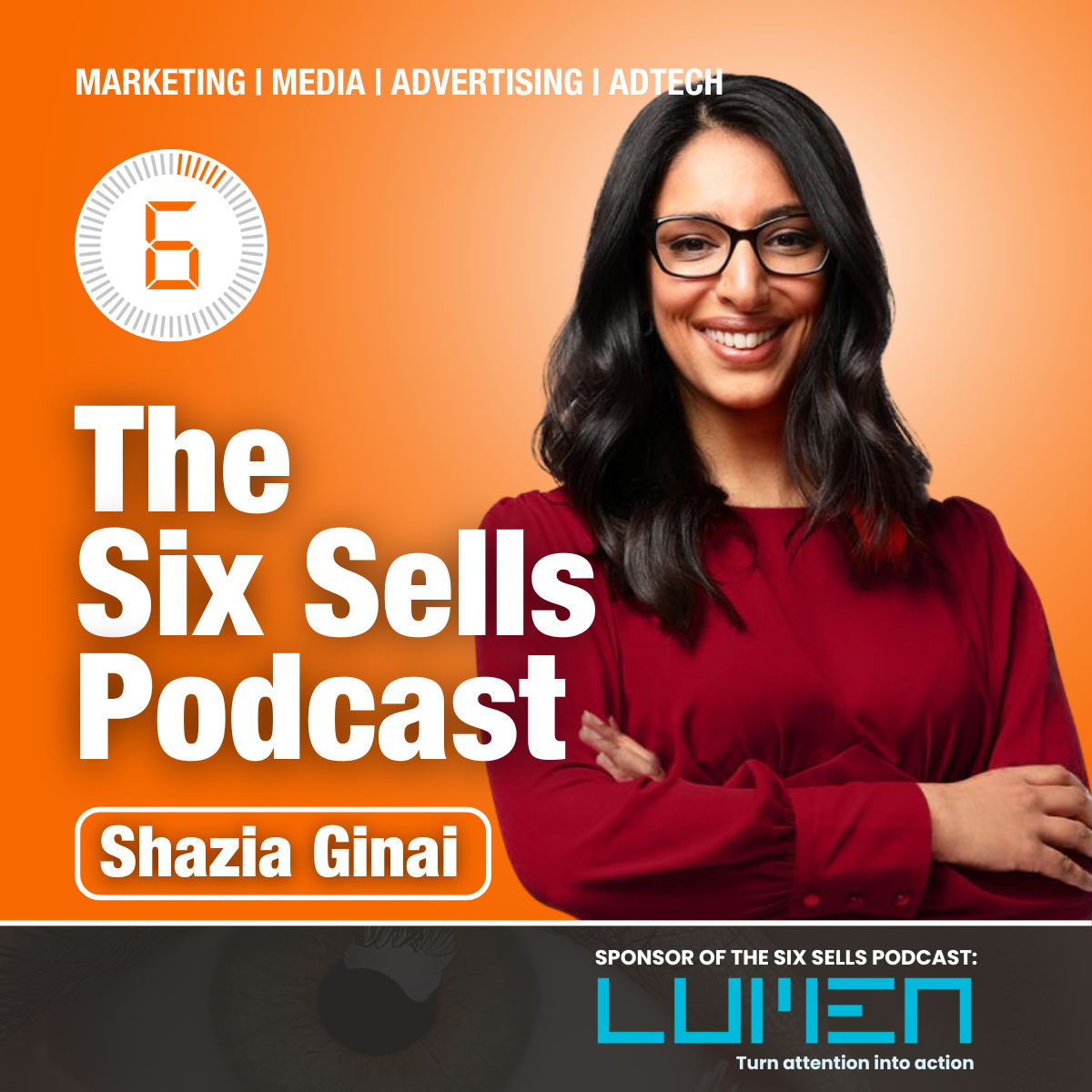
In this episode of The Six Sells Podcast, Mike Nicholson spoke to Charlotte Pearce, founder of Inkpact, about entrepreneurship, human connection and why physical marketing is becoming more powerful in an increasingly digital world.
Charlotte explains how she started Inkpact straight out of university without first building a conventional corporate career, and how an early fascination with entrepreneurship, psychology and human behaviour shaped both her approach to business and the company she went on to build.
They discuss why handwritten notes, direct mail, gifts and other physical communications can create levels of attention, trust and loyalty that are increasingly difficult to achieve through crowded digital channels.
Charlotte shares examples from brands including Victoria Beckham, Marks & Spencer, John Lewis and Sweaty Betty, explaining how physical communications can make customers feel recognised and valued, increase repeat purchasing and even improve their subsequent engagement with digital marketing.
The conversation also explores the resurgence of analogue experiences, the similarities between personal relationships and brand relationships, the realities of running a business, balancing entrepreneurship with family life, and Charlotte's advice for anyone thinking about starting a company of their own.
Topics discussed include:
- How Charlotte Pearce became interested in entrepreneurship after reading Rich Dad Poor Dad at 13 or 14, and why her father encouraged her to think about building businesses rather than simply pursuing a conventional career.
- Charlotte's early experience buying and selling make-up on eBay, and how learning to improve the photography, description and presentation gave her an early understanding of how value can be created.
- How running a large social enterprise while at university gave Charlotte experience leading businesses and teams before she had ever held a conventional full-time job.
- The chance conversation that led to the creation of Inkpact after someone said they loved sending handwritten letters but did not have time to write them.
- Why Charlotte believes entrepreneurship often starts with trying something rather than sitting down and deciding to "start a business".
- How being selected as a young leader, speaking to thousands of people and receiving support from experienced entrepreneurs helped Charlotte develop confidence in her own ability.
- Why Charlotte believes founders need a degree of obsession with solving problems, but also need to recognise the areas where other people are better than them.
- How mentors and entrepreneurs including the founders of Skyscanner, Mr & Mrs Smith and Octopus helped Charlotte understand how to build and scale a business.
- How Inkpact describes its role in helping growing retail brands use physical marketing to create stronger customer relationships.
- Why Charlotte sees brands as extensions of people and believes much of the same psychology applies to dating, personal relationships and brand relationships.
- Why physical mail can attract attention in a world where email inboxes and digital advertising environments have become increasingly crowded.
- How Victoria Beckham uses handwritten welcome notes after purchases, and why Charlotte says customers who receive them subsequently spend substantially more with the brand.
- Why a handwritten communication without a discount, sales message or direct call to action can sometimes create more commercial value than an overt promotion.
- How physical communications can remain inside someone's home for weeks, months or even years, keeping a brand physically present in a way digital advertising cannot.
- The role of costly signalling, and why people can place more value and trust in communications that appear to require genuine effort, money or time.
- Why Inkpact encourages brands to treat their highest-value customers more like influencers by giving them memorable experiences they naturally want to talk about.
- How brands can use packaging, gifts, scent and other sensory details to make physical communications more memorable.
- Why communications from a founder, CEO or recognisable person inside a company can make customers feel more important and valued.
- Why Charlotte believes an "analogue movement" is gathering momentum as people become increasingly conscious of the amount of time they spend looking at screens.
- How physical experiences such as catalogues, postcards, board games and Christmas decorations can create rituals and memories around brands.
- Why Charlotte jokes that Inkpact may have started ten years too early, and why the market now appears increasingly receptive to physical communications.
- How Inkpact's original plan to serve smaller B2B businesses evolved into a business working predominantly with major retail brands.
- How COVID accelerated Inkpact's shift from B2B communications towards retail and consumer marketing.
- Why Charlotte believes founders can restrict their businesses by trying to control too much, and why she now tries to leave more room for unexpected opportunities.
- The idea of deliberately leaving "room for magic" by taking unusual meetings, attending unexpected events and protecting time simply to think.
- Charlotte's ambition to make physical mail a measurable growth channel alongside email, SMS and in-app communications.
- Why measurement and CRM integration are important if direct mail is to be treated as a modern performance and growth channel rather than an old-fashioned marketing tactic.
- How physical mail can be used for acquisition as well as retention, and why privacy regulation makes personalised acquisition easier in the US than in the UK.
- How local businesses and retailers could use physical communication around store openings, refurbishments, local offers and community marketing.
- The opportunity for creators and influencers to communicate directly with customers on behalf of brands, creating person-to-person rather than brand-to-person communication.
- Charlotte's experience of the less glamorous side of entrepreneurship, including responsibility for employees, clients, investors and cash flow.
- Why Charlotte has used coaches, therapists and other forms of support to help her deal with the pressures of running a company.
- Why the period when Inkpact was neither failing nor growing particularly quickly was one of Charlotte's most difficult periods as a founder.
- How Charlotte learned to separate her own identity and self-worth from the performance of the company she founded.
- Why Charlotte does not believe there is a perfect version of work-life balance, and how she instead creates a working life around the priorities that matter to her.
- Charlotte's advice to aspiring founders: test ideas, get good people around you, reduce financial pressure where possible, learn quickly and decide what kind of business and life you actually want to build.
Why is physical marketing becoming more valuable in a digital world?
Physical marketing is becoming more valuable because digital channels are increasingly crowded while people's physical letterboxes and homes remain comparatively uncluttered.
Charlotte Pearce argues that brands have spent years moving more investment towards email, social media and other digital channels, creating intense competition for people's attention. Emails can disappear within seconds, get filtered automatically or simply never be opened.
A physical item has to be handled. Someone picks it up, opens it and decides what to do with it. If it is useful, attractive or emotionally meaningful, it may then remain in someone's home for days, weeks or much longer.
Charlotte believes this creates an unusual opportunity for brands. Digital communications still matter, but physical communications can generate a different kind of attention precisely because fewer companies are using them well.
She describes the space on someone's doormat as "gold dust" for brands and believes the growing desire among consumers to spend less time looking at screens will make physical communications increasingly important.
Why can handwritten notes be effective for brands?
Handwritten notes can be effective because they feel personal, require visible effort and can make a customer feel recognised rather than marketed to.
Charlotte Pearce says Inkpact's aim is to make communications feel more like something sent "from a friend to a friend" than a traditional direct-mail campaign.
That means avoiding excessive branding and, in some cases, avoiding any sales message at all.
Charlotte gives the example of Victoria Beckham, where Inkpact sends handwritten notes following a customer's first purchase. The note welcomes the customer to the community rather than immediately asking them to buy something else.
According to Charlotte, customers who receive these communications subsequently purchase more frequently and also engage more with the brand's other communications.
The principle is that making somebody feel valued can influence behaviour without the brand having to immediately ask for another transaction.
How does Inkpact use physical marketing to increase customer loyalty?
Inkpact uses personalised physical communications to make customers feel seen, valued and part of a brand's community.
Charlotte Pearce explains that Inkpact works with retail brands to trigger physical communications using customer and CRM data. These can include handwritten notes, gifts, catalogues, brochures and other physical experiences.
One example is sending a handwritten welcome note shortly after somebody makes their first purchase.
Charlotte argues that this can help move customers towards their second purchase more quickly. Once that happens, the customer relationship can become progressively more valuable.
She also says the effect does not stop with physical marketing. Customers who have received a memorable physical communication may subsequently engage more with the brand's emails and other marketing.
The objective is therefore not to replace digital channels, but to use physical communication to strengthen the entire relationship between the customer and the brand.
Why does Charlotte Pearce believe brands should treat customers more like influencers?
Charlotte Pearce believes brands can create valuable advocacy by giving their best customers some of the same attention and experiences they currently give to paid influencers.
Brands frequently invest heavily in elaborate influencer gifting because they hope those creators will talk about the experience publicly.
Charlotte argues that loyal customers can be extremely influential too. Their recommendations are made within real relationships, where friends and family may place considerable trust in what they say.
Inkpact therefore helps brands create memorable physical experiences for customers using gifts, handwritten messages, distinctive packaging and sometimes sensory details such as scent.
If the experience is genuinely remarkable, customers may photograph it, share it socially or simply talk about it with people they know.
For Charlotte, this is particularly powerful because the advocacy follows naturally from the experience rather than being purchased as part of an influencer agreement.
Is there an analogue movement happening in marketing and consumer behaviour?
Charlotte Pearce believes there is a growing analogue movement as people seek opportunities to spend less time looking at screens.
She points to examples including Pinterest's focus on offline experiences and the growing popularity of physical activities, postcards, printed newsletters, catalogues and traditional mail.
Charlotte says she has noticed a significant change in attitudes towards Inkpact over the last 12 to 18 months. For years she felt she had to persuade brands that physical communication still mattered. Increasingly, brands already understand the argument.
She also describes her own desire to put screens away and spend time doing physical activities such as painting with her children.
For brands, Charlotte believes this creates an opportunity to become part of those offline experiences. A catalogue can be read over a cup of tea. A board game can become part of Christmas. A branded Christmas decoration can reappear every year.
These objects can create rituals and memories that are difficult for a transient digital impression to replicate.
How did Charlotte Pearce start Inkpact without having a conventional job first?
Charlotte Pearce started Inkpact after developing practical leadership and entrepreneurial experience through university projects, small businesses and social enterprise rather than through a traditional corporate career.
Charlotte says she became interested in entrepreneurship at around 13 or 14 after her father gave her Rich Dad Poor Dad. She subsequently experimented with buying and selling products online.
At university, Charlotte became involved in a large social enterprise organisation. She eventually led a network of businesses and teams working on social-impact projects around the world.
Those experiences gave her confidence that she could lead people, develop ideas and create organisations.
The idea for Inkpact emerged from a conversation in which somebody mentioned wanting to send handwritten letters to busy CEOs. Charlotte realised she already knew people who could write the letters and offered to organise a campaign.
She says she did not initially think of that moment as formally "starting a business". She simply saw a problem, saw a possible solution and tried it.
That approach of testing something before overcomplicating it remains central to the advice she gives other aspiring founders.
What has Charlotte Pearce learned about growing a business?
One of Charlotte Pearce's biggest lessons is that founders need a clear plan without becoming so attached to it that they miss better opportunities.
Inkpact initially looked very different from the company Charlotte expected to build. She thought she was creating a service primarily for smaller B2B customers. Over time, demand increasingly came from large retail brands.
COVID then accelerated that change because office-based B2B communications became far more difficult while consumer and retail communications continued.
Charlotte says the more tightly she tried to control what the business should be, the easier it was to overlook opportunities emerging elsewhere.
She now talks about leaving "room for magic". This can mean protecting time to think, attending something that does not appear immediately relevant or taking a meeting without knowing exactly where it will lead.
For Charlotte, strategy remains important, but experimentation and openness allow founders to notice opportunities that no business plan could have predicted.
What does Charlotte Pearce say about the realities of being a founder?
Charlotte Pearce says entrepreneurship can be rewarding but is far harder and less glamorous than popular portrayals of starting a business often suggest.
Over more than a decade of running Inkpact, Charlotte says there have been many occasions when she wanted to stop.
A founder carries responsibility not just for themselves but for employees, clients and investors. Charlotte says she takes those responsibilities seriously, and that weight can be difficult to switch off.
Interestingly, one of her hardest periods was not a dramatic crisis. It was a period when the business had become stuck at a certain level and was neither failing nor growing in the way she wanted.
Charlotte says she has invested significantly in coaching, therapy, personal development and surrounding herself with people who can support her.
She has also learned to separate her identity from the company. Inkpact is something she created and cares deeply about, but its success or failure does not determine her value as a person.
What advice does Charlotte Pearce have for someone who wants to start a business?
Charlotte Pearce's advice is to test ideas, surround yourself with people who know more than you do and avoid assuming there is one correct way to become an entrepreneur.
She cautions against the glamour attached to entrepreneurship and says running a business is not for everybody.
For somebody who genuinely wants to do it, however, Charlotte recommends starting by trying things rather than waiting for the perfect circumstances.
She used consulting work to reduce the immediate financial pressure while developing Inkpact. She also joined accelerators and entrepreneur programmes and deliberately sought advice from experienced founders and investors.
Charlotte believes modern technology makes it possible to test many ideas without huge initial investment.
She also encourages aspiring founders to decide what they actually want from entrepreneurship. Not every company needs to become a huge venture-backed technology business. A smaller lifestyle business may be exactly the right outcome for somebody else.
The objective is to build the type of company and life that suits the person creating it.
What is The Six Sells Podcast?
The Six Sells Podcast is for people working in marketing, media, advertising, adtech and technology. There are over 150 episodes (and counting), and the biggest episodes have achieved 30,000 views across all platforms.
Want to get in touch? Email hello@sixsells.co.uk
Who is Six Sells?
Six Sells is a UK-based executive visibility and thought leadership agency that works globally with CEOs and senior leaders in media, advertising, adtech and technology.
Founded in 2018, we turn each executive's expertise into distinctive, authoritative content in their own voice, built to reach two audiences at once: the humans that matter to them, and the AI models those humans now ask for answers.
Our work combines executive ghostwriting, video, podcasts, photography and awards to build familiarity, trust and authority across LinkedIn, Reddit, YouTube, Substack, the trade press and the wider web.
We also help executives and their companies improve their visibility in AI search and large language models (LLMs) through generative engine optimisation (GEO), increasing the likelihood that platforms including ChatGPT, Google Gemini, Perplexity and Claude can discover, understand, cite and recommend their expertise.
Email hello@sixsells.co.uk for more information.
Transcript
Mike Nicholson: Hello and welcome to The Six Sells Podcast. My name is Mike Nicholson from Six Sells. Before we jump into today's episode, I just want to say a huge thank you to the team at Intelligent Assistants. Not only are they partners of Six Sells, but they're also sponsors of this podcast.
Thanks again to the team over there. Intelligent Assistants combine human intelligence with artificial intelligence to solve real business challenges. They believe in a process of human first, human last, which really chimes with the way that we think about things at Six Sells. So thanks once again to the team at Intelligent Assistants.
And let's jump into today's episode. Charlotte, how are you?
Charlotte Pearce: Great, thank you, Mike. How are you?
Mike Nicholson: Good, not too bad. How's West Wittering today?
Charlotte Pearce: I love it. I love coming from the beach into central London. You get a bit of both.
Mike Nicholson: Was it sunny this morning?
Charlotte Pearce: It was a bit sunny, yeah. Starting to get a bit cold in the morning, so missing my flip-flop weather.
Mike Nicholson: Your remote working on West Wittering Beach made me feel very jealous when I found out about that.
Charlotte Pearce: I absolutely love it. There's something about being creative by the beach. But then, you know, I really miss London. So I'm in London a couple of days a week, beach a couple of days a week. I think it's perfect for creativity and productivity.
Mike Nicholson: Perfect. Whenever I've got any planning to do, I go to the beach and I need a hotel room that's got a sea view. I don't know what it is about the sea, but it's calming and inspirational and everything all at once.
Charlotte Pearce: I agree. And if I'm having one of those days where it all feels a bit much, just go stand there and breathe and it feels okay.
Mike Nicholson: So jealous. We're going to have a chat today about Inkpact and your career to date, which I've just learned started at Inkpact. I don't know that I've ever met a founder that didn't do something else first, so I'm really interested in that.
We normally ask for a snapshot of your career to date, but that's literally been university and then straight into it. Could you give us a little bit of a view on how that happened?
Charlotte Pearce: Of course. I'm a little bit odd.
When I was 13 or 14 years old, I read a book called Rich Dad Poor Dad. It was all around investing and building businesses and thinking differently rather than just swapping your time for money. I loved it.
My dad recommended the book to me. I think he'd gone through a big corporate career for many years and then decided a lot later in life, "I want to run my own thing, run my own business." And so he was like, "Don't wait as long as I did. Think about it now."
I think I had entrepreneurial qualities from quite a young age. I started buying and selling make-up online on eBay. Make the photo a little bit better, the description a little bit better, buy it for less and sell it for more. I just got the bug, sitting in my pyjamas selling make-up online. Loved it.
Then I went to university because I was the only one in my family that's ever had the opportunity to go, and I wanted to experience it and move away from the Midlands where I grew up.
While I was there, I ran a big social enterprise alongside my degree. I had 30 businesses and 150 people in my team, and I became the president of this business. We had 30,000 people across the world that these businesses worked with.
It was everything from sanitary towels that we'd made and created and helped roll out across Africa, to toilets, to helping ex-military in the UK. So although I guess I haven't technically had a job, I've had lots of experience running different businesses.
That really changed my life. I was 19 years old running this massive global social-impact business that changed people's lives. I was like, "This is what I want to do forever."
When I graduated, I had the idea for Inkpact. It was one of those mornings where I woke up and I was a little bit like, "I have no idea what I'm doing. Who am I to run these big social-impact companies?"
A family friend ran a coaching business and I went and spoke to them, just learning from them really. It was in that room where I was just learning for myself that one of the people said, "I love sending handwritten letters, but I can't contact busy CEOs."
It was one of those sliding-door moments that I could have just ignored or gone along with the conversation. I thought, "I've got loads of people who could handwrite some letters for you. Why don't we do a campaign?"
That's obviously led to Inkpact as it is now.
There were lots of little micro businesses and testing things out. But I've always been very creative and loved working for myself, and had a massive passion for brands and building something from nothing.
I've had little internships here and there, but mostly just figured it out as I've gone along.
Mike Nicholson: I've got so many questions.
When we talked before, we both know Tom at Herdify. He posted something on LinkedIn today about trying to market to people when they're at work because you get those water-cooler moments.
If you've got lots of brands around, people start seeing it like, "They've got it, therefore it would be all right if I got it."
I started searching: is there a company that delivers product samples to water coolers in companies? And there is actually one that's set up. But that was another one of those things where I thought, okay, that's an opportunity. Does that exist?
But to do it so young, all of the founders I can think of typically went to work somewhere and thought, "There's a problem with the way that works, so maybe I'll run my own thing and do that."
Or they see some sort of problem in the industry they're already in. But that didn't happen for you.
Was your dad quite instrumental in trying to make you think, "Be your own boss", from fairly young? Because that's quite young to read Rich Dad Poor Dad as well.
Charlotte Pearce: Absolutely. I don't think there are a great many 13 or 14-year-olds reading it.
I think I also just had this obsession with living my life a bit differently from my family. Not that there's anything wrong with where they lived or what they did, but no one had really gone to see the world or created their own businesses that took them to different places.
I grew up in quite a small location and all my family lived 10 minutes from each other. In many ways, now I look back, that's glorious for my kids and stuff. But at the time, I wanted to run away from that, and I saw business as my opportunity to do that.
I was obsessed with it. "I'm going to build my own business. I'm going to make a lot of money. I'm going to create some amazing things in the world."
That stemmed from my dad giving me that book. He's still one of my biggest cheerleaders today.
I think he just saw something in me. I could get quite obsessed, in a good way. I think you have to when you run your own business. You have to be, one, a little bit crazy, and two, a little bit obsessed with solving problems and creating things.
He said, "I actually don't think you'd love or do very well in the corporate world because you're so obsessed with seeing a problem and fixing it. You're so obsessed with starting something from nothing."
I think I was coached in a really good direction to start my own business. And he's right. I absolutely love it.
I think I'll be building businesses for my whole life. I don't think I'll ever really end up working for anyone.
Mike Nicholson: I started my own business when I was 18, ran it for a few years, then went back to work for other people.
I must admit, it's really hard if you've got that sort of "I want to fix things" mindset to go and work for other people because you're put in a box. You do that job.
You can see a solution being fixed across four different departments, but they just want you to focus on that little bit that you do there. My brain didn't deal very well with that.
Charlotte Pearce: The one time I had an internship, between my second and third year of university, I worked at Enterprise Rent-A-Car on a summer internship.
I was at one of these branches and I could see that the branch wasn't doing very well. I could see a few things, so I wrote a business plan for how I thought they could turn it around.
When you're an intern, only there for a couple of weeks, giving the boss this plan of how I thought they could turn it around didn't go down very well. They absolutely hated me. "Who does she think she is?"
But to this day, I still think it was all around the energy in the branch and making it a lot happier and smiley, asking more human questions and then upselling the different insurance types. It was really focused around human connection.
I remember thinking, "Silly man, if you'd have listened to me, the branch could have done really well."
I saw a problem and I was trying to fix it. Then I got pushed back. "No, I'm not even looking at it. It's not your job. You're an intern. Who are you? Go away."
After that, I was like, "Fine. I'll go and do it on my own then."
In a way, I'm really grateful for that experience. I also learned a lot about how to sell in that internship, just around connecting with a customer and selling.
I definitely took that away. But that pushed me more towards starting my own business and going, "No, definitely do it on my own."
Mike Nicholson: I think if you can sell to the general public, you can sell to anyone because they can be quite rude.
I had a job in between jobs where I was working at a call centre. It was when gas and electricity were deregulated, so your gas company could sell you electricity and your electricity company could sell you gas.
I was ringing Southern Electric customers to try to sell them Southern Electric gas.
There were people screaming at me before I'd even got who I am out. "Why are you calling me?"
Having only been in B2B before that, where people tend to behave themselves to a greater or lesser degree because they're working for a company, these people had no filters.
And I sold furniture to people when I was younger as well.
But the problem you were talking about in the branch, about being happier and asking more human questions, that's obviously got a behavioural science skew to it. Is that in your past as well? Is that what you did at university?
Charlotte Pearce: No. I did management, marketing and entrepreneurship. I've just always been obsessed with how people work.
I spent all of my savings to go and see Tony Robbins to understand how people work. I loved it. It's one of the best things I ever did.
Then I went on to do his Business Mastery course as well.
Rather than doing more learning and doing an MBA, I went and spent all my money on Tony Robbins.
Mike Nicholson: I've always fancied it, but I don't know whether it's going to be cheesy. You say it was really good?
Charlotte Pearce: Yeah. There were people there who'd done MBAs and lots of other stuff.
There's just something around understanding the core psychology of what makes people tick and how you can connect with people.
It's all around the basics of being curious, asking good questions and being really present with them.
People often say, "What's your superpower? How have you started a business? How do you know so many people or connect with them? How have you raised money?"
I'm like, "I just love people and I love understanding how to give them some joy in their life or help them with something."
Therefore, I get a lot out of that too. I think that exchange is really important.
Through that, I've been able to build businesses and help brands try to do that.
I often think of brands as an extension of a person in lots of ways. I often talk about dating advice and brand advice being very similar.
How we deal with our personal lives and our dating lives is very similar to how brands can relate to their customers.
It all comes back to understanding a person and their psychology, what makes them happy, tick, buy or become interested. It's all the same stuff.
That's why I love psychology so much, because it relates to everything: personal life, brands, growth, everything.
Mike Nicholson: I'm going back to day one at Inkpact again.
You're starting a brand-new business. Please don't take this in the wrong way, but I'm trying to think about how people start businesses.
They normally get some competence somewhere by going to work for someone else and think, "Hang on a minute, there's a problem here that I can solve." Then they go off and do their own thing.
Because you missed that bit out, I'm trying to think of where you got your confidence from. Was it your dad? It's such a brave move.
I don't mean that in a way that I hope comes across as condescending. It isn't. I'm genuinely fascinated.
Charlotte Pearce: It's partly obviously the environment I grew up in.
Then, when I was at university and I ran this social-enterprise business, you basically have a chairman or a CEO every year. When you graduate, you have to pass that business to someone else to run because the rule is it has to be under the student environment.
The president before me was a guy called Chris.
I joined this society and I just wanted to have some fun and make some money. He saw what I did to fundraise and to build a business to make some money for this company.
He was like, "You're the next president here."
He picked it out really early on. There were people who had been in this company for years and had run the projects internally. I hadn't.
He just went, "You're a leader. I see something in you. You're coming to Washington later in the year and you're getting on stage in front of 6,000 people. I'm going to basically show you how to run this business."
There were people more qualified, but he just saw something in me.
To go on stage, speak in front of 6,000 people at 19 years old and then start running these businesses, and then I got invited to Russia to speak at this presidential academy. Basically, the president of Russia asked us to go over and talk about youth entrepreneurship.
I'd had these experiences where, when I used my voice, built businesses and shared big ideas, people listened.
I was like, "Okay, I can do this."
When I was in that room and someone said, "I love sending handwritten letters", I didn't see it as starting a business.
I just saw it as, "Cool, I can connect you to these people we've got across the world. I could make some money from it. Let's just try it."
I had this experience that business, using your voice and creating things can lead to really amazing stuff. Why not? What have you got to lose?
I didn't think of it as starting a business.
I thought, "I could make some money. This person could make some money. He could have better marketing. Win. Let's just try it."
I think I've still got that today.
Sometimes it can be really hard to go, "I've got to start a business. Here's a whiteboard or here's a plan."
Actually, just try something and see what works.
Then have a ridiculous amount of confidence in yourself that you can make it work. But also, if it doesn't work, that's okay as well.
I think I'm just a very risky person and I always have been. If that little project didn't work out, I'd think of something else and do something else.
Mike Nicholson: You said something before we started recording. Your dad said, "Don't get used to a wage", because once you get used to a wage, it's hard to start your own thing because you've got to get rid of the wage.
But you started from zero, if you like, in terms of income, so there was no risk in many ways.
Charlotte Pearce: And I started really young. I was 21 or 22 when I started.
I didn't have a family, a house, a mortgage or kids like I do now.
It would be so much harder to start a business now. There's a lot more risk associated with it because you have a family that depends on you.
It's still possible. Lots of people do it, and I'd still encourage that if you feel in your heart that's what you want to do.
But it was easier when I was 21 or 22, not because I didn't have the experience, but because I didn't have all this extra stuff.
I think, in a way, it's a bit like having kids. There's never a good time. If you waited two years already, you'd never start.
I don't think there's ever the perfect time. But it was quite nice not to have to say goodbye to a salary to start it.
I did little consulting jobs. I worked in a bar for a bit. Then I was an entrepreneur consultant, whatever the hell that is, for PepsiCo and Unilever.
I hustled my way in with absolutely no real background, but just a lot of love for building businesses and brands.
That funded my living in London and moving to London, which I wanted to do to raise money to build the business.
Again, it was that confidence that I'll figure out a way. If I can just get there and start something, I'll figure out a way of doing it.
Mike Nicholson: Amazing.
When you start a business, you're head of sales, head of marketing, head of product, head of finance, head of HR, head of everything.
Normally, when you go into a business, you might be good at one of those areas, two if you're lucky, but you've got to try to figure out the rest as you go.
What were those early years like when you're basically learning all of this?
You've got a natural-born communications talent and you know how people tick, so you've got a huge advantage over a lot of people. But you've got to learn the processes of business while actually starting the business.
Did you have people around you that were working with you? Did you start on your own?
Charlotte Pearce: I started on my own.
Very quickly, I realised that to make a scalable business, I needed someone who understood processes and tech, which I did not.
Like you mentioned, I love the people, the brand, the marketing, the sales, even the fundraising. I can do that because it's all storytelling and people.
Then there's the actual setting up of the tech and processes.
We built a platform which, in the early days, was a bit like Deliveroo but for scribes and handwriting. I needed someone to help me bring the tech.
A couple of years after I'd come up with the idea, I brought on board a co-founder called Andrew. We went through a few different accelerators and incubator-type programmes together.
He was really tech-focused. I was sales and marketing-focused, and fundraising.
Then we just surrounded ourselves.
When I first came up with the idea for Inkpact, I was so lucky to get onto this entrepreneur programme in London called the New Entrepreneurs Foundation.
It got you in front of investors and people who wanted to give back.
I got to sit down with the founder of Skyscanner and I said, "This is what I want to build", and he helped me map out what that could look like.
I think surrounding yourself with people like that is so important.
Day to day, I needed Andrew and people around me who had different skill sets. But I had these amazing people mentoring me.
I was this little girl from the Midlands. I'd never even been to London, let alone understood the London ecosystem of how you build a tech business, which is actually what we ended up creating.
But I got to sit down with the founder of Skyscanner. Then I met the founder of Mr & Mrs Smith, who's still an investor of ours today, and met the founder of Octopus, and it just spiralled.
I got to hang out with these people and get advice from them.
That is one of the reasons why I think we are where we are today. Partly my blind confidence, and partly just me knowing I don't know everything.
I have to get these people around me and I have to get them fast, and I want them to be superstars to help teach me what I don't know.
Even now, I am just not amazing at the processes and finance side of things. I've learned it and I've got better as I've got older because I need to know the numbers to grow this business.
But I know I'm not the best person to be doing that and I hire really good people to do it.
Mike Nicholson: I so want my kids to watch this podcast. This is so inspirational. My daughter's actually called Charlotte as well. Maybe I can convince her to watch it based on the name.
We've got six questions that we think are really important for any founder to be able to explain.
I think a lot of people don't do it so well because they're so in the weeds of the business that they forget they're talking to people with a helicopter view.
They're down here, they know everything, and they can't unlearn what they know to layer the information for people up there.
Those questions are: who are you? What do you do? Who do you do it with? How do you do it? Why is it valuable to do it? And what happens after you've done it?
If we think about Inkpact through those six questions, how would you define it?
Who are Inkpact?
Charlotte Pearce: Inkpact are a company disrupting the way that brands think about growth and connection.
We are trying to disrupt an old, outdated industry with print and physical media and transform it into something really valuable for businesses.
Mike Nicholson: Fabulous. What do you do?
Charlotte Pearce: We help businesses grow through physical marketing that gets put in people's hands.
Mike Nicholson: Lovely. Brand in the hand. Who do you do it with?
Charlotte Pearce: We do it with growing retail brands across the world.
Mike Nicholson: How do you do it?
Charlotte Pearce: We do it through sending handwritten notes, gift boxes and marketing that makes people feel something, all connected to their CRM system.
Mike Nicholson: Lovely. Why is it valuable to your clients?
Charlotte Pearce: It's valuable because it gets seen, it gets appreciated and it makes the customer act, do something and engage with their brand.
Mike Nicholson: Which leads into the last one. What happens after you've done it? What's the benefit to your client? What do they see?
Charlotte Pearce: It helps them form a community of people that love, value and spend more money with their brand.
Mike Nicholson: Very good.
I'm really interested in your business.
I have wanted to do a direct-mail campaign for the longest time, a handwritten one, but my writing is awful. It would just be like, "Return to sender. I don't know what this means."
That's the first problem. And also just getting around to it.
But I feel the letters I get now are from Santander and HMRC. Other than that, it's quite clearly franked machines that are "to the occupier", "to the homeowner" or "to the business owner".
You can tell almost immediately when you look at it, "I can throw that away without even opening it."
Charlotte Pearce: You think, "That's not for me or not that important."
Mike Nicholson: That's trying to sell me something, a credit card or something.
The volume of that has gone down significantly over the years.
I know Rory Sutherland talks about this. He grew up in direct marketing, obviously, where you write to someone and give them a coupon.
I know it feels very dated, but the premise is still the same.
If you send something to somebody that feels of interest to them in that moment and it feels valuable, they'll do something with it.
If I think about a letterbox as a bit like an inbox, it's probably the least crowded inbox we've got at the moment because people stopped doing direct mail and started over-indexing into digital channels.
Have you got any case studies, whether anecdotal or otherwise, about how brands have seen the light and thought, "Actually, maybe we need to under-invest in digital a little bit and start thinking about the physical world more?"
Charlotte Pearce: We work with lots of brands that have done direct mail before, but also some that never have.
Victoria Beckham is a brand we work with that had never touched physical mail or direct mail. It was brought up in the e-commerce world. Great brand, great brand name, but hadn't even considered it.
We spoke to them and approached them. They said, "We've never done it. We don't know if it works, but we need another channel to grow because email is saturated. We have this really luxury-feel product. Let's give your handwritten notes a go."
Now they see a 16 to, I think, 5,000 times ROI is the most we've ever seen with them, which is insane.
We send a handwritten note triggered after the first purchase of a Victoria Beckham handbag, bag or jeans, et cetera.
It's just a welcome to the community, thanks for your purchase.
It's triggered seven to 14 days after the purchase, so they've already had that product. They get this handwritten note and then we track what happens.
When someone doesn't receive an Inkpact, they go on to purchase, I think, one point something to two times more that year.
When they have received an Inkpact, it was between six and seven times more that year.
The psychology behind that is: "They welcomed me. I feel part of something. I had a really great experience with the brand. I'm now going to go back on and buy."
They get to their second purchase quicker.
If you get them to the second purchase quicker, that whole spiral of loyalty and value grows.
If you also look at what happens to their email communications when someone's received this handwritten note, they then go on and engage with their emails more. They engage with the other marketing more.
You're getting more money out of those other channels too.
I'm talking about a simple handwritten welcome. No discount code, no call to action, nothing. We just track it in there.
Mike Nicholson: That's what I was going to ask.
Because it's handwritten and you're not asking for anything, you don't feel sold to.
You're just saying thank you for what you did before and nothing more.
That's kind of different, isn't it? Most things would be like, "By the way, if you want to buy this, this and this, we've got it."
Charlotte Pearce: If you think about how long an email will stay in your inbox, if you are even lucky enough to look at it and AI and your spam filters haven't put it somewhere else, you get a couple of seconds.
With that note card that's landed on the doorstep or in the letterbox, they've got it, moved it, opened it, thought, "That's nice", and put it on the side.
It can stay there for weeks and months and years.
We often say from a friend to a friend is going to get the best response. Not overly branded.
We don't put any branding on the envelopes. It's not a marketing campaign in the traditional direct-mail sense.
Mike Nicholson: It's on heavy paper though?
Charlotte Pearce: Yeah. When you actually open the note card, there's often a logo on one side.
But again, a piece of artwork on the other side, something they'd want to put on their fridge or mantelpiece, works really well.
The aim of the game is to make them feel special and valued. You want them to see it and then you want to keep it around their house as long as possible.
When they're walking past their mantelpiece, there's the card from Victoria Beckham.
Your brand is in their head all of the time they're walking around their own home.
That is priceless in terms of what that can do for a customer, their loyalty and them remembering your brand.
You can't get that with digital and you can't get that with email.
Mail is this golden space right now.
That space on a doormat is like gold dust for brands.
If you either can't email someone or you just know they're not opening your emails, mail is a great way to get in front of them.
People trust mail.
I think Royal Mail did a study recently. They trust mail more than any other form of communication at the moment.
They don't trust emails or advertising. People don't trust it, partly because of AI and how easy it is to make these things now.
Mike Nicholson: There's a psychological construct you'll be aware of called costly signalling.
If people think it took you a lot of time, effort or money to make something, they're more likely to trust it because you wouldn't have done that if it wasn't trustworthy.
Also, thinking about what I said earlier about what comes through my letterbox. It's HMRC, my bank. That's how trusted organisations in my life communicate with me.
I suppose there's an element of that as well. If I'm used to things coming from organisations that I trust, whether I like them or not, that's one more thing.
Charlotte Pearce: I think you then think, "I'm important and this is important."
When you've got those two things, you've got the costly signalling and you go, "At least I'm going to read it."
Then you can get the message right, the right tone and everything else right as well.
You've just layered up to an incredible piece of marketing.
That's why I think mail particularly is like a golden bullet for businesses at the moment.
I think it's only going to get better, not worse.
Mike Nicholson: I love this so much.
Unfortunately, we've only got an hour, but when I find ideas like this, I just keep coming up with different ideas on how you could use it.
When you mentioned Victoria Beckham earlier, I wondered if you'd ever done anything with smell.
Charlotte Pearce: Interesting. We do gifts and gift boxes.
One of my theories is that if brands took some of their money away from influencer marketing campaigns, not all of it, and treated their top customers like influencers, they're going to get much better reach.
Generally, if you look at it again, trust in influencers goes down. The more you know they're getting paid for stuff, you start to trust it a bit less.
But you trust your friends and family more than anything.
We often do campaigns that are gifting for top customers.
We put tissue paper and smells in there for various brands we work with, like Space NK, and we've done some things for L'Occitane and lots of brands.
Making the whole experience.
People go to town on influencer gifting. I don't know if you've seen some of the things people are gifted online.
Actually giving that experience to your top customers is so valuable because they're the ones spending money with you.
Their friends and family love to hear about these things and they really trust them.
So yes, we've done some things with smell and gifting smell to people is really interesting.
We've put some spray on tissue paper and made it really special.
Mike Nicholson: I was thinking if every letter from Victoria Beckham smelled of a Victoria Beckham fragrance, you'd be like, "That's quite a special fragrance. I'd wear that."
Maybe just a little PS, "That's the latest fragrance that you can smell there."
I don't know how it travels. Does it travel quite well?
Charlotte Pearce: Yeah, as long as it's absorbing into the paper or tissue paper or anything that's porous, it works really well.
I will pitch it to her, Mike, and we'll let you know.
Mike Nicholson: Do it. Invoice is in the post.
My daughter gets offered a lot of stuff on TikTok. People go, "Can you review this, unbox it?" and stuff like that.
But you're kind of doing that in the real world. You're delivering it directly into people's hands.
Do you see a lot of social uptake where people take to social media and say, "I've just got this from Victoria Beckham"?
Charlotte Pearce: Loads.
We've given Victoria Beckham a lot of airtime, not that she needs any more airtime. She's doing very well with her brand at the moment.
We did the same with Marks & Spencer and the CEO there wrote a note to lots of the Sparks customers.
People took to LinkedIn, particularly with that campaign, to thank him.
They know that he didn't sit and assemble all of those gifts, and Victoria Beckham does not sit and write every note.
But, "I'm important enough to get a message from the CEO", is again making you feel special, valued and appreciated, plus the costly signalling.
I think all of those things put together.
No matter what the company is, not everyone's going to have a massive figurehead or celebrity as their founder, but every business does have a founder or a head of something or someone who really cares about that brand.
Putting a message, gift or something from that person is really impactful.
We can all do that, no matter how big or small your business is.
Mike Nicholson: We have Victoria Beckham. You mentioned M&S.
Their head of product, her name has completely escaped me, but she's now taken to TikTok and is doing very well.
It feels like, when we launched Six Sells, we launched with the insight that people pay more attention to people than brands.
Everything we do is through the people in a company. Most of what we do is through the people at the company rather than the brand and products.
We've got Unilever reportedly hiring 300,000 creators this year. You've got M&S sending the head of product onto TikTok.
From research with a company called Dig In, which does boxes in universities where they give you lots of physical-world stuff when you arrive on your first day, they've done a lot of direct research with Gen Z university students.
There's this feeling that people want to pull back a little bit from how long they're spending online.
They feel they have to go online, but they want to do less of that.
You've maybe got this move towards the physical world becoming a little bit more important.
Maybe we've over-indexed on the digital world.
Do you feel like your business, even though it started 11 years ago...
Charlotte Pearce: Eleven or 12 years ago.
Mike Nicholson: ...might actually be coming into its own right now?
Charlotte Pearce: Honestly, the last 12 months.
I made a joke recently that I think we started about 10 years too early.
I felt like I was peddling, "We can send handwritten notes, gifts, physical mail. Let's bring it back. It's great."
Everyone was like, "I kind of get it, but I'm not going to spend money on it", or I only got top, high-average-order-value brands.
In the last 12 or 18 months, I saw Pinterest at Cannes do the analogue movement.
When I was at Wimbledon, we were in this area and they were getting you to write postcards to people.
I'm like, "I've been doing this for 12 years. I was just 10 years too early."
I reckon in the last 12 to 18 months there's been this massive analogue movement.
When I'm talking about Inkpact and why it works so well, and now we do more than just handwritten notes and gifts, we do catalogues and brochures.
People want to sit down with a cup of tea or a glass of wine and flick through a catalogue, get off the screen.
This weekend I bought a paint-by-numbers because my screen time was crazy the last few weeks.
I got a paint-by-numbers, I got my kids some paint-by-numbers, and we just painted and put our phones away. It was magical.
People want that experience.
For brands to get in on that, let's be gifting things to people that can give them that experience.
We've done lots of things recently and I've just pitched some more for Christmas around getting people to get board games out again.
Whatever brand just sent you a board game just for fun, you're going to remember it.
That's going to be around your house all Christmas.
We've been doing Christmas-tree decorations for brands for years. They get put up every year.
We send John Lewis Christmas-tree decorations in this beautiful gift box that goes out every year.
Then the next year they're like, "What Christmas-tree decoration are John Lewis going to send me?"
It becomes a thing with their family.
These moments of ritual and things you can create with people, I think, are magical. We're all begging for them.
However we can, as people, inspire them, or brands can inspire them, we should go with that movement.
I think it's good for all of us to have more analogue.
There's this analogue trend that's happening and we were there ready to be part of it because we started 10 or 12 years before.
So, right place, right time now.
Mike Nicholson: It's taken a little while.
Charlotte Pearce: Thankfully I didn't give up along the way.
Mike Nicholson: How did you get your first customers?
When Karen and I started Six Sells, a lot of people reached out and wanted to have a coffee.
I initially, naively, took that as all good: you want what we're selling.
They just wanted to know, really, what's it like running a business? They wanted to know the pros and cons.
One of the questions I get asked the most is, "How did you even get your first customers?"
When you just open your doors, metaphorically speaking, to business, now what?
What did that look like for you? Did you start already with somebody in mind?
Charlotte Pearce: When I was in the room and it was this ActionCOACH business and they said, "I love sending handwritten notes, but I don't want to write them", I went, "I've got a match."
They'd come up with the idea, but none of them wanted to start a business.
I said, "I'll deliver it for you."
So I had the first customer.
It was a franchise. Then I got 10, 12, 15 customers and started to think, "I might have a business here."
From that, I decided to build this platform, which was a bit like Mailchimp but for handwritten letters in the early days.
I really thought I was building a B2B business.
For the first six, seven, eight years, half our business was B2B and half was retail.
Very quickly, brands started coming to us that had met me at a networking event or something.
We had Moët Hennessy, Mr & Mrs Smith as part of this founders group I was part of.
They'd say, "We'd actually like some for our members", or, "We'd really like some after someone buys a really nice bottle of champagne."
I thought we were building a B2B business.
We actually built part B2B and part direct-to-consumer.
Then the world gives you something lovely like COVID.
I couldn't send anything to B2B because no one was in offices.
It gave me a purely retail business.
I think Steve Jobs says you can't join the dots looking forward, only looking back.
I believed I was starting a business for SMEs.
If you look at us now, we don't work with any SMEs. We only really work with large enterprises and in the retail space.
I was wrong on both accounts.
They're not small and they're not B2B. They are large and they are retail.
But you only know by going along and trying it.
Now we're actually looking at, "Can we build a self-service platform for B2B? Can we build a self-service platform for SMEs?"
That's what we're starting to build as well now.
But most of our business needs that managed service that enterprise clients want and use and pay a lot more money for.
As I was starting, I had no idea.
The first customer paid for the second and then the next.
It was only probably a couple of years in that I raised money and built the platform, after we'd been built on spreadsheets for a couple of years first.
Mike Nicholson: That's so interesting and gives me a little bit of inspiration as well.
I was 100% building a B2B business and still am, but it feels like the B2C world is picking up on people-shaped marketing quicker than the B2B world.
I would never have guessed that because B2B businesses are full of people, so it just makes so much sense that B2B businesses should do this.
But then you've got the likes of Unilever and Marks & Spencer and influencer-creator marketing, all of these people, because people pay more attention to people than brands.
I had a call with one of the biggest B2C brand owners in the world about this and their 300,000 creators and stuff like that.
I'm thinking, maybe I'm following just behind you. Maybe I'm a B2C business after all.
But it feels so strange to me that brands selling to consumers picked this up quicker than B2B.
Charlotte Pearce: It's interesting because you just don't know.
I think the biggest lesson I've learned along the journey is that the more I control something, the more restricted something gets.
Mike Nicholson: Say that again.
Charlotte Pearce: The more I try to control things as a founder and in the business, like, "We are only a business that does this for these people", actually, I'd have missed the opportunity for retail, or I'd have missed the opportunity over here.
As a founder as well, the more I'm like, "I have to do it this way, this way", the more I miss opportunities over here.
Recently I read a book called The Surrender Experiment. It was all around how sometimes life works really well when you don't intervene.
Then, when you do need to intervene with action, you go for it.
But I'm such an action, doer-orientated, go person. You miss those signals sometimes if you're so committed to your lane of, "I'm only this company for these people."
You miss this whole opportunity.
I've tried to be a little bit less, "Go, do, this is the only way", and go, actually, the space is a little bit where the magic happens.
Mike Nicholson: How do you make that space for yourself?
You're right. You have a strategy and a plan and you go and do the plan.
But how do you make space for looking at potential other opportunities, like B2C for example?
Charlotte Pearce: A very, very successful guy who's the founder of Octopus Group and Octopus Energy and lots of others said to me, "I want you to block out half a day in your diary every week just to think."
Mike Nicholson: Every day?
Charlotte Pearce: Sorry, every week!
Mike Nicholson: Half a day every day would be hard.
Charlotte Pearce: But he had a point, right?
You know how hard it is to block out half a day every week.
Mike Nicholson: I do Friday afternoons, but it's still hard.
Charlotte Pearce: To think.
Then you're like, "I can fill it with this or that or the other."
Now I try.
Here's the plan. Always have a plan. Always know the numbers. Always know these things.
But sometimes just explore that little something that comes along and you're like, "It's a meeting. I don't know what's going to come out of it, but I'm going to take it anyway."
Or I'm going to put my half a day aside and think of something completely random or different that we could do.
Recently I got asked to talk on stage about something that I don't normally talk about. I did it and it was great and I loved it.
You just take these little things here and there.
I call it leaving a little bit of room for magic.
You don't necessarily have to schedule it in.
But if you've got that mindset of, "I will just take that random meeting", or, "I will just go to that event even though it's not that relevant", or, "I will speak to that customer or that B2C even though they're not B2B", and just see what happens.
Sometimes it doesn't go anywhere and you let it fizzle out. Sometimes it might be something.
Mike Nicholson: I'm going to sound like Rory Sutherland now, probably, but you're expanding your surface area towards opportunity, aren't you?
By doing those things, there's more opportunity for you to find serendipitous opportunities if you just put yourself out there.
I don't think I'm very good at that.
I do try and keep Fridays, as much of Friday as I can, which usually ends up just being Friday afternoon, to think about the business.
But I think I'm still thinking about the business in the guardrails that I've given it.
This feels like a therapy session.
Charlotte Pearce: It's great.
Mike Nicholson: I think I still think about the business in the guardrails that I've given it, and I need to probably take those guardrails off, if only for Friday afternoon.
Anyway, it's not about me.
What's next for Inkpact? What do you want it to look like in five years' time if we sat down again?
Charlotte Pearce: Great question. I love it.
I'm very open about this.
We got stuck at a certain revenue.
We were selling handwritten notes and gifts to retailers that looked a certain way. As a business, we got a bit stuck and were bouncing around there.
Companies would come to me and say, "Charlotte, you do handwritten notes, you do gifts, we'd love your opinion on this or that", or, "How else can we do physical mail?"
So we acquired a business. Now we can do all physical mail.
My big dream is that you have email, you have SMS, and every company has mail again, but in a very different way to what it did five, 10 or 15 years ago.
It's tracked and measured in the same way, very similar to your digital and other channels.
You're looking at money in, money out, ROI. We're tracking it in CRM systems.
There's a real-time reporting layer with Shopify or Klaviyo or whoever they're using for their CRM system and growth.
I think we should be putting mail back as the next growth channel alongside email, SMS, in-app and physical mail.
Whenever I go to anything that's like direct mail, if you've ever been to a direct-mail conference, it is like it's 20 years ago still today.
I think there's room to absolutely shake it up.
I'll stand on stage in my leather jacket and my ripped jeans and I'll be like, "The future is direct mail."
I'm a younger person and I'm female, which often you don't find at these conferences.
I'm really saying we can make it sexy again. It could be a great growth channel.
For me, in five years' time, we will be as big as your Klaviyo, having that other growth channel that's just as important as email and SMS, and them all working together.
But done, tracked and measured on a platform just like your Klaviyo or your Attentive, et cetera.
Mike Nicholson: The interview I had before this one was with Tom Kerr at SeenThis.
He spent a number of years, I think 10 years or something, at Dentsu.
We were talking about how you put a business like ours in front of agencies and clients.
The things he came up with were differentiation, simplicity, make it really easy to understand, differentiation, this is why it's different, and then make it easy to buy.
It sounds like the platform you're building will do that last bit.
In a planning tool within an agency, you could say, "We've got our out-of-home, this is where we buy our video from, this is where I buy display from, this is where we're going to buy our out-of-home from", and just plug it in and go, right?
Charlotte Pearce: Yeah.
Ultimately, you just have to be proving you're adding value at all times.
I think the biggest thing is you want to make yourself really hard to turn off.
We've been working with some of our brands for nine years. They're never going to stop working with us because, for every pound they spend with us, they get £10 back.
I think it's actually 16 times, so £16 back.
You wouldn't turn that off.
You'd find other ways to grow with the brand. We understand their business and their strategy, and now we do everything with them in physical mail.
We started with one product and we've made ourselves really valuable.
That's what I think every business needs to do and then be able to prove easily how valuable it is.
"If you turn this off, you're going to lose millions of pounds."
It's the dream position to be in.
Mike Nicholson: One hundred per cent, especially when you can measure it that precisely.
But this is all first-party data from existing customers, right?
Do you have any plans to do anything for acquisition?
Charlotte Pearce: We do, but you can't make it personalised in the same way.
In the UK, everything we do is around making someone feel special, seen, valued and personalised.
We've got really clever in the UK with what you can do and the data you can get.
We're working with some brands on how you use what you do know about them.
It might be their road, their street, their local area.
How do you personalise it so, when they pick it up off the doormat, it's still for them?
We are doing that, but it's harder.
In the US, it's much easier because you can get that personalised data and you can market to people with mail.
Our business is split across the UK and the US, but acquisition can be a lot bigger in the US.
It can't be as big here because of GDPR.
Mike Nicholson: What's the smallest campaign you could run?
Would you like us to run a campaign?
I'm thinking, and maybe because it's lunchtime and this is probably saying more about me than I should be broadcasting, but for some reason my local pub came into my mind.
They do a lot of social media to say, "We're doing two-for-one on Peroni" and stuff like that.
But taking what Tom at Herdify said when he came on the podcast, with what you're saying, what if you could write to everyone in my little village of Stoneleigh and say, "Come on Monday, there's two-for-one on Peroni", with a handwritten note from Peroni?
It would be a few thousand houses, so it might be too small.
Charlotte Pearce: For us right now, anything under 5,000 is too small. Even 5,000 is quite small in the scheme of where we work.
However, when we get the self-service platform up, anyone could do that. You could log on and send 1,000 very easily.
I get asked all the time by people, "Can I send even 10?"
Someone came to us the other day and said, "Can we send 10?"
I was like, "You can do that yourself. Hire someone, a daughter, friend, family, someone."
But we often get asked and I do want to find a solution.
When you start a business, you have to start a little bit with who's paying you the most money.
Personalisation is personal, right? Often there's a smaller audience for what you want to do.
But it's a really good idea.
We've done this with Waitrose and Space NK for new store openings or refurbished stores, John Lewis, et cetera.
When they have to close down a store for a little while or they're doing a new one, they invite all of the people locally to tell them about this new refurbishment.
It's so good for that customer journey.
One, you're actually telling them if the store is out of action for a bit.
But two, you're inviting them in personally and they feel really special and valued.
I've been invited into this new pub to try this thing on a Monday because it's locals' night.
I think it's a great idea and lots of pubs should do that.
Hopefully very soon we'll have a platform that can help them.
But in the short term, they should find someone to help handwrite some notes for them and send them out.
Mike Nicholson: I'm thinking also David Lloyd. I'm a member of David Lloyd and they'll have first-party data, obviously.
What they could do is perhaps mix a little bit of Rory Sutherland with Tom and your own behavioural sciences.
Thirty per cent of the people in Stoneleigh have a David Lloyd membership either at Cheam or Epsom.
"We're doing an offer. If you want to pop in, bring this letter with you."
Charlotte Pearce: It's interesting because me and Tom and Rory often all get together and chat about these things.
We're all talking about it in slightly different ways.
Mike Nicholson: Very cool.
Going back to Victoria again, she's kind of a brand in her own right, but she's a person, right?
Influencers and creators are also people.
Are there any plans, maybe you've already done it, to send handwritten letters?
Let's take Unilever. They're rolling out 300,000 creators.
What if each of those creators could send an Inkpact to the audience of the brands they're going to be advocating for and ask you to follow them on social media?
Charlotte Pearce: Have you been listening to some of my talks recently?
I actually talked about this the other day.
I really want to find a brand. I don't think we've done it yet, where rather than the brand talking to people, the influencers talk to people or the people behind something.
If the company doesn't have a person, they often pay lots of influencers or engage with creators.
If those people then wrote notes to people, that's actually more impactful.
I think it's Joe Wicks who's a big Gousto advocate.
Rather than Gousto sending it from the founder, sending it from Joe Wicks is much better.
Using these networks to write from a person to a person and creating these amazing chains would be really lovely and could carry really empowering messages as well.
When we've done things with Sweaty Betty around International Women's Day, a message comes from a lady at Sweaty Betty. It could have been a creator, to empower other women.
They're writing a note card with a really positive statement and asking them to write one to another woman.
That's like chain mail back in the day, snail mail back in the day, where you've got these chains and people writing to people.
I've seen a massive trend on TikTok recently around snail mail and people signing up to physical newsletters, where people are sitting packaging things with stickers again.
I think a big part of the creative industry is starting to do that.
Stephen Bartlett even has a physical newsletter that goes out now in the mail every month.
A handwritten note, if you could converse with somebody at a brand, who knows? Maybe that could come back.
Mike Nicholson: Lots of Inkpacts needed.
Charlotte Pearce: Lots of scribes.
If we can bring in lots more scribes, it would be lovely.
Mike Nicholson: Going back to being a founder, I'm trying to think of some of the things people would want to know.
Absolutely fascinating story, by the way.
I think part of your problem and brilliance is that your actual founder story is so interesting that I could have spent hours on that and not even worried about the actual business.
But that's also a massive strength because people lean into you and they'll want to listen to you talk.
I don't think you've really done any selling today. You've just talked about what you're doing and it's really brilliant stuff.
But another question is: what's shit about running a business?
Because there's always something.
I know you can't really compare it with long corporate life, which is fine, but are there things where you think, "It must be easier to work for someone else", at times?
Charlotte Pearce: Over the last 12 years I've probably wanted to give up about 100 times, in different ways.
I underestimated what starting a business would be like.
It gets glamorised quite a lot. You see Dragons' Den, Shark Tank, and especially when creators are talking about it, you're like, "Running a business is on this pedestal."
It's really freaking hard.
Also, there is no off switch.
I had four weeks' maternity leave with both of my children, partly because I needed to go back to the business and partly because the business needed me back.
I chose to do that and I could have chosen differently, but that's how it worked for me in my life at the time.
There is no off switch.
Over 12 years, like with any relationship, there have been times I've loved it, been on this roller-coaster high, amazing.
And times where I've wanted to go, "Get me off this roller coaster. I hate it. I hate this business now."
Then back to, "I love it again now."
Mike Nicholson: Can you remember what was happening on the highs and the lows?
Charlotte Pearce: It's partly tied to creativity, but there are all different things.
You've got the people element. You've got the cash-flow element. You've got the client element.
You start a business because you want freedom, but actually then you're beholden to your investors, to your people and to your clients.
That can be quite a big weight on your shoulders.
Most business people would probably say the same.
I take that very seriously.
If someone's spending their career with us, their money with us or their investment with us, I take that very seriously, and that's on my shoulders.
That can be quite a heavy thing to carry a lot.
I've always had to have a coach, a therapist. You talked about therapy earlier. I love therapy, coaching.
I go on lots of courses and do a lot of things to make sure I am the most authentic, best version of me when I can be.
On that down, which we get all the time, I want to make sure I can pick myself back up again and be the best person to run this business, the best mother, the best wife and the best person.
I can only do that if I have a team of therapist, coach, personal trainer, everyone around me to help.
But I wouldn't say it's as linear as, "The business is struggling with cash, therefore it's been hard."
The hardest time was actually when we just weren't growing.
Nothing was going wrong, but nothing was going amazingly well.
It was the mediocre middle I really struggled with.
Mike Nicholson: Why do you think that?
Do you think because you were bored with the status quo? You wanted to go that way?
Charlotte Pearce: I just wanted a bigger company now.
I've worked for years on this. Why is it not bigger? Why is it not this, that and the other?
I've had to do a lot of soul-searching around, "Some people would love a business this size, Charlotte. Come on. What's wrong?"
It's all your expectations.
The best thing I've ever done is work really hard on myself and also try to detach my ego from the company.
The company is a product of what I created, but it's not me.
Let's say this company does really well. It doesn't mean I'm suddenly the best person in the world.
If it fails, it doesn't mean I'm bad or wrong or I've done anything wrong.
I've had to, and I'm still, detaching a little bit.
I created this business and I love it and I run it and it adds a lot of cool stuff in the world, but it's not me.
If this business wasn't here, I'd still be me.
That took me a while.
Starting the business so young, I'd linked the two together so much, probably a bit too much.
It's only in the last couple of years, really, I've been able to detach it.
And then it's done a lot better.
Mike Nicholson: Interesting.
Two questions to interlink this.
One, do you think you've achieved work-life balance?
And two, if you left the business tomorrow, could it run itself?
Charlotte Pearce: Great questions.
I don't think I've achieved work-life balance.
I don't think there's ever actually an achievement of work-life balance entirely.
I love life at the moment in particular.
I've got this life with my kids by the beach. I come into London and stay in London and get to go to amazing events and be with clients.
Having my time at the beach, doing my spinning and with my kids, and then this quite go-go-go life in London works for me really well.
I still get times of burnout and I still get times of, "Oh my gosh, I just need to take a minute."
But for me, that's as close to balance as I've ever found.
I'm not really a person who even likes balance, to be honest. I'm very go, or I'm very black and white with a lot of things.
But I'm as close to balance as I have ever been.
I don't know if that's getting older, getting wiser.
I just decided I wanted to create life my way and be really unapologetic about it.
That means I dress more like me and I act more like me and I say whatever I want and I live here and move here.
I feel like I've been a lot more powerful in creating the life I really wanted.
Especially having two small kids, we have an au pair who lives with us and we couldn't do it otherwise.
You have to get those mechanisms around you to get that balance.
People are like, "Charlotte, how do you do it?"
I'm like, "Well, I get help in the areas I need help in."
That's sometimes childcare. That's sometimes with my health. That's sometimes with my mental health.
Whatever that is, I will always ask for help.
Mike Nicholson: That's great advice.
You said there's no off switch. I would agree with that 100%. Definitely no off switch.
For me, I'm not sure if it's so much balance, but getting to decide when you do things.
There's always going to be some element of the business whirring away in the background.
But if you plan well, the difference for me is I spent a lot of time in corporate life before I started the company.
If I want to play tennis on a Tuesday afternoon, I'll play tennis on a Tuesday afternoon and the work will move around it.
That would be frowned upon in a corporate world. "What do you mean you're going home? No, you're not. Get back to your desk."
I think it's about how you move things.
There's only seven days in the week for everyone, and it's how you move things around.
Now, because it's my own thing, I don't mind working at the weekends.
If I wanted to take a day off and then just work Saturday to make up, that doesn't bother me.
It might have done a little bit more in corporate life because it's not yours. You feel it's a bit of an imposition if you're asking me to work weekends now.
Do you think it's more about being a little bit more in control of when you do things?
With two small kids, I'm assuming there are parts of the week where you want to be there and not thinking about work.
Charlotte Pearce: Yeah.
There are these little moments you have to carve out.
The only pick-up I do from school is Friday at three o'clock. The other times he goes to an after-school club or someone else picks him up.
Fridays at three are sacred to me.
Between three and six, I hang out with some of my mum friends, the kids hang out, we go to the pub, go to the park, we might go to the beach.
That's sacred. That's my time.
But I'm happy to do a couple of hours on a Sunday when the kids are watching TV or playing. I can do a couple of emails.
I think you find those times to make it work for you.
Sunday power hours I love. I always have.
Even when I'm on holiday, I'll go on holiday, but if I do an hour every morning, I'll have a better holiday than if I just turned off completely, because I'm thinking about work.
I might as well just do the hour, put it out of my head, do all the important stuff and then get on with the holiday.
I've just found what works for me.
The same with maternity leave.
I was like, "I want to go back a couple of days a week", or I think I had Fridays off, but I'm going to go back Monday to Thursday because I will be a better person and a better mum for the rest of the time if I do go back to work.
I think everyone just has to be really honest.
For some people, that will absolutely not work. For other people, it does.
You've just got to find what works for you.
And no judgement for anyone else doing something different.
Mike Nicholson: Such an inspirational story.
Thank you so much for your time.
Can you end maybe by giving some advice to people who are thinking of leaving university and wondering what's next, particularly as it relates to starting a business?
What advice would you give to people in that boat?
Charlotte Pearce: First of all, I think starting a business is not for everyone.
Be a bit careful about this whole glamorised idea that starting a business is great and you'll make lots of money. It is really difficult.
But if you know your heart is in it, anyone could absolutely start a business.
I would say the best thing I ever did was get people around me who really knew what they were doing.
Don't think you know everything, because you don't.
Go and learn and surround yourself.
You're the average of the five people you spend the most time with. Still a great quote today.
Go and surround yourself with amazing people.
Go on accelerators, incubators.
For me, I got a job that took the money pressure off a little bit. I got the consulting jobs so that I could start the business.
Eventually I was able to stop the consulting and just go straight for the business.
Don't think there's one way to do everything.
Don't just give up everything to start the business.
Start slowly.
Nowadays you can test, you can trial. You can do it for very little money as well.
AI and tech are incredible at building things.
Or go and get your first customer that gets you that first bit of the business.
Just go and try, test and learn.
See what works for you and see what works for your customers.
If you've got your heart set on running a business, then absolutely do, but work out what it looks like for you.
I think it looks very different for every business owner.
There are lots of different types of businesses you can start.
You don't have to go and build a multi-bazillion-pound tech business.
You can start a great lifestyle business running it from a beach in Bali.
If that's what you want, you should go for that.
Figure out what type of business you want to run and then be really obsessed with building that type of business that works for you.
Mike Nicholson: You talked about selling make-up on eBay at the beginning of the conversation.
I've often thought about this. My daughter does a little bit of that. She sells stuff on Vinted, similar idea.
I think it was Gary Vaynerchuk who talked about this.
Anyone can make, say, £100,000 a year by doing exactly what you said.
Buy something at one price, do a nice job with the pictures and the description and the story around it, then sell it for a higher price and do that at scale.
That's a business.
Charlotte Pearce: I think everyone overcomplicates business a lot.
All business is: buy it for less, sell it for more.
That's it. That's business.
That can be anything.
I heard about a friend of mine's son who got expelled for selling sweets out of a locker.
I'm like, "Typical entrepreneur. That is a great business. You can sell a lot of sweets out of a locker."
Mike Nicholson: You went to whatever big hot book is, get two dollars...
Charlotte Pearce: Exactly.
The school should have been saying, "Okay, maybe you can't do that for these legal reasons, but that's really entrepreneurial. Why don't we do X, Y, Z with you instead?"
Instead of making him expelled or whatever it was.
I think we should be encouraging that behaviour, not squashing it.
But there are lots of ways to start a business.
Mike Nicholson: There are.
Charlotte, that's been amazing.
Thank you so much for your time.
I think I've just run over a little bit, but I could have spoken to you for another couple of hours at least.
Charlotte Pearce: Thanks, Mike. It's been a pleasure.
Mike Nicholson: I hope people enjoy listening to that as much as I enjoyed having that conversation.
Charlotte Pearce: Thank you for having me.
Mike Nicholson: Thanks again.
Actually, 160-ish episodes in, I think that might be my favourite ever episode.
That's no offence to everybody else that was on. I've enjoyed every one of these.
But that's just so inspirational.
The fact that you started a business without having done a job first. I don't think I've ever met anyone who's done that.
I think there's an element of crazy in anyone who starts a business.
As you say, you get that weight where things aren't going well and you've got to keep everything going, so I think you've got to have a little bit of craziness.
But just brilliant.
Obviously, the business is doing really well.
Charlotte Pearce: Thank you.
Mike Nicholson: Absolutely love that story.
If I can get my kids to sit down and watch this, they'll be better for it.
Charlotte Pearce: Well, if Charlotte watches it, let me know. I'd love to chat to her.
Mike Nicholson: Yeah.