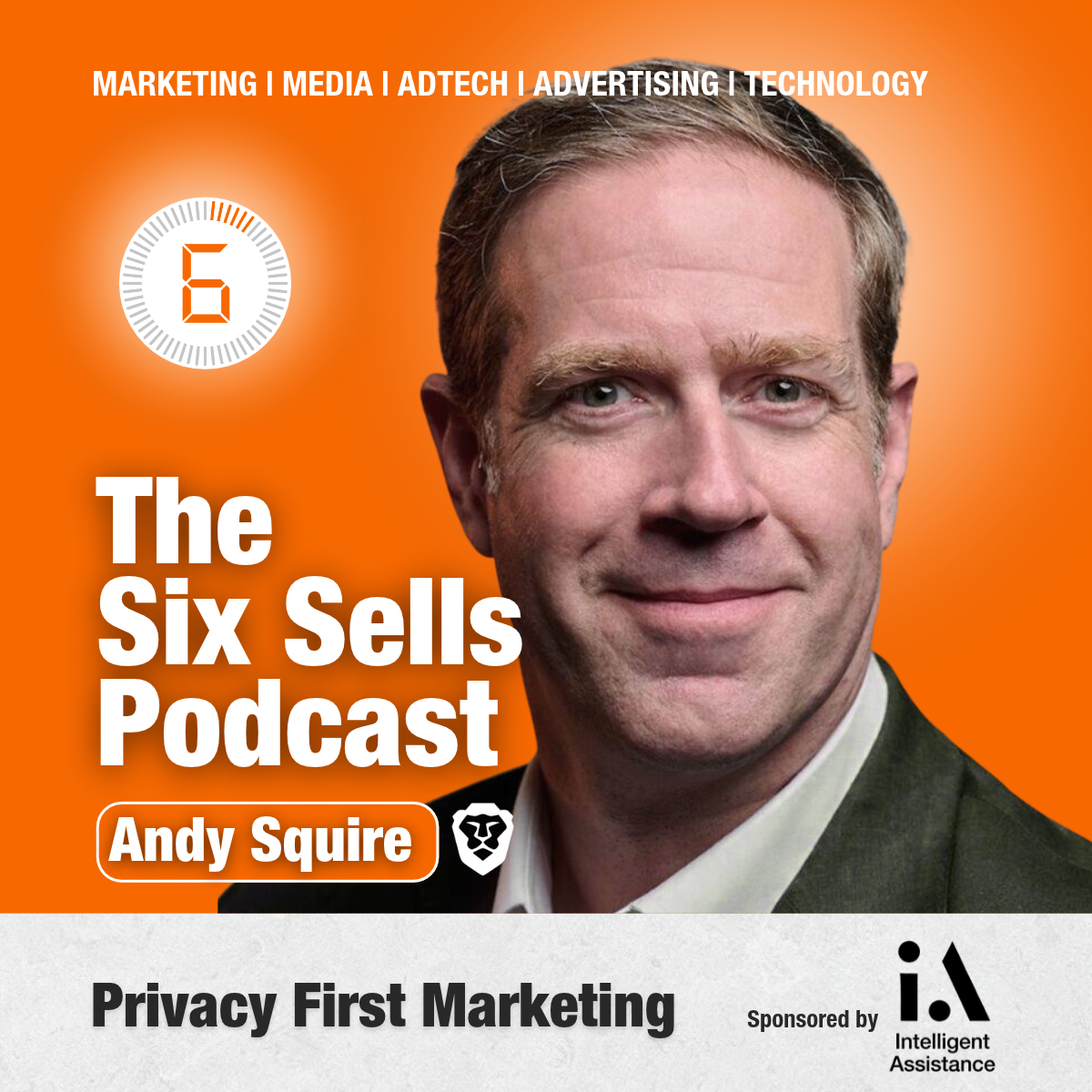
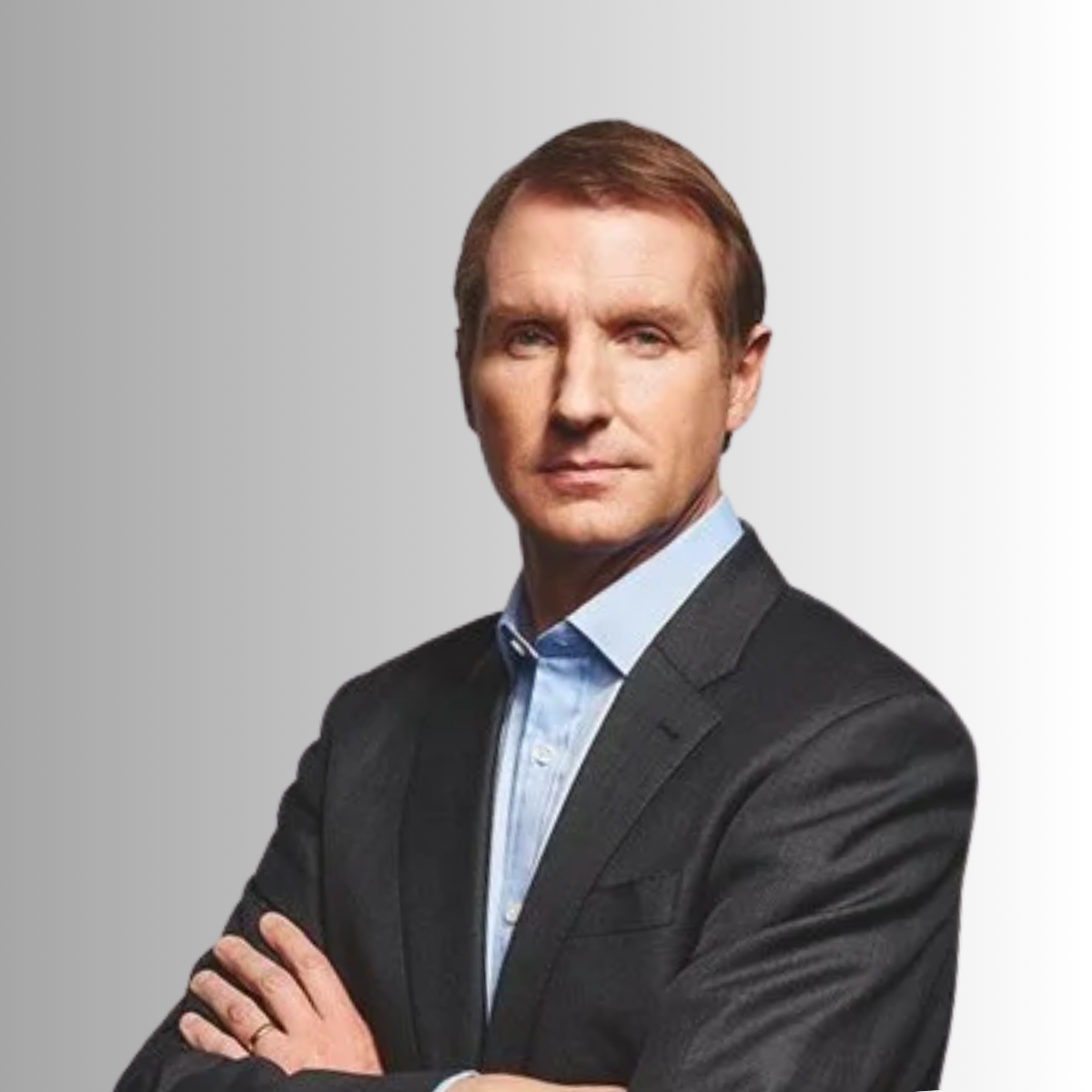
In this episode of The Six Sells Podcast, Mike Nicholson sits down with Andy Squire from Brave to talk about privacy, browsing, search and advertising in a privacy-first world.
Andy has spent 25 years in digital media, starting as a buyer in search and display before moving into ad sales and programmatic advertising. Mike and Andy discuss how the industry has gone in cycles, from contextual advertising to finding users at the right time and in the right space based on data, and how consumers are now starting to understand the exchange between themselves and the internet.
Topics discussed include:
• How digital advertising has gone in cycles, from contextual targeting to chasing people around the internet.
• Whether the industry shot itself in the foot by going down the response route rather than establishing itself as a branding medium.
• The value of a click and the attribution of a sale.
• The exchange between consumers and the internet.
• GDPR as a tipping point for the general public.
• Whether consumers should be reading a minute and a half of sliders on consent banners.
• How Brave has grown through word of mouth and peer-to-peer recommendations.
• The distinction between blocking and privacy.
• How Brave monetises its ecosystem without taking data from consumers for retargeting.
• How long-form queries are broken down into hundreds of searches.
• Whether advertisers should be serving ads to consumers who are in research mode.
• Why blue links are as important, if not more important, than ever.
• Who owns the advertising journey and advertising data?
• Why the technology and marketing departments within businesses need to come closer together.
• How Brave Search could help retailers generate incremental business and feed their retail media plans.
How has digital advertising changed over the last 25 years?
Digital advertising has gone from contextual targeting to finding users at the right time and in the right space based on data, and is now moving towards a privacy-first mentality.
Andy Squire explains that in the early days of digital media, users weren't getting tracked because there was no tracking. While that was nice for the user, it wasn't great for the end client because they didn't know the profitability of their digital advertising.
Andy believes the industry went down the response route because it was the nearest and easiest money to get as a seller or a buyer. Advertisers had proof of ROI and would invest more money.
However, Andy would have loved to have seen the internet develop more as a branding medium - a screen that people see and use, where advertisers could get their brand message out there.
Was GDPR a tipping point for consumer awareness of online privacy?
Andy Squire believes GDPR was the big tipping point for the general public's understanding of how much data was being moved around the internet.
When consent banners started appearing, consumers were exposed to information about what they were giving over in exchange for accessing a website.
Mike and Andy discuss whether itemising hundreds of advertising and technology companies is particularly helpful to consumers who don't know who those companies are.
Andy personally prefers giving consumers a simpler choice between necessary, marketing or advertising purposes, or opting out. He believes it's up to the industry to self-monitor how many bits of technology it puts on a website and how that impacts the consumer.
What is the difference between ad blocking and privacy-first browsing?
Andy Squire believes the key is to give users as much of the internet as possible on their own terms.
If you're just a blocker, Andy explains, everything gets removed and it becomes a frustration. In a privacy-centric environment, first-party data can still pass, consumers can log in, and their shopping baskets are still there.
The exchange between a consumer and a retailer, bank or other business should still be there because that's the consumer's choice.
Removing third parties where there is a lack of understanding or knowledge is what Brave users have opted into.
How many people use Brave and how has the browser grown?
At the time of recording, Andy Squire reports that Brave has 55 million daily active users and that its monthly user numbers grew by 30% between October 2025 and October 2026.
Andy explains that one of the highest trust signals comes from somebody you know telling you that something is a good browser.
While Brave has previously seen fantastic spikes in user numbers through advertising, the longevity of those users hasn't been as good.
Through peer-to-peer communications, people spend time in conversations and trust the information they're getting. Brave tends to see longer usage from users acquired in this way.
How does Brave deliver advertising without third-party tracking?
Brave offers advertisers two principal opportunities - its new tab takeover and paid search.
Andy Squire describes the new tab takeover as Brave's virtual digital out-of-home offering. Advertisers get 100% share of voice for a day, with zero audience or contextual targeting.
Search is different because it's about the intent behind a single query. If somebody searches for hiking boots, Brave makes a decision about whether it has an appropriate ad to serve in that moment.
Brave doesn't need to store that information, reuse it, retarget the consumer or use it for contextual advertising later.
As Andy explains, Brave doesn't need a lot of data to serve a search ad. It needs the query.
How do large language models break down long-form search queries?
Andy Squire explains that a long-form query gets broken down into individual search query terms.
Mike uses the example of somebody with wide feet who is looking for hiking boots to climb Everest.
The model breaks that down into terms such as hiking boots, wide feet and Everest. While it might appear to be making four searches, Andy explains that it can actually be making hundreds of searches to find the relevancy of the query.
The model then builds an answer out of those queries and the information it has found.
For Brave, the key is citing sources and giving users the option to click on links and go deeper into the content.
What is the difference between Brave Leo, the search summariser and Ask Brave?
Brave has three AI-powered offerings, each designed for a different purpose.
Brave Leo is its in-browser AI, which is very much associated with the page the user is on. The search summariser provides an AI-generated summary of search results, while Ask Brave is its natural-language conversational search offering.
Andy explains that Ask Brave isn't a platform for creating images or spreadsheets. It's more about searching the web and finding out information.
Are consumers less likely to click on ads when using AI search?
According to Andy Squire, consumers using long-form search queries seem to be in a research environment and are less inclined to click on advertising.
Andy explains that Brave sees around 30% to 50% of traditional search queries as being commercial, whereas that drops to around 8% to 10% in longer-form queries.
One of the big decisions Brave makes is whether there should be an ad associated with a query at all.
It doesn't mean Brave doesn't serve ads within conversational search, but it needs to understand the intent of the query and whether the ad is going to enhance the consumer's journey.
Will AI search replace traditional search and blue links?
Andy Squire believes blue links are as important, if not more important, than ever.
At the time of recording, around 70% of Brave's searches are still traditional, short-form queries, with around 30% being long-form searches.
Andy explains that long-form search still needs to have a destination. He gives the example of looking for information about why his radiators had stopped working, with the end destination being a YouTube video.
Whether that destination is a publisher, a video site or a purchase point, Andy believes conversational search is another path to a destination that the user wants.
The industry needs to think about those journeys being joined up rather than treating traditional search and AI search as two separate entities.
What advice does Andy Squire have for marketers moving towards privacy-first advertising?
Andy's first question for marketers is who owns their advertising journey and advertising data?
By having a third party involved, advertisers are giving that data to another platform to store, own and operate for them.
Andy believes one of the most powerful messages Brave can give to marketers is not to give up on cookies, but to position them in a first-party world where the relationship is direct with the consumer.
He also wants marketers to understand that there is scale within privacy-first environments.
Andy talks about the conversations Brave has with marketers who say they can't track anything, and technology departments that have access to product codes, SKUs and customer data.
The data does pass, he explains. It's about marrying up those two areas of the business.
How could Brave Search work with retail media networks?
Andy Squire describes Brave Search as an access point for retailers to get incremental users through its web index, generating new customers that retailers can then feed into their own retail media pathways.
Andy shares an idea involving a supermarket and a brand such as Pampers.
Pampers is a great brand, but it doesn't have a transactional point on its own website. Could a supermarket use Brave Search to generate that transaction and then feed the data back to Pampers on lift and incremental business?
Andy would love to explore how Brave could influence retailers' customer data and store information through search, without needing to marry up first-party data.
As Andy explains, Brave would be the conduit - a passageway for the user to get to the final point of their journey, whether that's finding out more about a brand or buying its products.
It's a theory that Andy would like to investigate, rather than an existing retail media offering from Brave.
What is The Six Sells Podcast?
The Six Sells Podcast is hosted by Mike Nicholson, founder and CEO of Six Sells, and features conversations with senior leaders from across the media, advertising, adtech, publishing and technology industries.
The podcast explores industry trends, challenges, opportunities and new ideas through conversations with people working across these industries.
Who is Six Sells?
Six Sells creates and distributes thought leadership content for senior leaders in media, advertising, adtech, publishing and technology.
Six Sells helps clients build visibility, credibility and authority with both human audiences and large language models, turning visibility into commercial conversations.
Visit www.sixsells.co.uk to find out more.
Full transcript of Andy Squire from Brave on The Six Sells Podcast
Mike Nicholson: Hello and welcome to The Six Sells Podcast. My name is Mike Nicholson from Six Sells. Before we jump into today's episode, I just want to say a huge thank you to the team at Intelligent Assistance. Not only are they partners of Six Sells, but they're also sponsors of this podcast.
Intelligent Assistance combine human intelligence with artificial intelligence to solve real business challenges, and they believe in a process of human first, human last, which really chimes in with the way that we think about things at Six Sells.
Thanks once again to the team at Intelligent Assistance, and let's jump into today's episode. Andy, how are you doing?
Andy Squire: Very good, thanks. Yeah, it's going well.
Mike Nicholson: Good, good. Last time I spoke to you was at the Digital Voice MAD//Fest cabana, and my goodness, was it hot! Anyone that saw those interviews, I think, should have been clapping because it was a hell of an ordeal to be trying to speak coherently while keeping cool.
Andy Squire: Yeah, it was a big challenge, but I think we got through it, just about.
Mike Nicholson: I didn't look great, I must admit. I said, 'Oh, I look like I'm melting on camera.' But anyway, I don't look great anyway, so it's fine. I can deal with it.
We're going to talk about privacy and browsing and search and all those good things today. But what we traditionally do on the podcast is get a little bit of a potted history of your career to date, which I know included buying search and stuff. So maybe if you could kick us off with that, that'd be great.
Andy Squire: Yeah, happy to. Twenty-five years into digital media sounds like something a medal should be given for. But yeah, I started off as a buyer in search and display, moved into ad sales probably about ten years into my career, selling publications, selling magazines, selling internet.
Then moved into the programmatic space when that launched, I think 2011, with the ill-fated Rocket Fuel, but it was a good ride when we were there.
And then I looked around, and Brave was positioning itself as a privacy browser coming into market, looking for an ad sales kind of thing. And it sang to my personal belief that things shouldn't be given away for free, and it should be choice, user choice.
So I'm very happy to have joined about three years ago, and we've really pushed hard to build our platform for display and predominantly for search, as a browser.
Mike Nicholson: Okay. You said 25-plus years. Unfortunately, I'm 30-plus years now. I was talking to, I think it was Tom Kerr, about it at some point. I have to probably stop, and maybe I've gone too far. Maybe I should just say 20-plus years forevermore.
Andy Squire: Yeah, because 30-plus seems too much, doesn't it? At some point, it's diminishing returns, and that extra five years just makes you out to be old.
I think that, but also I think that because we're in digital media and it's constantly changing, you could say I've been here five years and people are like, 'Well, that's a long while.' So all those little extra years, I think, are a credit to everyone who does it.
Mike Nicholson: Yeah, well, I just feel very, very old when I say that. But the reason for bringing it up is that you see these things going in cycles.
So back probably when you were buying search, it was very contextual-led. The example I would give, for some reason, is always Hellmann's. If they wanted to advertise to foodies, they'd come to us at The Telegraph and say, 'Well, we want to be on your food page.'
And if you looked, we didn't have very much in measurement back then, other than click-through rate. If you looked at the click-through rate of a Hellmann's campaign in the food section, it would be 20 or 30 times that of the same ad run of site across The Telegraph because it's contextually relevant.
You know what you're doing. The user doesn't give you any data. You're not mining the data or anything like that. And then programmatic came along, third-party cookies, and we started chasing people around the internet.
It became a lot more about the who rather than the when. So, if we were trying to buy a Telegraph audience, maybe we'd buy them on crap.com because it was ten times cheaper to do so, and we knew so much about them.
And so then we took the privacy away to quite a large extent. But it feels like over the last few years we're coming back to living in a privacy-first world. What are your thoughts on that?
Andy Squire: Yeah, I think you've hit it in terms of the cycle. You're right. I mean, I was buying from The Telegraph 20-plus years ago, and also in the search terms as well.
When you think about companies like Vibrant Media and things like that, who were selling search query terms into contextual articles, and you were trying to get business-focused users or consumers, food lovers or sports fans.
The users weren't getting tracked because there was no tracking, and that was nice, but not great for the end client because they didn't know the profitability of digital advertising.
So I'm not surprised we went down the cookie route, and we ended up having an environment or a business that was focused on delivering results.
I think the industry itself, from my point of view and my experience, we kind of shot ourselves in the foot with that a little bit because I don't think we knew we were going to reach virtually 100% of the population so quickly as an internet business.
And therefore we went down the response route because that was the nearest and easiest money to get as a seller or a buyer. It was one you could prove, and you had the proof of an ROI. Clients would invest more money.
What I would love to have seen, and a branch I would have loved to have seen happen back ten or 15 years ago, was we're a branding medium.
We're a screen that people see and use, and therefore get your brand message out there and deliver that.
That would have been a really nice subtle shift in the industry, but we didn't. We went down the programmatic route. I went down the programmatic route, as I said, and I loved it.
It was great selling that concept of, 'We can find your user at the right time and space based on data.' It was incredible, and it worked.
Mike Nicholson: I feel there might have been a bit more branding before programmatic, perhaps.
Again, this might be a sample size of one, but we used to sell quite a lot of very branding-led campaigns, like mega banners above the masthead and stuff like that. But you're right, a lot of it was how many clicks.
Andy Squire: At Brave, we have a new tab takeover for brands to buy for one day. I sell it as our virtual digital out-of-home offering because it's 100% share of voice.
But the end answer is, 'Am I going to get enough clicks on that?'
Mike Nicholson: What do you think about the click? The click as a metric, just generally?
Andy Squire: It's always going to be there. It's a valuable indication of a product's value to a user, right?
I am clicking on this because I am interested. It's something that does show an exchange between a brand and a user.
Does it show you value? No, because there are nefarious people out there that can generate clicks robotically, as they choose to, at will.
And it's some of the work that we do, obviously, at Brave as a browser. We try and protect users against those kinds of things and clients against it as well.
So the click will be there, but it's not the be-all and end-all. I don't think anything can take away from the actual physical, 'Have I recorded a sale?'
I know there are going to be people out there that will be discussing the attribution of that sale and who should be credited the value there, but that's a whole different argument.
I think clicks are there to stay. Credit where credit's due should be based on ROI if you're looking at performance. And I think the internet's still learning how to do that.
Mike Nicholson: Well, it's our obsession with that last click as being the thing that we attribute. That kind of does a disservice to all the other stuff that you said you would have liked to have seen 15 years ago, right?
You see the brand five times and then you click. 'Oh, yeah, but that was the click.'
Or you go to a search engine and you search for something because you've seen it five or six times, but you can't track the journey.
So, in some sense, the programmatic, cookie-based, let's-track-everyone-everywhere approach made sense to try and put those journeys together, but didn't really make sense for consumers.
They didn't get much out of that.
Andy Squire: Consumers don't look at it linearly like that. They don't go, 'Oh, well, I saw it on TV, I saw it outdoors, now on the internet.'
Mike Nicholson: No, I mean, in terms of all of the data being taken in order to join up the dots for marketers, that wasn't really necessarily in the consumer's best interests.
Andy Squire: In that sense, no. I think the more analytics that went into the internet and into marketing in general, the more was taken from users unwittingly. The phrase isn't right, but without their consent.
And I think that's where we're at now. Users are starting to understand there is an exchange between themselves and the internet.
And a lot of them, thankfully for Brave, are moving towards a privacy-first mentality where they're owning the choice in that exchange, either restrictive or permissive. They are allowing their data, their information, to be shared or not.
And I think that's the key thing, actually giving users choice. And that's where Brave's platform was built from, is user first.
If you give the user choice, then you allow them to understand it. You can get them to understand it, and then that choice can happen.
We have users who turn off our Shields and just like our browser. And then we have the majority, I'd say, that have the Shields up and run it 100% at the highest category to stop anything leaking from their data.
Mike Nicholson: I suspect there may have been an element of ignorance, not in a bad way, but just people didn't know what was happening with their data. The general public I'm talking about now.
And that seemed to change. I don't know if you're able to pinpoint when that started to change.
Again, sample size of one, but I think people that work in our industry assume that everybody understands that the reason advertising is on a site is to supplement the cost of the content.
But I've found a few people that I've spoken to that have got nothing to do with our industry that didn't know that.
They were, 'Oh, I'd never really thought about it like that. I just thought they were spamming me because they wanted me to buy their products.'
So I think there's an assumption because we're in this bubble working in media and advertising that everybody gets that, everyone knows that, but I don't think everyone does.
But at some point, people started to understand that their data was being used and started to kick back. And I think that's probably where the Brave browser first came to prominence, right?
People were looking for an alternative to being tracked.
Andy Squire: Yeah, I think from personal experience, I didn't really get on top of the amount of data that was being moved around the internet until I started programmatic around about 2011, 2012.
But actually, a few years later, when the GDPR rules came in, I think that's the tipping point for the public as well, because when those consent banners came up, users then probably started reading them.
Not all of them, not the thousands of lines, but actually the top line is, you are going to accept some kind of loss of data for this advertising or for accessing this website.
And I think that's when probably the tipping point was. And Brave is 11 years old now, so it wasn't soon after that that Brave was launched.
And I think that's when the coupling of those two things gave us a great little niche in the marketplace. To say, look, you don't have to have that exposure, or you don't have to expose yourself if you don't want to. There is a second option, and that is Brave.
Mike Nicholson: Yeah. So some sites didn't take GDPR probably in the way that it was meant, and it was a yes or no. But some did it to the letter of the law, and they surfaced in that consent banner everyone that's got access.
And I must admit, even though I've been in the industry for as long as I have, I looked at one of them once, just professional interest, and I was scrolling for a minute.
I was like, 'Oh my God!' There were hundreds and hundreds of companies. A lot of them I'd heard of, many that I hadn't.
And I was thinking, if I was a consumer and I looked at that, I'd think, 'No way I'm happy with that.' Because I would never know any of those brands because I'm just a consumer. I don't work in advertising, so I don't know what these DSPs are. I've never heard of them. And why do they need my data?
Andy Squire: And that's where we got to as Brave, and that's the Brave Shield. If you are a Brave user, you can go and check on each page and every site you visit what is being blocked, right?
And I've seen, I think the maximum is about 250 in our counter of active blockers on one single page.
It is a wow moment when you start looking at that. And you go, if everyone knew that, what would their choice be?
And it's a shame. I kind of sit with two hats. One, I know it's needed to a point for the industry, and I think the value exchange between advertising and publication has to be there.
It was interesting you said that you didn't think a lot of users thought there was an exchange, given that they've bought magazines and read newspapers for hundreds of years, so they know there is a value exchange between content and advertising.
Mike Nicholson: Yeah, but usually you buy those, don't you? So the internet's obviously a different story.
But I've definitely had conversations, and it surprised me because I specifically asked those questions because I thought, are we assuming too much here? Are we assuming that everybody acts like we do and understands what we understand?
Because people don't spend a lot of time thinking about advertising, let's be honest. Outside of advertising, it's something that kind of happens.
But it would be really interesting to know. You think around GDPR is when it starts to enter the consumer's agenda?
Andy Squire: I think that has to be the real big tipping point. When you're exposed to a little bit of information, I think human nature lends you to investigate further.
I've done the same as you, a minute and a half of reading who's doing what. That's just the geeky side of life for us in digital media.
But I think the general consumer then does pause to think. I think now there's a lot of publications that are starting to produce the pay-to-play kind of scenario, where you either pay me or you give me your data.
I don't have an objection to that concept, but again, it raises up to a consumer, what am I giving over, and what environment do I want to engage in that publication with?
Am I happy just to say yes for me to get through this article because actually it's really interesting and I want to read it? Or am I going to be loyal to the brand and pay you to be unexposed to some of those things?
Mike Nicholson: Yeah, I think personally, I don't think itemising each brand is helpful.
I understand it might feel like you're doing the right thing for the consumer. I actually don't think you are because they don't know what any of those brands are, so you're just confusing them.
And they might say no when otherwise, had it just said advertising companies to make sure you get more relevant ads, they might have gone, 'Yeah, that's fine. I don't care about that.'
Andy Squire: I think you're right there. Personally, again personally, I prefer the consent where it's necessary, marketing or advertising purposes, or opt out.
I think that keeps it very clean, and it's up to the industry to self-monitor how many bits of tech you put on your site and how that is going to impact the consumer.
But I think the consumer shouldn't be reading a minute and a half of sliders.
Mike Nicholson: They don't spend that much time looking at the actual advertising, let alone who's got access to it.
So what's the history of Brave browsers? I know it's steeped in people looking for a privacy-first option, but how long have you been going? When did that start? Was it around the time of GDPR coming in?
Andy Squire: Yeah, as I mentioned before, we're 11 years old. So what's that? We had our ten-year anniversary in 2025, 2026 now, so 2015.
It was probably a little bit before GDPR came out, and it's one of those interesting stories where you can see over the last five years, and certainly three years I've been at Brave, the user growth is exponentially just going up and to the right, as more and more consumers are understanding that position.
We don't really promote ourselves. We're not doing TV commercials, we're not doing press, we're not trying to build that. It's all on word of mouth.
And if you can get an advocate out there talking about their experiences, then that's going to echo far greater than any kind of big promotion that we would be doing.
And we've seen in the last year alone, I was looking at it before I came in, October 2025 to 2026, a 30% growth in users on a monthly basis.
And we're at 55 million daily active users, who are constantly engaging with the Brave browser.
We have a great forum for people to feed back and for people to suggest. It's an open-source browser, so they can suggest changes, features and growth that they want to see from us.
So we really do look to our users to guide us as much as we're sitting at the forefront.
In terms of advertising, we've gone through a few iterations of what is a private advertising ecosystem.
We had some display ads in the news feed, and that's fine because it was not using any context or content, it was just serving.
We had, and we do still have, push notifications to an opted-in audience, and they're slowly disappearing as the audiences are going, 'No, I'm not interested in that anymore.'
And actually all our ads are opted in.
We have the new tab page, which I mentioned, that big display, and then we have Brave Search. Brave Search is still an opted-in ad solution for our users, so they can remove themselves completely, even from our own ecosystem.
Mike Nicholson: So what does that look like? How do they do that?
Andy Squire: I have to say, I'm going to look it up in the settings. But it's actually when you sign up to the browser, when you start using the browser, you get choice. And that's the thing, user choice.
You choose to have the ads, choose not to have the ads, choose to dial out completely.
You can then choose to link all your old bookmarks. We try and help users as much as possible to bring their previous browser settings into Brave because we want you to have a like-for-like experience apart from having all the data trackers and the third-party trackers in place.
So we're working very hard on that as a business to say, look, we're here. You can use us, and it's pretty simple.
If you think the UK banking industry did that simple change factor about ten or 15 years ago, where they just said, 'We will do it all for you,' we're trying to have that kind of mentality.
Let us get everything, all your bookmarks over, everything you've done.
Mike Nicholson: Yeah, yeah. And then it builds trust, right?
Andy Squire: Yeah. And one of the highest trust signals comes from somebody you know telling you this is a good browser.
And we see a lot of it comes from people's relief, relief is probably the wrong word, when they experience Brave's browsing speed.
Because the more you take out of the page load, the quicker it is, and the simplicity of use comes in.
And we do very well at blocking video ads on YouTube and things like that, where if it's short-form content and you've got ads in front of it, that's user frustration.
We do tend to see a lot of our users are just using it for that kind of purpose, where you're removing that obstruction to their enjoyment.
Mike Nicholson: So you're giving them back the internet for them to consume in a way they want.
So if we think about that cycle that we talked about at the beginning, where it was contextual to start with, not too much consumer data, then we went to programmatic, lots of consumer data.
Marketers have got used to that. There will be some marketers of a certain age that don't know anything else other than that.
And now they're being forced to think about targeting and attribution in a privacy-first world.
There will probably still be some that will look at it and think, well, how can you be privacy-first and targeted?
So what does that look like in the Brave ecosystem? How do you work with brands? Because you obviously have to monetise Brave at some point without it being at the expense of consumers' data.
So what does that look like in your case?
Andy Squire: Yeah, split it in half, really simply. The new tab that I mentioned has zero targeting, zero context targeting. It is just a space for a day, to all users who open a new tab.
So we've removed that concern and that worry about taking data or having to have any kind of data for us to target users. It's just 24 hours, one day, go for it.
The other side, the other half of it, is search.
Now, search is not about context, it's about an intent. It's about a single query.
And if you look at the single query, hiking boots, right? Someone's put that in, and we will have a response to that. Either have an ad or not have an ad.
None of that gets stored. We don't have a back end storing all of that up to then be serviced at a retargeting purpose or learning model. We don't have any of that kind of back end.
It is simply a query, and yes or no, do we have an ad or not in the moment?
And I think that's really important because that gives you those privacy-first advertising capabilities, where you're not trying to store anything, reuse it, retarget it, use it for contextual advertising later.
All of that element is removed from Brave's ad ecosystem, and therefore we can operate without too much information, too much data.
We don't need a lot to be able to serve a search ad. It's the query, and that's really how we see the advertising world moving forward.
What is the user intent off the back of this query or off the back of an action, and can we leverage a response for them? And what is the best response for them?
So that's the way we look at it as well. Our natural listings, our organic results, are all based on popularity and performance.
So has there been lots of searches done on it, and is there a good click-through rate? That's it.
That's really the kind of binary fact that you need to build a search engine, is to realise up top what the user wants. And can you give it to them in the best possible way?
Mike Nicholson: You still have paid search, right? So you're still working with brands on paid search to appear at the top of a query, but you're still very mindful it has to be super relevant to the actual query, not just put there because it's got a cost attached to it.
Andy Squire: Exactly that. So we actually see quite a lot of information with regards to impressions, click-through rates, and very basic, but we see a lot because we've got a good range of clients now.
We've been selling search for about three years, and those search query terms where you're assumptive, if you put hiking boots up and you put someone a trainer just because they're looking for shoes, that's assumptive, and those click-through rates just plummet down.
We're seeing averages on good targeting and proper search query results in paid of 15%, 20%, 25% and higher.
So we know that we're getting the right ad in front of them. And yeah, it's a paid ad and there's a cost per click associated, and that is how we're going to monetise the Brave ecosystem.
But it's not intrusive. It's not taking anything away from the user. In fact, it's enhancing their journey by putting a highly relevant ad in front of them.
Mike Nicholson: So we're living in an era of no-click search at the moment, where LLMs are being asked queries, sometimes quite complex queries.
Rather than hiking boots, it might be, I have wide feet. I'm going up Everest in October, where it's going to be minus four at the top. I need something that's going to be strong. Whatever, it'll be quite a detailed search, right?
Two parts of this question. The first thing is, can you explain how an LLM takes that and breaks it down into lots of different searches and puts it back together again?
I thought that was really interesting. We were talking about that as you arrived.
But also, what does AI-driven search and no-click search look like in the Brave ecosystem? Is it similar to everywhere else, or have you seen something maybe a little bit different?
Andy Squire: Yeah, I'll get the detail out of the way, and then we can chat about the no-click search because I think it's a fascinating area.
So essentially, the long query gets broken down into basically search query terms. So on your example, hiking boot, wide feet, Everest.
The model will then send those queries out, and it will make four searches, but actually, it's making hundreds of searches.
So in terms of what it's doing, it's trying to find the relevancy of your query.
Are you more interested in Everest, do you want a booking ad for that, or do you want a Salomon hiking boot ad served up?
It has to have a bit of reasoning and context there, but effectively, it's just pinging our search query index multiple times to try and get as much information together.
Then the model is building the answer, the actual English answer, out of all those queries and all the information it's found.
The key thing is citing all sources and making sure that the user has the option.
Within our search summariser and Ask Brave, we have the option for the user then to click on links, and it renders full of context and full of content, so they can go deeper straight away.
And then in there somewhere is a signal of purchase point or the intent of that query.
Now, full research queries, and this bleeds into the second half, when you look at the context of the query, you're in research mode there. You're not necessarily wanting to buy anything.
So should I be giving you an ad at all?
That's one of the big decisions that we make at Brave. Should there be an ad association to that at all?
Now, whereas within let's call it traditional search, we can probably see about 30%, 40%, 50% being commercial.
Whereas in the large language models, or in the more long-form queries, that drops down to eight to ten per cent.
Users and consumers seem to be in that research environment and less inclined to click.
It doesn't mean we don't serve ads in there, but we make sure that we are able to understand the intent of that query.
So the model's doing a lot, and we know that there is a significant increase in the volume of search queries.
We've just re-released our Brave browser, and it's now faster than ever. And it's making better searches and finding better content.
Mike Nicholson: So Ask Brave is your LLM?
Andy Squire: Yeah. So Brave has split the AI, for want of a better word, or our AI platforms. It sounds very grandiose, but essentially we have Leo, which is our in-browser AI.
That's really about querying the page you're on and/or looking into the code of the page if you're a coder and things like that.
It's very much associated to the page you're on, and you can still query, and it has our search index associated to it.
We then have the search summariser, which is, I guess, what the traditional AI answer is at the top of the page, and it summarises the search results.
And then Ask Brave, which is our pure form, pure language conversational search.
And it's pretty good, actually. I mean, biased, yes, but actually using it in my day-to-day life, I think it's a very, very powerful engine.
But what it's not, it's not a platform for creating images or spreadsheets and that kind of thing. It's more about searching the web and finding out information. So it's slightly different to our competitors in that sense.
Mike Nicholson: Okay. So you've got the search summariser at the top. Have you got any data on how that affects whether people do click or don't click?
Because obviously, traditionally, search was, I think the joke used to be, the best place to hide a dead body is page two of Google.
But you basically get 25 blue links in response to your search query, and then you've just got to go and see if any of those are correct.
But now, the search summariser, whether that be Ask Brave or ChatGPT, whatever it might be, or Google Gemini, is quite often enough for people.
And they think, okay, that's the answer I was looking for, and then they go without having to click through.
Now, I don't know if you're seeing that?
Andy Squire: Yeah. So in terms of Brave Search as a whole, we tend to see, I think it sits around 70% is still traditional query search. So short queries, and only about 30% of our users and all the searches end up in the long form.
So we still think there's a huge search environment, not AI search, search, let's call it that, that our users want to engage with.
And then that 30% are using it, they're using it regularly, and I think that hasn't changed a lot in the last two years we've had the query tool.
So we know that users use it, but they're not swaying so far down into, or abandoning, traditional search.
So actually, for us, the blue links you mentioned are as important, if not more important, than ever.
Because if you think about the whole journey here, you move from single search to long-form search.
That long-form search has to have at some point a destination. What is your exit action?
Now, that could be, I was looking up some plumbing information because my radiators have stopped working at the minute, and my end destination was a YouTube video.
So I still have a destination. It's not like I abandoned the internet completely for that.
You take that back to searches. You go from your massive long-form query about hiking up Everest with wide feet, and you need some boots, to the purchase point.
Now, I know some of the AI apps are starting to bring revenue generation into their conversations. We haven't seen what that looks like yet, really. I don't think that's scaled yet.
So people are still swinging back towards hiking boots now, for want of a simpler search.
So that's the cycle. I think there's a lot of consumer research done, and I think there's a lot of information to be gained out of those AI searches.
But I still think, and we still see, with up to 70% of our users still transacting or having transactional search queries, that it's another path to a destination that the user wants.
And as long as we, as a browser and a search engine, can engage along that journey, giving the user the right information, or thinking about the user first and what they're doing, then productivity, for want of a better word, is there.
Can I still get an action out of this, be it to a publisher, be it to a video site, be it to a search query?
So we have to think about it all being joined up rather than being two separate entities, because I think that will get the industry heading down a different path where actually we forget, as we talked about earlier, what the user actually is doing and wants to do.
And we end up abandoning our values of user first for Brave.
But actually, we start moving away from what is good for the user and what can we serve the user at the right time, be it a display ad, video ad or search ad.
And I think if we fall too heavily into, 'AI has got it solved, and no one ever goes anywhere anymore,' I think it's a bad shift in the industry mentality.
Mike Nicholson: Do you ever feel that maybe you were born too soon as a company?
Because 11 years ago, people weren't really interested in privacy first. They were interested in chasing everyone around the internet.
But it's now a thing, right? You could almost build privacy-first marketing lessons that you could take out to industry and say, 'This is what we've learned over the last 11 years of putting the consumer's privacy first,' whereas other companies maybe didn't do that.
Andy Squire: Yeah, were we born too soon? I think we created the wave, let's say, and we're still riding it.
Our growth is still there, so I don't think we were born too soon in that sense.
I think teaching clients, marketers and users about privacy and what the exchange is between platforms and users in their internet journey is key.
The one thing Brave doesn't do is we don't block first party, so it's not about removing everything from the journey.
The exchange between yourself and a retailer, or yourself and your bank, or some entity should be there because that's your choice, right?
And it's giving users choice that's more important.
Removing third parties where there's lack of understanding or lack of knowledge is key for a Brave user. That's what they've opted into.
So yeah, we weren't too soon. I think we're at a great place where the internet is moving that way.
As we mentioned, Safari has blocked a lot and is blocking more. We are blocking a lot. People are looking at alternatives.
I personally think that the key is to give the user as much of the internet as possible on their terms.
And I think that's a really important distinction between blocking and privacy.
Because if you're just a blocker, then everything gets removed and it becomes a frustration.
But if you're privacy-centric, as I said, first party can pass and you can log in. You have all your memories and your baskets still there, and you're still able to do all of that because that's really important for a user.
So there's more in the journey. I think it's just really starting off, and actually, the foundations that us and other privacy browsers have laid are really, really important.
So yeah, not too soon, just at the right time.
Mike Nicholson: Okay. So you mentioned that most of your new users come from word of mouth.
That's something that just occurred to me just then. If I were looking for a privacy-first browser, I would probably search for it, right?
And you're quite good at search, but you've got to get them there first in order to be searching with you.
So do your marketing team do anything around GEO, generative engine optimisation, to try and show up when people are asking ChatGPT or whatever it is, 'What's the best privacy-first browser?' Let's say you're one of those answers.
Andy Squire: I'm going to hazard a guess at yes, because I don't know how heavily involved our marketing team are in really generating content that way.
Brave.com is there as a website, and I'm sure it's very well enabled for AI searches.
I think the key is, we have tried advertising, we have tried paid search, and I think we do run some paid search on other platforms because we should be trying to get people onto our browser.
I know that we don't run big commercial entities anymore in terms of marketing plans because the user you get, I mean, the user spikes are fantastic, but the longevity of that user isn't.
So they come over, and that's not a product problem that Brave has. It's more of that marketing hook. What have you hooked them with?
You've got 30 seconds on a TV commercial. You can't get the essence of what Brave is all about across.
Whereas actually, peer-to-peer and user-to-user, you spend time in conversations, and you trust the information you're getting.
So we tend to see longer usage and better, quote-unquote, better users out of peer-to-peer communications and that kind of growth.
It'd be great if we did some great marketing stunt and got half of Google's users. But I think that's a big ambitious push for next year.
Mike Nicholson: I'm just thinking, again, sample size of one. There's been a lot of that in this particular conversation.
But if I wanted to find a privacy-first browser, and I didn't know already, obviously I've spoken to you before, I know what it is, I know exactly where to go.
But if I didn't know that, I'd ask ChatGPT, 'What are the best privacy browsers?' And the answer I get would be depending on what it could find in its own search, right?
Finding Brave.com, finding the information there. Is there third-party verification that says that's true, which is your PR and your Digital Voice relationship, stuff like that?
So I just wondered because I'm super interested in that area at the moment. But I'm guessing that you're not as close to that because you said, 'I'm guessing.'
Andy Squire: Yes. Our marketing team, we are a US company, so our marketing's out of the US.
They're a great team, and they do some wonderful advertising around key areas.
And I'm pretty sure, I don't want to go live and check, but I'm sure if you ask a third-party AI app, Brave should come up.
Mike Nicholson: Should we try it?
Andy Squire: No, never do live demos.
Mike Nicholson: Okay, so to finish us off then, and to put you on the spot slightly, if you were going to take your three years at Brave, 11 years that you've learned about the company before you joined, what kind of key things would you say are really important for marketers and media execs to know about privacy-first communications in this new world?
Because there'll be a lot of people that rode the third-party cookie, and maybe even still trying to do so to a certain degree, but are looking for different ways now to transition out of that as they realise that it's not very scalable and it's only getting shorter.
The direction of travel is fairly obvious. So it feels like you've had a bit of a run-up at this.
So what would be your key advice?
Andy Squire: Key advice, I think, from a client point of view, is who owns your advertising journey and advertising data?
By having a third party involved, you are giving that to that platform to store and own and operate for you.
Whereas if you move to a first-party setup, and that's probably the most powerful message we can give out, don't give up on cookies. Just position them in a first-party world where your relationship is direct with the consumer, rather than with a third-party adtech company.
Because by having that relationship with the consumer, they're only going to learn more about them and build better trust.
For us, at Brave, if a client does operate a first-party tracking solution, fantastic. We'll pass that all day, and you can be very effective advertising in a privacy environment.
So don't be scared of that. That's probably one of the biggest takeaways.
Looking at what you've got now feels very comfortable because it's traditionally what's been done.
By flipping it on its head and going first party and making that move, it will only enable you to have a better relationship with your end user, and that's the key.
That's one of the takeaways.
Second is there's scale in it as well for an advertiser.
Again, don't be afraid. There's scale within privacy worlds that does exist.
It takes, I think, a bit more time to understand that scale. It doesn't take any more work to get into the privacy advertising environment. It's just taking that understanding of how the data flows.
I think a lot of the separations in some of the clients we have and we talk to, where you get marketers saying, 'I can't track anything,' to talking to the back end and the systems owners, the tech departments where they have their product codes and their store-based profiles and things like that, data does pass.
It's just marrying up those two.
The difference between technology and marketing still needs to come closer.
So again, don't give up on the shift. If you can't see it in your analytics reporting, I'm sure someone will see it in your store code reporting, or SKUs, or some kind of customer data.
It should and will be there, and that's the bit we want to talk to clients about in a sensible way.
Again, it's about saying we are blocking a lot of things, but we are not going to block your relationship with our users because that's a one-to-one relationship.
I think the big takeaway is move in.
Time is not of the essence, but even when we talk to clients who have Google Analytics, there is a first-party option for Google Analytics.
So test it, flip it, because then data will pass on all the platforms.
And I think the best way to think about it is, if you can track it in Brave, it will be first party, right?
So clients who come to us and test with us and they can see it know that they're ready for a first-party environment.
And that's probably going to be more prominent with Safari, and there may be other browsers out there that are testing these environments for privacy.
So with Brave, you have the option to test, and if you can see data there, then you're in for a first-party tracking understanding, and then you can start learning more and more about your user.
Mike Nicholson: Yeah, brilliant. I said that was the end, but actually I've got one more question, if you don't mind.
You mentioned earlier retail, and then we went down a little rabbit hole.
Retail media is obviously exploding as an area of our industry. How do you play in the retail media space, whether that be for retailers or brands, if at all, and what does that look like?
Andy Squire: Predominantly in search. We own and operate our own search index, so we know a lot about those retail sites.
So we're not really in the retail media space, but we are an access point for retail to get new users, incremental users, through our web index and therefore generate more revenue.
They are then going to get new customers or more customers from us that they can then feed into their own retail media pipes and be loyal to them. That first-party relationship.
I've dreamed of a scenario with a big, big retailer or a big store card holder where we are able to somehow, not marry up data because that's first-party data, it's theirs, but actually utilise Brave Search as an engine to feed their retail media pathways.
As in, if they are a massive supermarket chain that has consumer data on how many people buy Pampers, well, Pampers doesn't render well in search because they don't have a transactional point.
They're a great brand, but they don't have a transaction point.
So use Brave Search as a supermarket. Use Brave Search to get that transaction for Pampers, and then feed that data back to Pampers on lift and incremental business.
I'd love to get a project.
Mike Nicholson: What, link it to Tesco, for example? So for example, Tesco or Sainsbury's or whatever it might be?
Andy Squire: Yeah, anyone who's doing retail media. I'd love to see how we could influence, through our search, their customer data and their store information.
Because again, first party should work, right?
If we can get that set up, then they're going to take information from our users and be able to feed their retail media plans, and therefore it should become cyclical in how they work with Brave and things like that.
It's a theory, it's an idea, but it's an interesting concept.
Mike Nicholson: So what are brands, using the Pampers example, what do they do at the moment? Is it just links through to the website? You get to find out more about Pampers, but you can't buy it, basically?
Andy Squire: Yeah. I mean, that's what we see. We see a lot of that from really, really strong FMCG brands doing search.
They are creating search atmospheres where there could be a competition at the end of it, right? There could just be a voucher page and things like that.
But it's not just FMCGs. For example, automotive.
Even though there's a lot of money spent on automotive search, there are very few physical transactions made on automotive websites.
You may book a test drive. You may get an old-fashioned brochure.
Mike Nicholson: Brochure, thank you.
Andy Squire: But you're not probably going to buy a car there.
So in the purest form where search is delivering an ROI, that doesn't exist in that kind of industry either.
And it's looking at where is the user going to transact, which is the best kind of search environment.
So for us to partner with even an automotive company or obviously a retailer, a big retailer, that we can power some kind of transaction into their ecosystem, I'd love to investigate, just out of personal interest as well.
Mike Nicholson: Because it would make a lot of sense to the brand, in this case Pampers, and the retailer, let's say Tesco.
If you can marry the two things together in the results, so you can find out more if you want to find out more, but actually, if you just want to buy it, just add it to your Tesco shop.
Andy Squire: Yeah, and that should be the relationship between the brand and the retailer. We're just a conduit.
We're a passageway for the user to get to that final, again, to harp on about that final point of their journey.
Be it more information about why Pampers over Huggies, or I want to go and buy it.
Mike Nicholson: Right. And could one retailer basically say, 'I want to work with you for a month, and in every FMCG search, I want to link back to our Tesco version of it.' So they're basically just saying...
Andy Squire: Yeah, 100%. It's no different from, I mean, we have Booking.com as a client.
It's users coming in searching for hotels, right? And they go to the Hilton, they go to the Marriott, they go to Travelodge. It's the same concept.
It's just in retail.
So yeah, the search will raise both ships up. Your awareness of a brand and awareness of the transaction, and where to buy it.
I think that's what search, and Brave Search does it very well, but actually, what browsers are doing is just opening that conduit to users to interact with the internet in any way they see fit.
Mike Nicholson: Yeah, Andy, been a pleasure. Thanks. Much cooler than last time, as I say.
Andy Squire: Significantly.
Mike Nicholson: Yeah, I feel all right still, not dripping wet. Thanks very much for coming in. Really appreciate it.
Andy Squire: My pleasure. Thank you very much, Mike.
Mike Nicholson: Cheers.
Andy Squire: Cheers.